
From Pen to Pixel
Studies of the Roman Forum and the Digital Future of World Heritage
edited by Patrizia Fortini and Krupali Krusche

Paperback (Published)
(January 2021)
ISBN: 9788891319456
9.41 x 10.98 inches
Price: $314.00
In stock
Efforts to build, rebuild and maintain the Forum Romanum, Rome’s historic urban epicenter, are likely as old as the place it self – some 2800 years. As a result the historic significance and archaeological richness of the Forum cannot be overestimated. This volume focuses on archaeological research and conservation in the Forum during Giacomo Boni’s tenure as director of excavations of the Forum Romanum from 1898 until 1925, since his work reflects early best practices’ in researching, preserving and interpreting such places. To frame the discussion some precedents and influences of the work of Giacomo Boni are offered.
Efforts to build, rebuild and maintain the Forum Romanum, Rome’s historic urban epicenter, are likely as old as the place it self – some 2800 years. As a result the historic significance and archaeological richness of the Forum cannot be overestimated. Despite its many changes the Forum Romanum’s survival today represents an outstanding example of cultural heritage continuity. Its highest possible protection status among monuments conservation agencies in Italy and its early listing on UNESCO’s World Heritage List in 1980 are testaments to this. Due to its remarkable physical survival, the Forum Romanum has been the object of extensive research, documentation, restoration and preservation efforts over the past two centuries especially. The sophistication of these measures evolved to include a wide range of expertise. Lay interest among antiquarians and architects in Rome’s past from the Renaissance through the eighteenth century was supplanted by the emerging new disciplines of archaeology, architectural restoration and museology. From the late nineteenth century corresponding advancements in archaeological method and conservation theory and science were increasingly applied. From this time on as well, expectations for preserving and presenting the Forum Romanum were high, the famous site being a matter of intense Roman pride, political interest, and serving as a must see’ destination for visitors to Rome. Leading historians, archaeologists and conservators have been central to the story of the Forum’s survival and interpretation. While numerous noted antiquarians and historians preceded him the architect and archaeologist Giocomo Boni (1859-1925) was unusual, even prescient, in his approach and treatment of the place during his tenure as director of excavations of the Forum Romanum from 1898 until 1925. His combined talents as an architect, archaeologist and conservator set a standard at the time for careful research, thorough documentation, and responsible conservation measures. The sponsors of the DHARMA conference have wisely chosen to focus on archaeological research and conservation in the Forum during Giacomo Boni’s tenure since his work reflects early best practices’ in researching, preserving and interpreting such places. To frame the discussion some precedents and influences of the work of Giacomo Boni are offered.
- Edited by Patrizia Fortini
- Edited by Krupali Krusche
Other Titles in this Series
 La Castellina a sud di Civitavecchia
origini ed eredita: Origines protohistoriques et evolution d'un habitat etrusque
Volume 47
 Studies in Romanesque Architecture and Sculpture
Cluny, Jumieges, Montceaux-L'etoile and Paray-le-Monial
Volume 72

 Patrimonio arqueologico espanol en Roma como instrumentos de memoria historica
Le Mostre Internazionali di Archeologia
Volume 61
 Antike Glaeser
Monumenta Antiquitatis extra fines Hungariae reperta quae in Museo Artium hungarico aliisque museis et collectionibus hungaricis conservantur. Vol. 5
Volume 19
 The Brick System of Romanesque Architecture
The Lombard Band and Its Transformation in Catalonia and France
Volume 56


 The Site of the Battle of the Aegates Islands at the end of the First Punic War
Fieldwork, analyses and perspectives, 2005-2015
Volume 60
 The Great Civilisations of the Ancient Sahara
Neolithisation and the earliest evidence of anthropomorphic religions
Volume 21
 Divagazioni archeologiche Vol. II
Di un pre-arco insussistente. Di quattro colonne di caristio
Volume 4


 Case e torri medioevali a Roma
Vol. I. Documentazione, storia e sopravvivenza di edifici medioevali nel tessuto urbano di Roma
Volume 22


 Le Sepolture principesche nel Lazium Vetus
Tra la fine della prima meta del ferro e l'inizio dell'eta orientalizzante
Volume 36

 Excavation of a Roman Villa
And Late Roman Infant Cemetery near Lugnano in Teverina, Italy
Volume 23


 Coptic Antiquities I
Stone Sculpture, Bronze Objects; Ceramic Coffin Lids and Vessels; Terracotta Statuettes, Bone, Wood, and Glass Artefacts. (Monumenta antiquitatis extra fines hungariae reperta, vol. II)
Volume 11
 Monitoraggio e Manutenzione delle Aree Archeologiche
Cambiamenti climatici, dissesto idrogeologico, degrado chimico-ambientale
Volume 65


 Orvieto La necropoli di Cannicella
Scavi della Fondazione per il Museo C. Faina e della Universita di Perugia (1977)
Volume 13
Similar Books

 Caesar’s Visions and Impact on the Roman Empire
Revisiting the Archaeological and Historical Record of the 40s BC
Volume 2

 Circulation, Use, Impact
The Consumption of Architectural Books in the Early Modern Eastern Adriatic
Volume 1


 Etruscan and Roman Hellenistic Anatomical ex votos
Reassessing Popular Religious Expressions in Central Italy
Volume 8


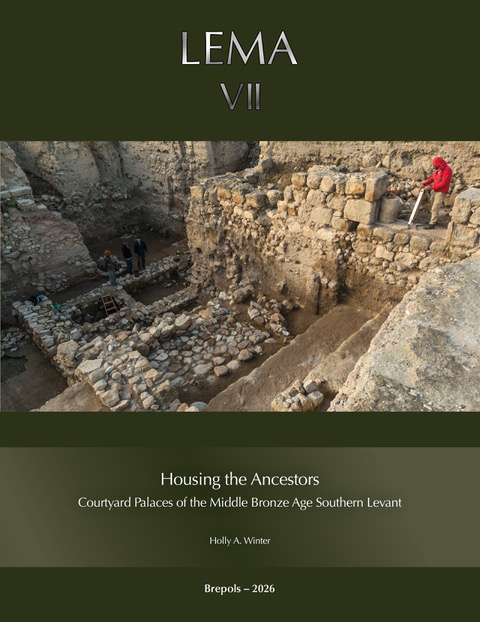

 Invisible Labour in Antiquity
Visualizing Obscure Work in the Ancient Mediterannean and West Asia
Volume 1
 Late Antique villae in the Balkans (3rd–7th c. AD): Current Research Questions and Perspectives
HAEMUS Companion to the Late Antique Balkans 1
Volume 4

 Monastic Manuscripts from the Eastern Mediterranean (Sinai, Jerusalem, Antioch)
Production, Use, and Contexts

 Portraying the Individual in the Roman East
Local–Imperial Entanglements in Sculpture, Mosaics, and Paintings (First–Fourth Centuries AD)
Volume 18

 Small Worlds and Relational Agencies: Local Societies in Early Medieval Iberia
Pequeños mundos y Agencias relacionales: Sociedades locales altomedievales en la Península Ibérica
 Students, Scholars and Their Books at the University of Louvain (1425-1797)
Studium Lovaniense: Learning across Borders, 1
Volume 17
 The Antiquarian Book-trade in Switzerland
Sir Thomas Phillipps's Acquisitions in the 1820s and their Later Dispersal
Volume 69


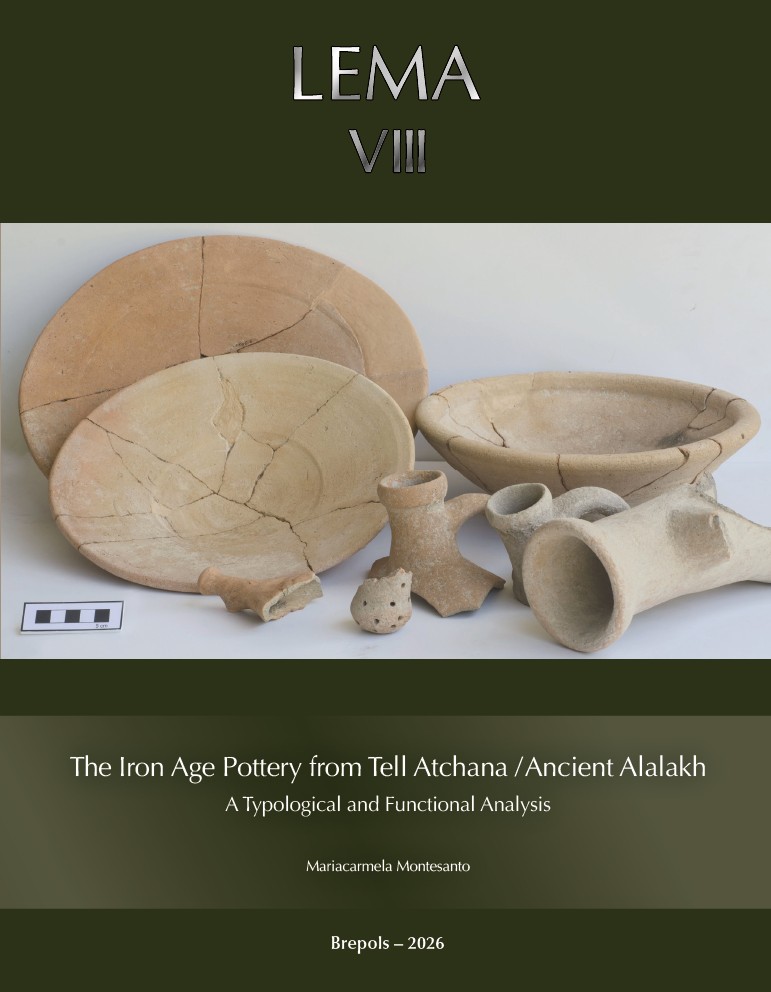 The Iron Age Pottery from Tell Atchana / Ancient Alalakh
A Typological and Functional Analysis
Volume 8

 Writing in the Church of the Nativity in Bethlehem
Inscription and Graffiti in a Multilingual and Multigraphic Perspective
Volume 45


 Atlante tematico di topografia antica 36-2026
Urbanistica e monumenti, porti, Roma. Ricerche sui monti Aurunci
Volume 36
 Cerámica común romana y ciclo haliéutico
Análisis de los contextos de las cetariae de Iulia Traducta

 Die Handschriften aus St. Emmeram in Regensburg. Pars 2,6: Clm 14691–14850
Neu beschrieben von Anja Freckmann, Friedrich Helmer, Hardo Hilg, Julia Knödler, Carolin Schreiber, Juliane Trede und Elisabeth Wunderle


 Nuove scoperte e progressi nelle metodologie di rilievo e analisi dell’arte rupestre post-paleolitica in Italia
New discoveries and progress in the tracing and analysis methodologies of the post-Paleolithic rock art in Italy
