
Patrimonio arqueologico espanol en Roma como instrumentos de memoria historica
Le Mostre Internazionali di Archeologia
by Trinidad Tortosa

Paperback (Published)
(October 2019)
ISBN: 9788891318510
8.46 x 10.98 inches
Price: $327.00
In stock
This book collects the results of a Spanish-Italian collaboration related to the Spanish involvement in the Mostra Internazionale di Archeologia organized in 1911 at the Baths of Diocletian, and the 1937 Mostra Augustea della Romanita promoted by Benito Mussolini in Rome. As final results of this investigation carried out by a group of scholars from both countries, we identify the archaeological material that Spain selected for both exhibitions, analysing the politic and scientific contexts in which both exhibitions were put into practice through the archive documents and the press reports – both Spanish and Italian-. The particular moment that our nation lives during the first decade of the 20th century, allows for Spain to organize a historical discourse in its assigned room for the Mostra in 1911. The protohistoric environment is represented by a number of archaeological items among which the Dama de los Cerros de los Santos (Albacete) stands out. This piece, placed in the centre of the room, integrates itself with the other Roman items, creating a wider historic discourse. This book analyses the casts and photographs sent by Spain in 1911, many of which have been mostly discovered and identified in the storage rooms of the Museo della Civilta Romana. Such pieces were exhibited in few occasions during the Mostra of 1937, along with scale models of iconic monuments of the Hispanic Roman sphere such as the Arco de Bara (Tarragona) or the Puente de Alcantara (Caceres). These studies on the archaeological aspects of the Exhibition in 1911 have been complemented with a further analysis of the Spanish section at the “International Arts Exhibition” which was being held in Rome at the same time. Therefore, this research seeks in the first place to establish a new methodology and experiment a possible reconstruction of the historical memory about the national identity reflected by the Spanish sent archaeological material on each of the aforementioned events. Secondly, this volume tries to stress the importance of analysing these International Exhibitions in order to understand them as vehicles for the dissemination of the European archaeology.
This book collects the results of a Spanish-Italian collaboration related to the Spanish involvement in the Mostra Internazionale di Archeologia organized in 1911 at the Baths of Diocletian, and the 1937 Mostra Augustea della Romanita promoted by Benito Mussolini in Rome. As final results of this investigation carried out by a group of scholars from both countries, we identify the archaeological material that Spain selected for both exhibitions, analysing the politic and scientific contexts in which both exhibitions were put into practice through the archive documents and the press reports – both Spanish and Italian-. The particular moment that our nation lives during the first decade of the 20th century, allows for Spain to organize a historical discourse in its assigned room for the Mostra in 1911. The protohistoric environment is represented by a number of archaeological items among which the Dama de los Cerros de los Santos (Albacete) stands out. This piece, placed in the centre of the room, integrates itself with the other Roman items, creating a wider historic discourse. This book analyses the casts and photographs sent by Spain in 1911, many of which have been mostly discovered and identified in the storage rooms of the Museo della Civilta Romana. Such pieces were exhibited in few occasions during the Mostra of 1937, along with scale models of iconic monuments of the Hispanic Roman sphere such as the Arco de Bara (Tarragona) or the Puente de Alcantara (Caceres). These studies on the archaeological aspects of the Exhibition in 1911 have been complemented with a further analysis of the Spanish section at the “International Arts Exhibition” which was being held in Rome at the same time. Therefore, this research seeks in the first place to establish a new methodology and experiment a possible reconstruction of the historical memory about the national identity reflected by the Spanish sent archaeological material on each of the aforementioned events. Secondly, this volume tries to stress the importance of analysing these International Exhibitions in order to understand them as vehicles for the dissemination of the European archaeology.
- By (author) Trinidad Tortosa
Other Titles in this Series
 Greek Vases in the National Museum of Natural History Smithsonian Institution Washington, D.C
Volume 17
 Tra Eretum, Nomentum e Crustumerium
Antiche modalita insediative nel territorio di Monterotondo
Volume 50


 L’enigma dei vasi murrini / The Enigma of Murrhine Ware
Leggende, storia, letteratura, indagine archeogemmologica. / Legends, History, Literature, an Archaeogeomological Investigation
Volume 59
 Architetture dipinte
Decorazioni parietali non figurate nelle tombe a camera dell'Etruria meridionale (VII-V sec. a.C.)
Volume 18

 La Castellina a sud di Civitavecchia
origini ed eredita: Origines protohistoriques et evolution d'un habitat etrusque
Volume 47
 Studies in Romanesque Architecture and Sculpture
Cluny, Jumieges, Montceaux-L'etoile and Paray-le-Monial
Volume 72


 Antike Glaeser
Monumenta Antiquitatis extra fines Hungariae reperta quae in Museo Artium hungarico aliisque museis et collectionibus hungaricis conservantur. Vol. 5
Volume 19
 The Brick System of Romanesque Architecture
The Lombard Band and Its Transformation in Catalonia and France
Volume 56


 The Site of the Battle of the Aegates Islands at the end of the First Punic War
Fieldwork, analyses and perspectives, 2005-2015
Volume 60
 The Great Civilisations of the Ancient Sahara
Neolithisation and the earliest evidence of anthropomorphic religions
Volume 21
 Divagazioni archeologiche Vol. II
Di un pre-arco insussistente. Di quattro colonne di caristio
Volume 4


 Case e torri medioevali a Roma
Vol. I. Documentazione, storia e sopravvivenza di edifici medioevali nel tessuto urbano di Roma
Volume 22


 Le Sepolture principesche nel Lazium Vetus
Tra la fine della prima meta del ferro e l'inizio dell'eta orientalizzante
Volume 36

 Excavation of a Roman Villa
And Late Roman Infant Cemetery near Lugnano in Teverina, Italy
Volume 23
Similar Books

 Caesar’s Visions and Impact on the Roman Empire
Revisiting the Archaeological and Historical Record of the 40s BC
Volume 2


 Contesting Labeled Identities
The Sociology of Gentilics in Biblical and Northwest Semitic Literature


 Drunk the Potion, No Whit Charmed
The Doctrine of Pure and Perfect Souls from Iamblichus to Damascius

 Epiphanies of the Divine in the Septuagint and the New Testament
Fifth International Symposium of the Corpus Judaeo-Hellenisticum Novi Testamenti (CJHNT), 14-17 May 2015, Nottingham


 Etruscan and Roman Hellenistic Anatomical ex votos
Reassessing Popular Religious Expressions in Central Italy
Volume 8




 Invisible Labour in Antiquity
Visualizing Obscure Work in the Ancient Mediterannean and West Asia
Volume 1

 Language and Power in the Roman Empire and Early India
Hierarchy, Ambiguity, and the Art of Reading the Signs in Cosmopolitan Cultures
 Late Antique villae in the Balkans (3rd–7th c. AD): Current Research Questions and Perspectives
HAEMUS Companion to the Late Antique Balkans 1
Volume 4

 Nurturing the Elite
Representations of Drinking, Eating, and Religious Vessels in Palmyrene Funerary Iconography
Volume 13


 Portraying the Individual in the Roman East
Local–Imperial Entanglements in Sculpture, Mosaics, and Paintings (First–Fourth Centuries AD)
Volume 18


 Small Worlds and Relational Agencies: Local Societies in Early Medieval Iberia
Pequeños mundos y Agencias relacionales: Sociedades locales altomedievales en la Península Ibérica
 The Compositional History of the Book of Kings
An Analysis of the Evaluative Frameworks in 1 Kings 14–2 Kings 25

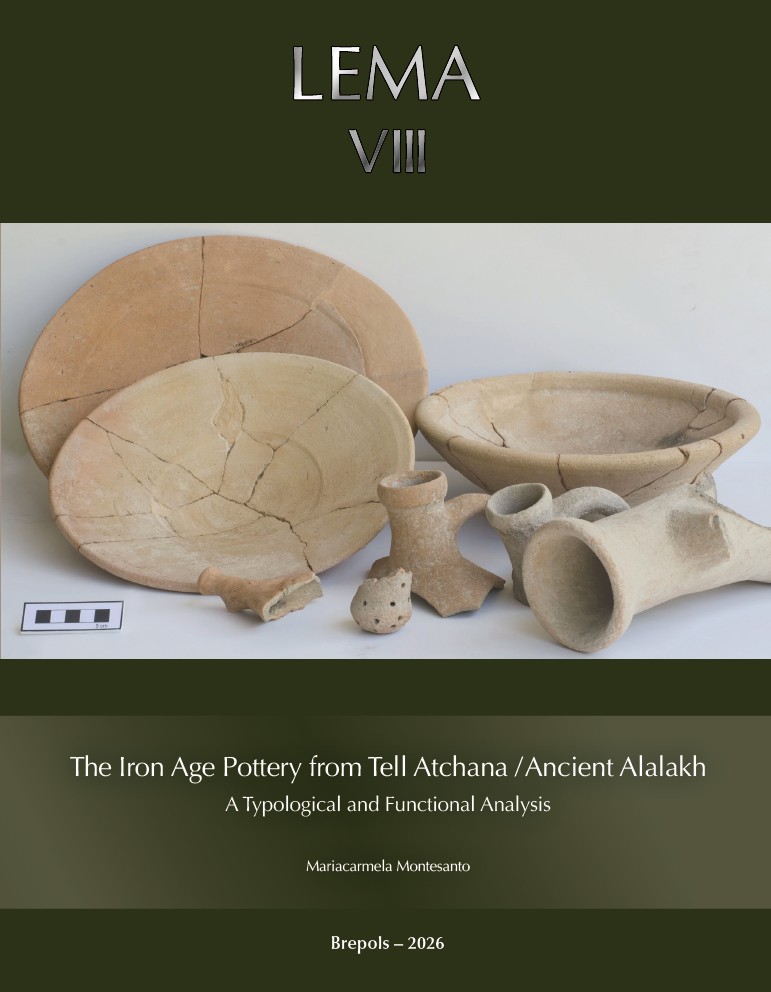 The Iron Age Pottery from Tell Atchana / Ancient Alalakh
A Typological and Functional Analysis
Volume 8


 Writing in the Church of the Nativity in Bethlehem
Inscription and Graffiti in a Multilingual and Multigraphic Perspective
Volume 45

 Roman Copies, Collecting, and Culture in the Bay of Naples and Beyond
Papers in Honor of Eugene J. Dwyer
