
Das Vediusgymnasium in Ephesos
Archaologie und Baubefund
by Martin Steskal and Martino LaTorre

In the years between 147 and 149 A.D. an almost 13.000 m bath-gymnasium complex was opened in the north of Ephesos, the sponsor of which, M. Claudius P. Vedius Antoninus Phaedrus Sabinianus, gave it its current name, Vedius gymnasium. The combination of Roman baths and Greek gymnasium is an example of the model type of the bath-gymnasium mainly found in Asia Minor. This publication is the continuation of the research started in the 1920’s and 1950’s and the result of six years of archaeological field work which is now presented in the final publication of the monument. It includes the theoretical reconstruction of the building, its furnishings and the clarification of various technical problems of the baths as well as the archaeological-historic relevance of the complex that explains the usage and the history of the building. The discussion also takes account of the monumental building type that strongly influenced the city structure of the metropoleis of the Greek east and belonged to the core of society. The multifunctional purpose of the bath-gymnasium made it a meeting point for clubs, events took place here, educational needs were met and last but not least it was also used as a place for exercise, body care and general recreation. This publication tries to explain the eventful life of one of the four large Ephesian bath-gymnasiums.
- By (author) Martino LaTorre
- By (author) Martin Steskal
Other Titles in this Series
 Amber for Artemis
Amber Finds from the Artemision at Ephesos. With Contributions by Silvia Alaura, Laura Ambrosini, Marco Bonechi, Vanora Estridge, Sarjit Kaur, Tripta Kaur, Michael Kerschner, Alessandro Naso, Martina Ott, Caroline Posch, Serena Privitera, Andrea M. P
Volume 12.7

 Das Grabhaus 1/08 in der Hafennekropole von Ephesos
Ergebnisse der anthropologischen und palaopathologischen Untersuchung kaiserzeitlich-spatantiker Kollektivgraber
Volume 1


 Das Mausoleum von Belevi
Archaologische Untersuchungen zu Chronologie, Ausstattung und Stiftung
Volume 45810


 Hanghaus 2 in Ephesos Die Wohneinheit 6 Baubefund, Ausstattung, Funde
Baubefund, Ausstattung, Funde
Volume 45878
Similar Books


 Caesar’s Visions and Impact on the Roman Empire
Revisiting the Archaeological and Historical Record of the 40s BC
Volume 2

 Construction Processes in Historical Western Societies (5th c. BC – 10th c. AD)
Case Studies on Techniques, Models, and Costs


 Etruscan and Roman Hellenistic Anatomical ex votos
Reassessing Popular Religious Expressions in Central Italy
Volume 8




 Invisible Labour in Antiquity
Visualizing Obscure Work in the Ancient Mediterannean and West Asia
Volume 1
 Late Antique villae in the Balkans (3rd–7th c. AD): Current Research Questions and Perspectives
HAEMUS Companion to the Late Antique Balkans 1
Volume 4


 Portraying the Individual in the Roman East
Local–Imperial Entanglements in Sculpture, Mosaics, and Paintings (First–Fourth Centuries AD)
Volume 18


 Small Worlds and Relational Agencies: Local Societies in Early Medieval Iberia
Pequeños mundos y Agencias relacionales: Sociedades locales altomedievales en la Península Ibérica
 SOMA 2023: Proceedings of the 24th Symposium on Mediterranean Archaeology
Ideas that Travelled by the Sea, Udine, 2-4 February, 2023


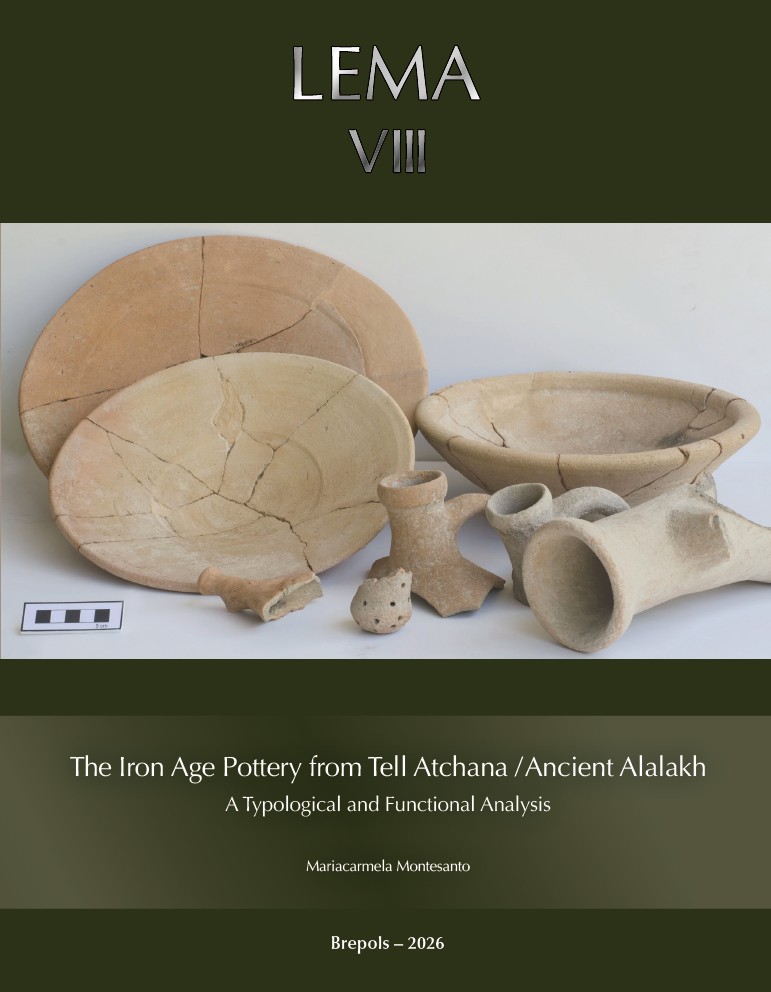 The Iron Age Pottery from Tell Atchana / Ancient Alalakh
A Typological and Functional Analysis
Volume 8



 Writing in the Church of the Nativity in Bethlehem
Inscription and Graffiti in a Multilingual and Multigraphic Perspective
Volume 45
 Zooarchaeology of Ancient Greek Sanctuaries in Southwestern Sicily
Faunal Analysis from Selinus and Akragas as Evidence of Differences in the Treatment of Animals for Ritual Purposes
 Butrinto Cento, 1924–2024
Bilanci e prospettive della ricerca archeologica internazionale in Albania e in Epiro a cento anni dalla riscoperta di Butrinto
 Cerámica común romana y ciclo haliéutico
Análisis de los contextos de las cetariae de Iulia Traducta


 Nuove scoperte e progressi nelle metodologie di rilievo e analisi dell’arte rupestre post-paleolitica in Italia
New discoveries and progress in the tracing and analysis methodologies of the post-Paleolithic rock art in Italy