
Bittplatze an agyptischen Tempeln vom 7. Jahrhundert v. Chr. bis zum 4. Jahrhundert n. Chr.
Ihre Architektur, Zuganglichkeit, Ausstattung und Bedeutung
by Julia Dorothea Preisigke-Borsian
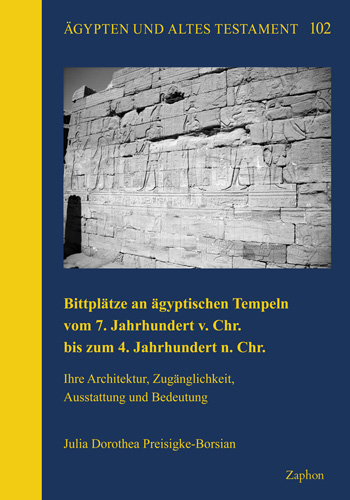
“Places of supplication” (“Bittplatze”) are architectural structures in peripheral areas of Egyptian temples. The detailed catalog presented here serves as the basis for the analysis in the main parts of the study, providing information on the architecture of the temples and places of worship as well as the finds. In addition, the dating, research history and excavation status of the individual temples and their places of worship can be found.
“Places of supplication” (“Bittplatze”) are architectural structures in peripheral areas of Egyptian temples: on enclosing walls and gates, in the courtyards and the temple forecourts, but also in the areas behind the temples, which Borchardt described in 1933 as “counter temples” (“Gegentempel”). These have mostly been planned and created by official bodies. From the layout of the temple areas and the structural conditions, it can be seen that probably only selected people such as priests, more precisely prophets, have access to these secondary places of supplication behind the temples. Doors and corridors allowed access to certain, restrictive places, but could also lock them. Primary prayer places directly at the gates, on the surrounding walls of the temple precincts and on the Dromoi were more accessible and were therefore probably visited more often by lay people. In the Nile Valley, the places of prayer have been recorded since the 18th dynasty under Thutmose I, while in the western oases they have only been occupied since the 25th / 26th dynasty. Overall, they were built and used until the Greco-Roman times. A diachronic comparison of the forms of supplication does not reveal any clear development. However, it is noticeable that the secondary petitions behind the temples both in the Nile Valley and in the oases became a typical element of the temple complexes during the Greco-Roman period. They seem to be an expression of changed or further developed cultic actions. This suggests that practices that have taken place at these cult sites in the course of the temple cult may have gained in importance. According to the current state of knowledge, secondary petitions were only available at temples of the gods. This seems logical, given the requests for an answer from Oracle questions or legal questions as well as requests for protection were directed mainly to the gods, less often to godlike or deified people who acted as mediators to the divine sphere. The detailed catalog served as the basis for the analysis in the main parts of the study (Chapters 4 and 5), providing information on the architecture of the temples and places of worship as well as the finds. In addition, the dating, research history and excavation status of the individual temples and their places of worship can be found. In the 43 catalog entries a total of 59 temples are discussed in detail and sorted according to their location in certain regions. Of the 31 oasis temples recorded, 24 sanctuaries could be viewed on site, documented photographically and the observations integrated into the investigation.
- By (author) Julia Dorothea Preisigke-Borsian
Other Titles in this Series

 Material, Method and Meaning
Papers in Eastern Mediterranean Archaeology in Honor of Ilan Sharon
Volume 110

 Rishon le-Zion. Volume I
The Middle Bronze Age II Cemeteries (Volume I/1: The Excavations + Volume I/2: Finds and Conclusions)
Volume 88
 Die Suche nach Gottesnahe
Untersuchungen zur Personlichen Frommigkeit in Agypten von der Ersten Zwischenzeit bis zum Ende des Neuen Reiches
Volume 73
 ‘Now These Records are Ancient’
Studies in Ancient Near Eastern and Biblical History, Language and Culture in Honor of K. Lawson Younger, Jr.
Volume 114

 Kinneret II
Results of the Excavations at Tell el-'Oreme, 1994-2008: Vol. 1: The Bronze Age, Iron Age II, Post-Iron Age Periods, and Other Studies
Volume 120

 Der Raum der Zeit
Eine Untersuchung zu den altagyptischen Vorstellungen und Konzeptionen von Zeit und Raum anhand des Unterweltbuches Amduat
Volume 64
 From Stone Age to Stellenbosch
Studies on the Ancient Near East in Honour of Izak (Sakkie) Cornelius
Volume 107
 From Memphis to Babylon
African Individuals and Groups in Texts from Chaldean and Achaemenid Babylonia
Volume 125
 Agyptische Tier- und Gotterbronzen aus Unteragypten
Untersuchungen zu Typus, Ikonographie und Funktion sowie der Bedeutung innerhalb der Kulturkontakte zu Griechenland
Volume 81
 A Sage in New Haven
Essays on the Prophets, the Writings, and the Ancient World in Honor of Robert R. Wilson
Volume 117

 The Late Egyptian Underworld
Sarcophagi and Related Texts from the Nectanebid Period: Part I: Sacophagi and Texts, Part II: Plates
Volume 72

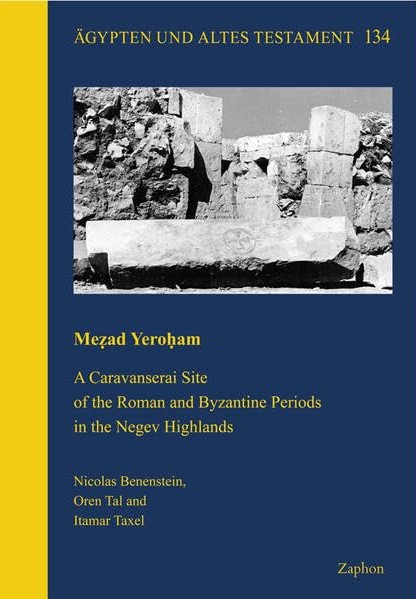 Mezad Yeroham
A Caravanserai Site of the Roman and Byzantine Periods in the Negev Highlands
Volume 134
 Sonnenlauf und kosmische Regeneration
Zur Systematik der Lebensprozesse in den Unterweltsbuchern - Teil 1: Untersuchungen, Teil 2: Materialien des Tabellenwerks und der Schautafeln
Volume 71

Similar Books


 Behind the Scenes of Medieval Roofs
An Overview of the Roofing Systems of Italian Churches
Volume 90

 Circulation, Use, Impact
The Consumption of Architectural Books in the Early Modern Eastern Adriatic
Volume 1






 Late Antique villae in the Balkans (3rd–7th c. AD): Current Research Questions and Perspectives
HAEMUS Companion to the Late Antique Balkans 1
Volume 4


 The Western Nile Delta
ARCE Fieldwork in the Region of Kom Firin and Naukratis (1977-1983) Revisited
 To Dimarcheio Tis Ermoupolis | The Town Hall of Ermoupolis
150 chrónia enós neoklasikoú topósimou | 150 Years of a Neoclassical Landmark
 Visual Memory and Oblivion
Monuments and Conflicts in Urban Spaces in Central and Eastern Europe from the Nineteenth Century to the Present Day

 Archaeological Discoveries at the Temple of Ramesses II in Abydos
Vol. 2: Old Kingdom Wall, Papyri, Ostraca, and Leather Remains


 The Southern Room of Amun in the Temple of Hatshepsut
Volume 2: Studies on Decoration and Ritual Function
Volume 11



 Die Ägyptenworte im Ezechielbuch
Eine literarhistorische und religionsgeschichtliche Analyse von Ez 29–32
