
Adaptive Reuse
Aspects of Creativity in South Asian Cultural History
edited by Elisa Freschi and Philipp A. Maas

The theoretical framework of “Adaptive reuse” (a term originally developed in the field of architecture) is here applied to a wide spectrum of cultural activities, from the composition of new texts on the basis of earlier ones to the re-creation of concepts and rituals. The first section of this volume consists of five case studies dealing with the adaptive reuse of Sanskrit philosophical and grammatical texts in Sanskrit works of philosophy, grammar and poetry. In these cases, adaptive reuse allows the creation of new forms and contents within a traditionally established framework in which the prestige of the sources of adaptive reuse reflects upon its target. In the second section, entitled “Adaptive Reuse of Tropes”, the motif of the chariot in Vedic, medieval and contemporary works and rituals is analyzed and fruitfully employed in various religious contexts. The chapters of the third section deal again with philosophical and religious texts, this time focusing on the adaptive reuse of sources that are no longer available or never existed. It emerges that the reuse of virtual texts was frequently intended to support the introduction of innovations into established traditions. In some cases, the prestige of the reusing works even reflected back on the allegedly reused source. Finally, the section “Reuse from the Perspective of the Digital Humanities” deals with the computer-based identification of possibly reused text-passages in epic literature that otherwise would remain undetectable.
The theoretical framework of “Adaptive reuse” (a term originally developed in the field of architecture) is here applied to a wide spectrum of cultural activities, from the composition of new texts on the basis of earlier ones to the re-creation of concepts and rituals. The first section of this volume consists of five case studies dealing with the adaptive reuse of Sanskrit philosophical and grammatical texts in Sanskrit works of philosophy, grammar and poetry. In these cases, adaptive reuse allows the creation of new forms and contents within a traditionally established framework in which the prestige of the sources of adaptive reuse reflects upon its target. In the second section, entitled “Adaptive Reuse of Tropes”, the motif of the chariot in Vedic, medieval and contemporary works and rituals is analyzed and fruitfully employed in various religious contexts. The chapters of the third section deal again with philosophical and religious texts, this time focusing on the adaptive reuse of sources that are no longer available or never existed. It emerges that the reuse of virtual texts was frequently intended to support the introduction of innovations into established traditions. In some cases, the prestige of the reusing works even reflected back on the allegedly reused source. Finally, the section “Reuse from the Perspective of the Digital Humanities” deals with the computer-based identification of possibly reused text-passages in epic literature that otherwise would remain undetectable.
- Edited by Elisa Freschi
- Edited by Philipp A Maas
Other Titles in this Series
 Kaiserliches Theater – Theater ohne Kaiser?
Die Grundung der Han-Dynastie in zaju-Stucken der Ming-Dynastie
Volume 89

 Strategies of Clause Linking in Semitic Languages
Proceedings of the International Symposium on Clause Linking in Semitic Languages, Kivik, Sweden, 5-7 August 2012
Volume 93

 The Way and Its Powers
An Ethnographic Account of Taoist Practice and Religious Authority in Northern Taiwan
Volume 119
 The Uppsala Manuscript of Muhammed Heva’i Uskufi Bosnevi’s Makbul-i ‘arif (1631) from a Turcological Perspective
Transliteration, Transcription, and an English Translation
Volume 105

 Yuan Hongdao – Eine Geschichte der Vasen
Ein Beitrag zur Literatur der Kennerschaft der spaten Ming-Zeit
Volume 108

 Die Schlangensprüche als älteste semitische Textbelege?
Analyse und kritische Betrachtung von Richard C. Steiners „Early Northwest Semitic Serpent Spells in the Pyramid Texts“
Volume 140
 The Beginning of the Subtle School of Taoism
An Official Perception of Taoism in the Early T'ang Period
Volume 94
 Another Tract for the Buryats
including I. J. Schmidt's recentlly identified Kalmuck Originals
Volume 82


 Daoist perspectives on knowing the future
Selections from the Scripture on Great Peace (Taiping jing)
Volume 110

 Studien zu ‘sabab’ in der arabischen Kunstprosa des 10.-15. Jahrhunderts
Ein Beitrag zur arabischen Lexik, Phraseologie und Stilgeschichte
Volume 126
 Fujian – Penghu – Taiwan
Fruhe Kontakte, nach Texten zusammengefasst (ca. 200-1450 n.Chr.)
Volume 95

 Bible Translations – Linguistic and Cultural Issues
Proceedings of the Erlangen Workshop on October 5 and 6, 2018
Volume 122

 Verbal Festivity in Arabic and Other Semitic Languages
Proceedings of the Workshop at the Universitatsclub Bonn on January 16, 2009
Volume 72
 The morphological-to-analytic causative continuum in Hausa
New insights and analyses in a typological perspective
Volume 109
 Ahmad ibn Yusuf at-Tifasis ‘Buch der koniglichen Steine’
Eine Mineralienkunde fur die arabischen Herrscher des 7./13. Jahrhunderts Eingeleitet, ubersetzt und mit Anmerkungen versehen von Armin Schopen und Karl W. Strauss Mit 38 Abbildungen von Alfred K. Schuster
Volume 92
 Die vokalische Gestalt des arabischen Wortstamms
Ihr Kodierungspotential im dreiradikaligen Masdar
Volume 127


 Arabische Kunstprosa im 14. Jahrhundert
Drei Einsetzungen fur Oberrichter 'Imad ad-Din at-Tarasusi in Lehramter an Damaszener Hochschulen
Volume 123

Similar Books


 Between Bones and Beliefs
Human-Bird Relations in Central and Northern Europe in the First Millennium AD
Volume 4
 Engaged Languages and Literatures / Langues et Littératures engagées
Critical Views / Regards Critiques


 Visual Memory and Oblivion
Monuments and Conflicts in Urban Spaces in Central and Eastern Europe from the Nineteenth Century to the Present Day
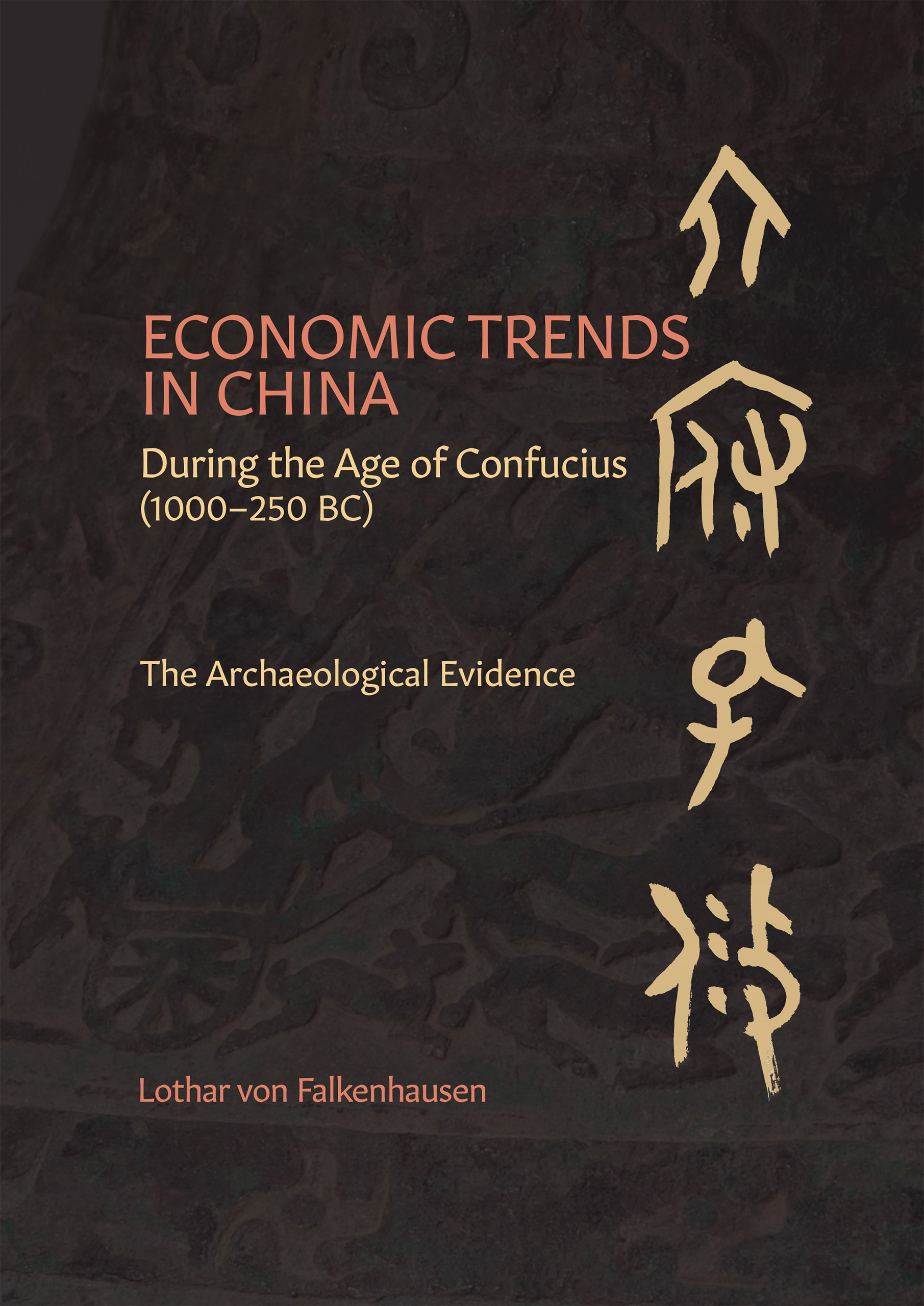 Economic Trends in China During the Age of Confucius (1000–250 BC)
The Archaeological Evidence
Volume 10
 “Italien übertrifft alles, was man mir darüber gesagt hat”
Wilhelmine von Bayreuth und Friedrich II. im Briefdialog über die Italienreise der Markgräfin


 In der Ferne gegenwartig. Katalog der Goethe-Bibliothek Dorn / ,Fernab und hoch droben’. Neue Feldforschungen zu Heiligtumern in peripheren Lagen von der Antike bis in das Mittelalter
Tagung Universitat Bamberg vom 21. bis 23. Oktober 2021


 Gender in Gandharan Art
Representations and Interactions in the Buddhist Context (1st-4th centuries CE)


