
The Economy of the Later Roman Province of Third Palestine
By (author) Walter D. Ward

Paperback (Published)
(July 2024)
ISBN: 9781803278070
6.85 x 9.69 inches
Price: $48.00
In stock
This book provides a comprehensive examination of the evidence for the economy of the later Roman province of Third Palestine, which roughly corresponds to southern Jordan, the Negev desert in Israel, and the Sinai Peninsula. It begins with a discussion of the historiography and attempts to create modern models (cliometrics) to explain the ancient economy. After covering this foundational material, the author uses archaeological data, papyri, and literary sources to understand agriculture and pastoralism in the largely arid province, and he examines the limited evidence for the urban economy and industry, focusing on ceramics and copper production. The next chapter looks at regional trade in the province by plotting the finds of four amphorae types and also examines the trade in fish from the Red Sea through faunal remains and papyri. The chapter ends with a discussion of the date trade and the records of a particular caravan described in the Nessana papyri. The focus then shifts to the role of international trade, including Red Sea trade through the port of Aila and trade with Mecca. Next, the economic impact of monasticism and pilgrimage on the province is appraised. The final chapter critically evaluates the role of economic modeling and quantification for understanding the economy of Third Palestine. It argues that the ancient economy was neither primitive, nor modern, but something unique that should be approached without introducing contemporary assumptions.?
Preface
Chapter 1: Introduction
Geography, settlements, and administration of Third Palestine
Interpreting the ancient economy
The traditional debate: ‘primitive’ or ‘modern’
The rise of neoliberal interpretations of the ancient economy
Market or bazaar economy?
Chapter 2: ‘Between the desert and the sown’: Agriculture and pastoralism in Third Palestine
Agriculture
The pastoralists of Third Palestine
Conclusion
Chapter 3: Urban economy, manufacturing, and resources
The urban economy
Industry: Ceramic production
Industry: Copper mining and smelting
Conclusion
Chapter 4: Regional exchange
Ceramic analysis of trade routes
Gaza amphora (LR4)
Palestinian Bag Jar (LR 5)
Egyptian amphorae
Aila amphora
Maritime animal products in Third Palestine
The date trade
One caravan’s records
Conclusion
Appendix 1: Amphorae descriptions
Gaza amphorae (LR 4)
Bag jars (LR 5)
Egyptian amphorae (LR 7)
Aila amphorae
Chapter 5: International exchange with the Red Sea and Mecca
Red Sea trade
Brief historical outline of Red Sea trade
Aila
Iotabe
Meccan trade
Nature of trade: Origins and caravans
Commodities
Conclusion: The economic implications of international trade on Third Palestine
Chapter 6: Monasticism, pilgrimage, and the economy
Monasticism in Third Palestine
Transportation and infrastructure
Supplying the Sinai monasteries
Conclusion
Chapter 7: Conclusion
A primitive or modern economy in Third Palestine… or something else?
Bibliography
Walter D. Ward is Professor and Chair of the History Department at the University of Alabama at Birmingham. He is the author of two books, Mirage of the Saracen: Christians and Nomads in the Sinai Peninsula in Late Antiquity (2014) and Near Eastern Cities from Alexander to the Successors of Muhammad (2019), and the editor of The Socio-economic History and Material Culture of the Roman and Byzantine Near East: Essays in Honor of S. Thomas Parker (2017).
- By (author) Walter D. Ward
"'Overall, this is a good book that provides a valuable account of the region's economy as well as the place of Third Palestine in late antiquity in general. Ward makes full use of the diverse evidence ... and brings to life many of the daily rhythms of its inhabitants. Ward's Third Palestine is full of vitality, with significant trade and manufacturing. ... If there is a quibble, it is that although he touches on the province's relationship to the imperial centre, I think there was scope for a fuller discussion of taxation and the law.Still, the breadth of coverage is significant, and Ward has managed to squeeze as much insight as possible from what evidence we have. To that end, Ward has managed to collect all the material we have for the province's economy. Regarding Ward's second goal, although he has revealed the limited role the province has played in wider discussions of the economy, I hazard that this book would be valuable to others interested in the economy of other Roman provinces, whether of the high or late empire. Indeed ... Ward has done the province a valuable service. He has shown the way forward on how to integrate the varied evidence (amphorae, environmental, papyrological) to uncover details of wider import for the Mediterranean economy.' - Conor Whatley (2025): B
—
‘Overall, this is a good book that provides a valuable account of the region’s economy as well as the place of Third Palestine in late antiquity in general. Ward makes full use of the diverse evidence … and brings to life many of the daily rhythms of its inhabitants. Ward’s Third Palestine is full of vitality, with significant trade and manufacturing. … If there is a quibble, it is that although he touches on the province’s relationship to the imperial centre, I think there was scope for a fuller discussion of taxation and the law.
Still, the breadth of coverage is significant, and Ward has managed to squeeze as much insight as possible from what evidence we have. To that end, Ward has managed to collect all the material we have for the province’s economy. Regarding Ward’s second goal, although he has revealed the limited role the province has played in wider discussions of the economy, I hazard that this book would be valuable to others interested in the economy of other Roman provinces, whether of the high or late empire. Indeed … Ward has done the province a valuable service. He has shown the way forward on how to integrate the varied evidence (amphorae, environmental, papyrological) to uncover details of wider import for the Mediterranean economy.’ – Conor Whatley (2025): Bryn Mawr Classical Review
—
Other Titles in this Series
 Roman Military Tribunes (First Century BC to Third Century AD): A Historical and Prosopographical Study. Volume I
Prosopographical Catalogue, Part 1: Roman Military Tribunes (tribuni militum in exercitu) and in the Garrison of the Roman Capital (tribuni militum in praetorio)
 The Urbanisation of the North-Western Provinces of the Roman Empire
A Juridical and Functional Approach to Town Life in Roman Gaul, Germania Inferior and Britain


 Investigations into the Dyeing Industry in Pompeii
Experimental Archaeology and Computer Simulation Techniques


 Late Roman Dorset Black-Burnished Ware (BB1)
A Corpus of Forms and Their Distribution in Southern Britain, on the Continent and in the Channel Islands


 Ländliche Siedlungsstrukturen im römischen Spanien
Das Becken von Vera und das Camp de Tarragona –zwei Mikroregionen im Vergleich

 Life, Death and Rubbish Disposal in Roman Norton, North Yorkshire
Excavations at Brooklyn House 2015-16


Similar Books

 Caesar’s Visions and Impact on the Roman Empire
Revisiting the Archaeological and Historical Record of the 40s BC
Volume 2

 Etruscan and Roman Hellenistic Anatomical ex votos
Reassessing Popular Religious Expressions in Central Italy
Volume 8



 Invisible Labour in Antiquity
Visualizing Obscure Work in the Ancient Mediterannean and West Asia
Volume 1


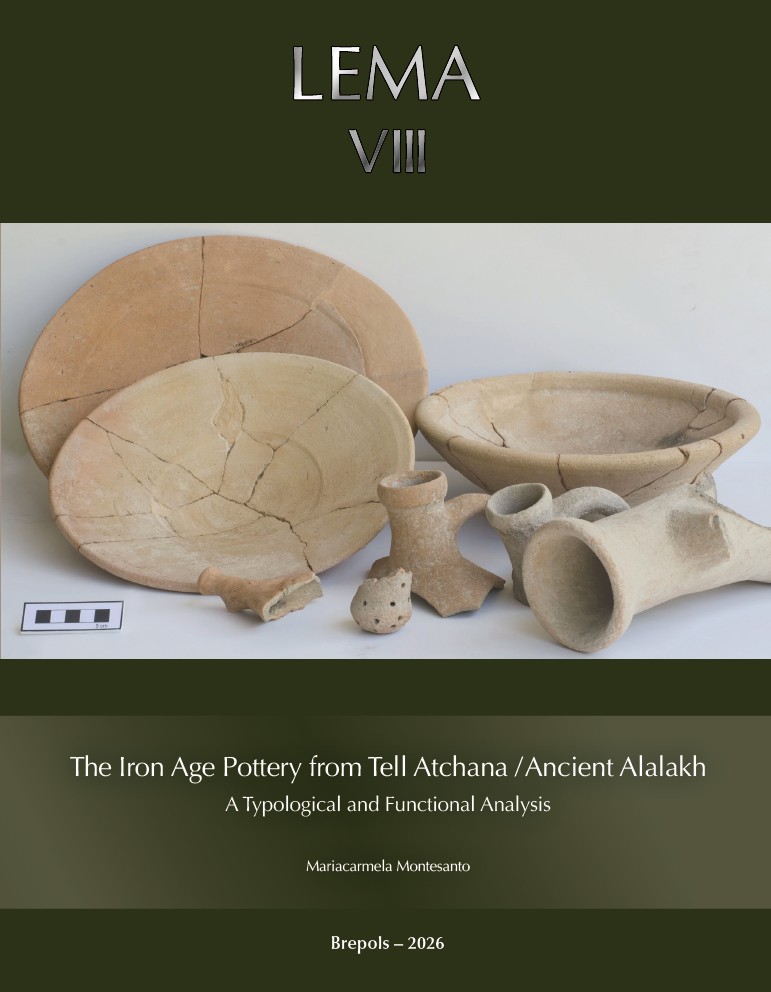 The Iron Age Pottery from Tell Atchana / Ancient Alalakh
A Typological and Functional Analysis
Volume 8



 A Dramatic Event in Late Roman Florence
The Anomalous Burial Site Discovered beneath the Uffizi Gallery

 Alexander the Great and the Campaign of Gaugamela
New Research on Topography and Chronology. IAMNI 1 (Italian Archaeological Mission to Northern Iraq)
Volume 53

 Citizenship Practised, Citizenship Imagined
Multiple Ways of Experiencing Citizenship in the Greek World


 Eating and Drinking along Ancient Roads and Rivers: Study Opportunities, Archaeological Sources and Open Issues about Diet Habits
Roads and Rivers 3


