
“Have You Not Read this Scripture?”
Memory Variation and Context-Based Modification in the Old Testament Quotations in the Gospel of Mark
By (author) H. Lammers
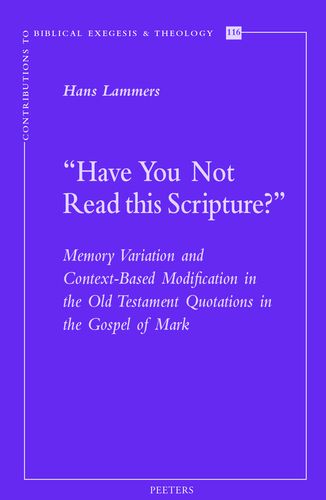
This book argues that the Markan author quoted the OT from memory, a process in the course of which a considerable portion of the observed variation was generated. This explanation requires us to modify current views of evangelists sifting through biblical books from which they copy certain passages. In addition, Lammers suggests that another part of the observed variation may be the result of conscious adaptation of OT quotations making them better serve the purpose of supporting the Gospel’s message.
In the study presented in this book, Hans Lammers sets out to answer the question which Old Testament (OT) version was used by the Markan Evangelist as the source of his scriptural quotations. Next, he observes that in most cases, the text of the quotations in Mark deviates from that in the OT source used. Whereas scholars usually ascribe the observed variation to the use of variant versions or forms of the OT text that are no longer extant, Lammers offers a different explanation. He argues that the Markan author quoted the OT from memory, a process in the course of which a considerable portion of the observed variation was generated. This explanation requires us to modify current views of evangelists sifting through biblical books from which they copy certain passages. In addition, Lammers suggests that another part of the observed variation may be the result of conscious adaptation of OT quotations making them better serve the purpose of supporting the Gospel’s message. By means of four case studies, he tries to demonstrate how views of Jesus developed in the Markan Gospel may have prompted the Evangelist to alter OT quotations, a practice for which he proposes the designation context-based modification.
- By (author) H. Lammers
Other Titles in this Series

 Prophecy after the Prophets?
The Contribution of the Dead Sea Scrolls to the Understanding of Biblical and Extra-Biblical Prophecy
Volume 52


 “With All Your Soul Fear the Lord” (Sir. 7:27)
Collected Essays on the Book of Ben Sira II
Volume 87


 Re-thinking the Death of Jesus
An Exegetical and Theological Study of Hilasmos and Agape in 1 John 2:1-2 and 4:7-10
Volume 73


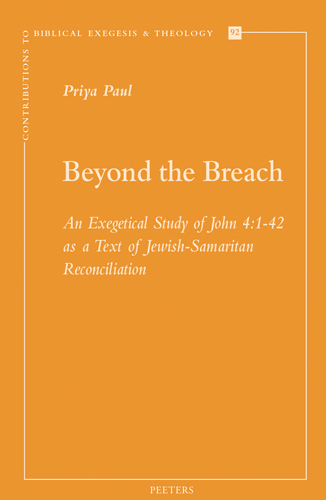 Beyond the Breach
An Exegetical Study of John 4:1-42 as a Text of Jewish-Samaritan Reconciliation
Volume 92


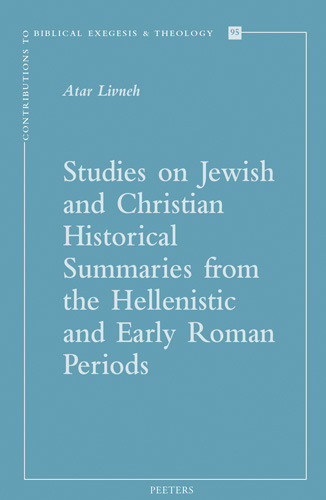 Studies on Jewish and Christian Historical Summaries from the Hellenistic and Early Roman Periods
Volume 95
 In the Footsteps of Sherlock Holmes
Studies in the Biblical Text in Honour of Anneli Aejmelaeus
Volume 72
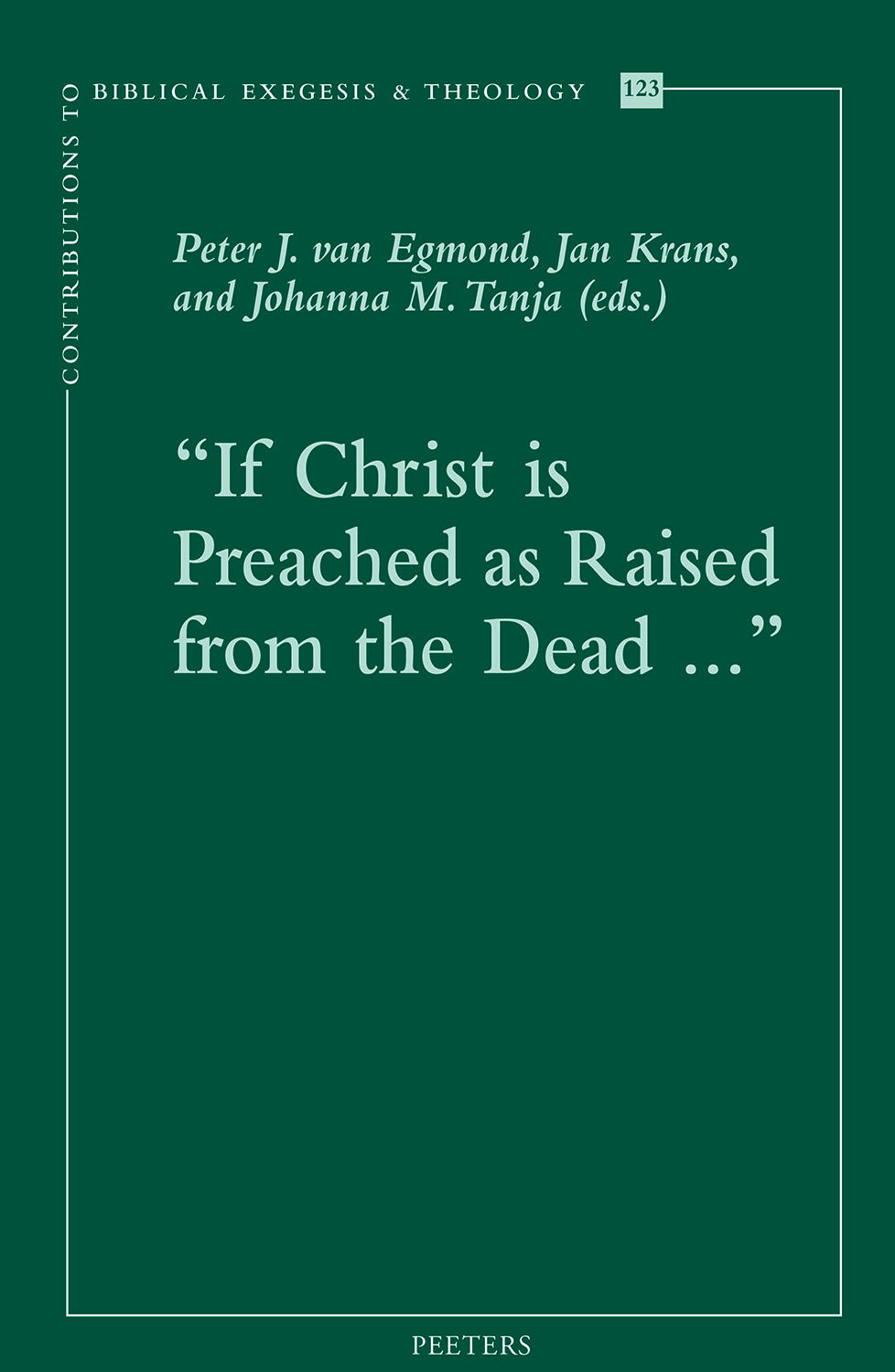 “If Christ is Preached as Raised from the Dead…”
Studies in Honour of Riemer Roukema on the Occasion of His Retirement
Volume 123


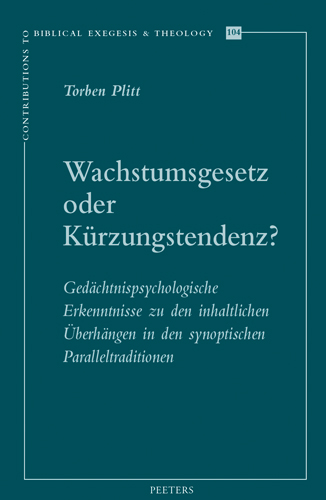 Wachstumsgesetz oder Kurzungstendenz?
Gedachtnispsychologische Erkenntnisse zu den inhaltlichen Uberhangen in den synoptischen Paralleltraditionen
Volume 104


 Three Versions of Esther
Their Relationship to Anti-Semitic and Feminist Critique of the Story
Volume 74


Similar Books


 Athanasius of Alexandria, Epistula ad episcopos Aegypti et Libyae
Old Slavonic Version and English Translation
Volume 261



 Contesting Labeled Identities
The Sociology of Gentilics in Biblical and Northwest Semitic Literature
 Cyril of Alexandria’s Christological Exegesis
Explorations of Partitive Exegesis in the Dialogues on the Trinity
Volume 70


 Epiphanies of the Divine in the Septuagint and the New Testament
Fifth International Symposium of the Corpus Judaeo-Hellenisticum Novi Testamenti (CJHNT), 14-17 May 2015, Nottingham


 Extracanonical Traditions and the Holy Land
Texts, Rituals, and Material Culture in Late Antique Palestine
 From Joseph to Jesus
The Joseph Narrative as a Compositional Template from Old Greek Esther to the Gospel of Luke
Volume 125





 Nicholas of Lyra’s Commentaries on the Gospels of Matthew and Luke
Franciscan Exegesis in a Time of Crisis
 Paradise Lost in Transmission
The Return to Eden in the Apocalypse of Peter within Its Ethiopic and Early Christian Contexts




 Punning in Odd or Elegant Constructions in Jeremiah
The Convergence of Linguistics, Rhetoric, and Textuality in the Hebrew Text of Jeremiah


 Reformed Covenantal Eudaimonism
Wilhelmus à Brakel (1635–1711) on Highest Good, Virtue, and Law
Volume 87
