
Das paulinische Eikon-Konzept
Semantische Analysen zur Sapientia Salomonis, zu Philo und den Paulusbriefen
by Stefanie Lorenzen

English summary: By analyzing the meaning of the word ?i??? and its semantic cognates, Stefanie Lorenzen reveals the mental concept of the likeness of man to God in the Wisdom of Solomon, the texts of Philo of Alexandria and the Pauline homologoumena. The comparison shows for the first time that Paul’s concept differs from Jewish-Alexandrian ideas, since it also includes the human body. While the Jewish-Alexandrian texts draw men in the image of God as a perfect spiritual response to a spiritual mediator (e.g. logos or sophia), for Paul the body is a medium of the Christ event and thus an essential part of the likeness of man to God or Christ. German description: Methodisch beschreitet Stefanie Lorenzen mit dieser Arbeit Neuland, indem sie versucht, uber die semantische Analyse des Wortes ?i??? und seiner Bedeutungsverwandten das mit diesen Ausdrucken verbundene mentale Konzept zu erschliessen. Als Korpus dienen neben den Homologumena des Paulus verschiedene Texte, die vermutlich in Alexandria entstanden: die Sapientia Salomonis und die Schriften Philos von Alexandrien.Im Fokus der Untersuchung steht das mit ?i??? verbundene Konzept der Gottebenbildlichkeit. Die judisch-alexandrinischen Autoren zeichnen den gottebenbildlichen Menschen als vollkommene geistige Entsprechung einer geistig vorgestellten gottebenbildlichen Mittlerfigur (z.B. dem Logos oder der Sophia): Prototyp ist der vollkommene Gerechte oder Weise. Der Korper des Menschen spielt dabei keine Rolle oder wird sogar negativ bewertet. Fur Paulus hingegen ist der gottebenbildliche Mensch Ebenbild des gekreuzigten und auferstandenen Christus und damit eine somatisch verfasste Grosse: Das Soma ist das Medium, in dem Christus erkannt werden kann. Es ist also medialer Vermittler des Christusereignisses und Trager der Gott- bzw. Christusebenbildlichkeit. Diese somatische Komponente des paulinischen ?i??? -Konzeptes wird vor dem Hintergrund des alexandrinischen ?i??? -Konzeptes besonders deutlich. In der Betonung dieser Differenz liegt der inhaltlich innovatorische Aspekt der vorliegenden Arbeit.
Stefanie Lorenzen, Geboren 1976; Studium der evangelischen Theologie, Germanistik und der spanischen Philologie in Heidelberg; 2004 Assistenzvertretung am Lehrstuhl fur Neues Testament in Jena; 2008 Promotion; seit 2007 Studienreferendarin in Saarbrucken.
- By (author) Stefanie Lorenzen
Other Titles in this Series

 John among the Other Gospels
The Reception of the Fourth Gospel in the Extra-Canonical Gospels
Volume 347


 Jesus as the Eschatological Davidic Shepherd
Studies in the Old Testament, Second Temple Judaism, and in the Gospel of Matthew
Volume 216
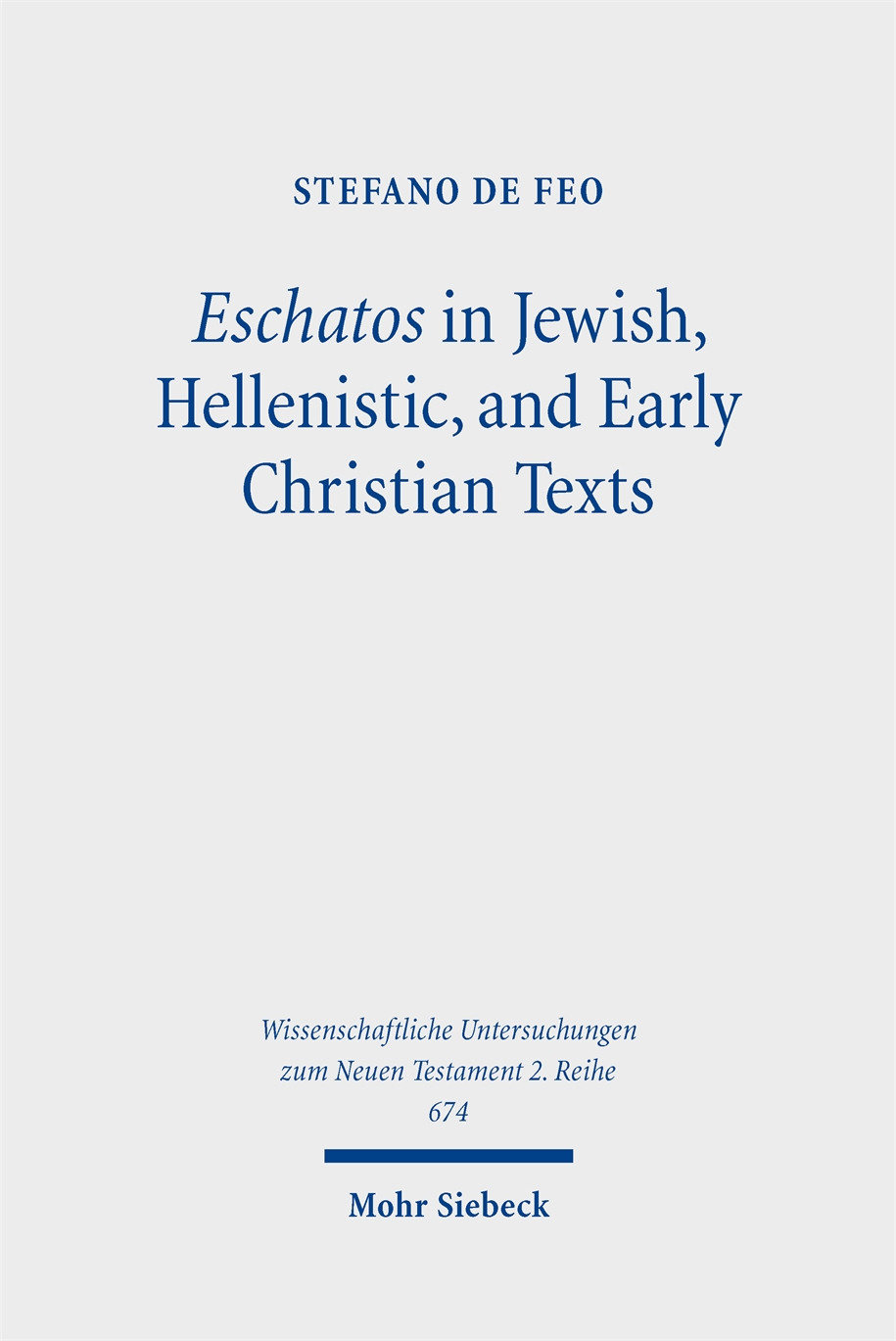 Eschatos in Jewish, Hellenistic, and Early Christian Texts
A Diachronic Analysis (3rd cent. BCE – 1st cent. CE)
 Der verborgene Vater im Matthausevangelium
Ein Beitrag zum Gottesbild und zur Gebetstheologie von Mt 6,1-6.16-18
Volume 617
 Intercession of Jesus in Hebrews
The Background and Nature of Jesus' Heavenly Intercession in the Epistle to the Hebrews
Volume 585


 Participation, Justification, and Conversion
Eastern Orthodox Interpretation of Paul and the Debate between Old and New Perspectives on Paul
Volume 442
 Temporal Dimensions of the Apocalypse
Ancient Christian Reception and Contemporary Hermeneutical Reflections

 Renaming Abraham’s Children
Election, Ethnicity, and the Interpretation of Scripture in Romans 9
Volume 421


 Die heiligen Propheten, eure Apostel und ich
Metatextuelle Studien zum zweiten Petrusbrief
Volume 300
 Paul’s Inclusive Ethic
Resolving Community Conflicts and Promoting Mission in Romans 14-15
Volume 252
 From Messiah to Preexistent Son
Jesus' Self-Consciousness and Early Christian Exegesis of Messianic Psalms
Volume 192
 The Colossian Hymn in Context
An Exegesis in Light of Jewish and Greco-Roman Hymnic and Epistolary Conventions
Volume 228
 Forgiveness as a Hermeneutical Key to the Gospel of Matthew
An Exegetical Investigation of the ?f??µ? Logia in the Matthean Gospel


 The Strength Needed to Enter the Kingdom of God
An Exegetical and Theological Study of Luke 16:16 in Context
Volume 485


Similar Books


 Apocrypha, Magic, Liturgy
The Multiple Identities of Coptic Prayers in Late Antique and Early Islamic Egypt
 Athanasius of Alexandria, Epistula ad episcopos Aegypti et Libyae
Old Slavonic Version and English Translation
Volume 261



 Contesting Labeled Identities
The Sociology of Gentilics in Biblical and Northwest Semitic Literature
 Cyril of Alexandria’s Christological Exegesis
Explorations of Partitive Exegesis in the Dialogues on the Trinity
Volume 70
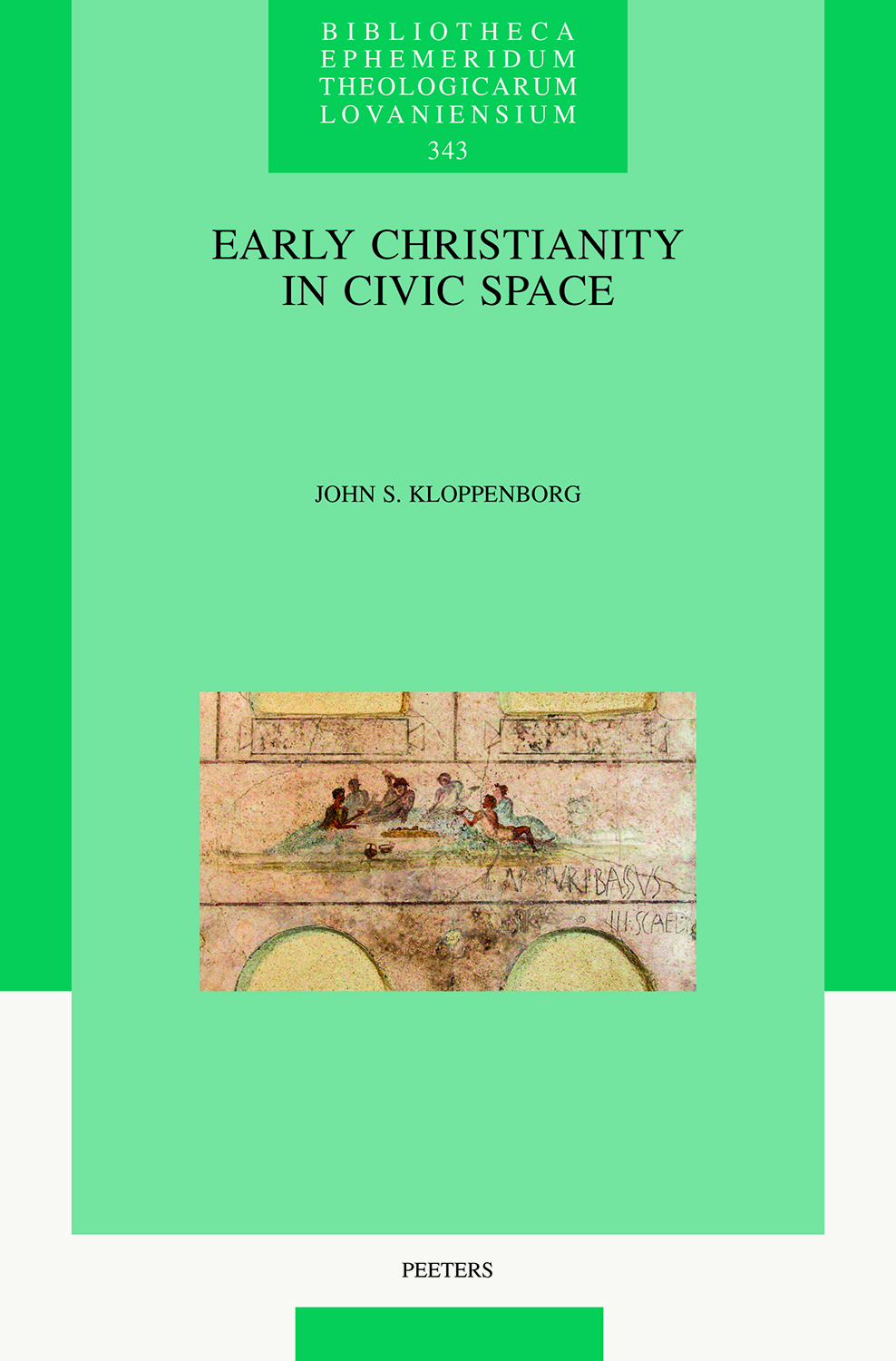

 Epiphanies of the Divine in the Septuagint and the New Testament
Fifth International Symposium of the Corpus Judaeo-Hellenisticum Novi Testamenti (CJHNT), 14-17 May 2015, Nottingham


 Extracanonical Traditions and the Holy Land
Texts, Rituals, and Material Culture in Late Antique Palestine
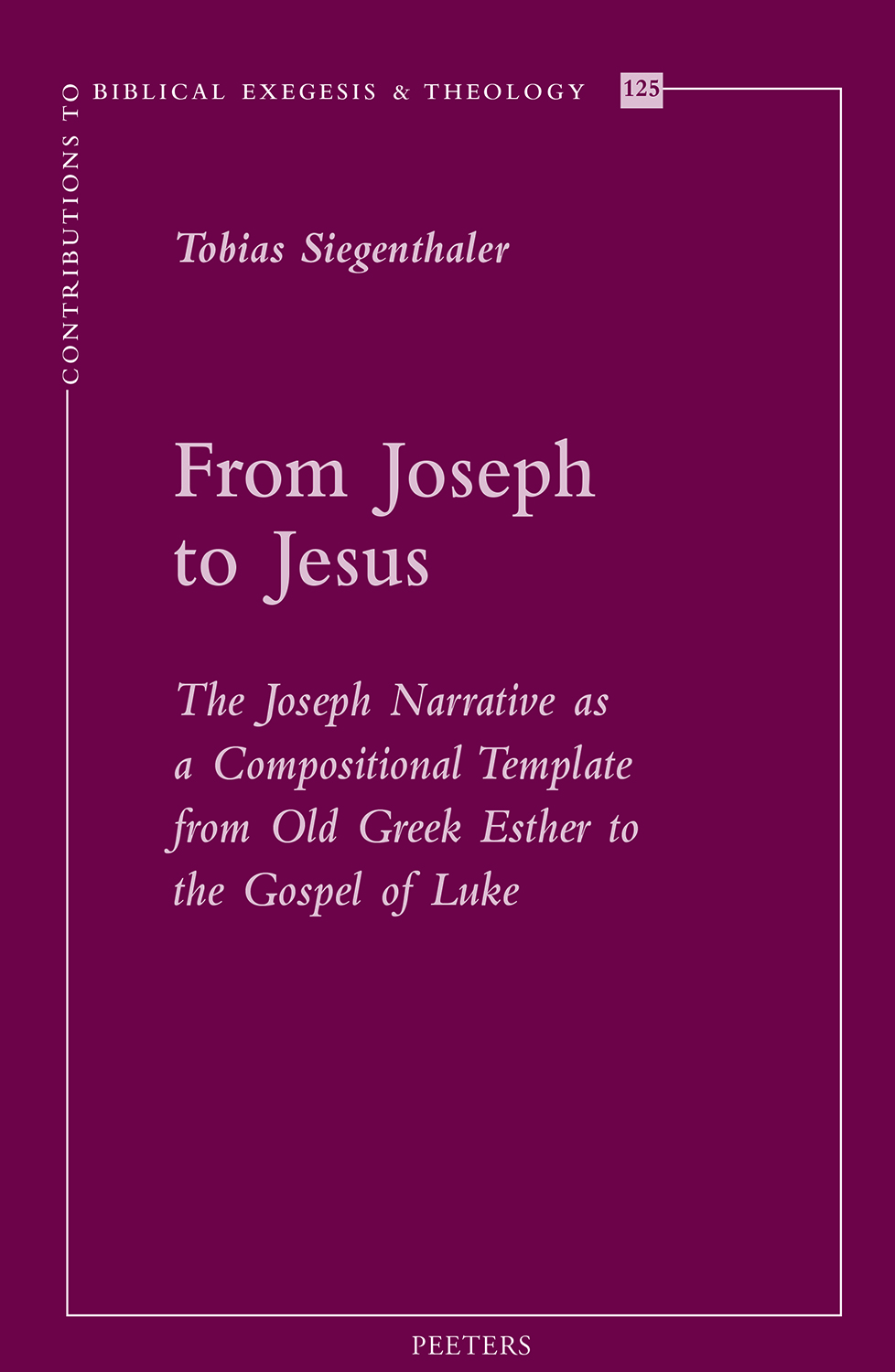 From Joseph to Jesus
The Joseph Narrative as a Compositional Template from Old Greek Esther to the Gospel of Luke
Volume 125





 Nicholas of Lyra’s Commentaries on the Gospels of Matthew and Luke
Franciscan Exegesis in a Time of Crisis
 Paradise Lost in Transmission
The Return to Eden in the Apocalypse of Peter within Its Ethiopic and Early Christian Contexts



 Punning in Odd or Elegant Constructions in Jeremiah
The Convergence of Linguistics, Rhetoric, and Textuality in the Hebrew Text of Jeremiah

 Reformed Covenantal Eudaimonism
Wilhelmus à Brakel (1635–1711) on Highest Good, Virtue, and Law
Volume 87