Der altturkische Kommentar zum Vimalakirtinirdesa-Sutra
by Y. Kasai

Paperback (Published)
(December 2011)
ISBN: 9782503541570
Price: $88.00
On back order
The book is the first edition of the Old Turkish commentary on the Vimalaki-rtinirdes’a-Su-tra. All fragments that were identified belonging to this commentary are now preserved in the Berlin Turfan Collection. The relevant commentary may have been based on a Chinese text, whose author was a representative of the Tiantai school. However, some lines in the Old Turkish version are the additions of the Uyghur translator or, more specifically, author and clearly show the strong influence of the Yoga-ca-ra school, which was then studied with keen interest in Dunhuang, the neighbouring city of Turfan. This fact indicates the close relationship between this Uyghur author and the Buddhism in Dunhuang. Moreover, the Old Turkish version of the Vimalaki-rtinirdes’a-Su-tra (published by Peter Zieme as Berliner Turfantexte XX) is preserved. The comparison between these two texts shows, however, that both texts were independently translated into Old Turkish.
The book is the first edition of the Old Turkish commentary on the Vimalaki-rtinirdes’a-Su-tra. All fragments that were identified belonging to this commentary are now preserved in the Berlin Turfan Collection. The relevant commentary may have been based on a Chinese text, whose author was a representative of the Tiantai school. However, some lines in the Old Turkish version are the additions of the Uyghur translator or, more specifically, author and clearly show the strong influence of the Yoga-ca-ra school, which was then studied with keen interest in Dunhuang, the neighbouring city of Turfan. This fact indicates the close relationship between this Uyghur author and the Buddhism in Dunhuang. Moreover, the Old Turkish version of the Vimalaki-rtinirdes’a-Su-tra (published by Peter Zieme as Berliner Turfantexte XX) is preserved. The comparison between these two texts shows, however, that both texts were independently translated into Old Turkish.
- By (author) Y. Kasai
Other Titles in this Series


 A Sogdian Version of the Mahāyāna-Mahāparinirvāṇasūtra in Pustaka Format
Fragments from the Berlin Turfan Collection and the Ōtani Collection Kyōto
Volume 53
 Hymns in Honour of the Hierarchy and Community, Installation Hymns and Hymns in Honour of Church Leaders and Patrons
Middle Persian and Parthian Hymns in the Turfan Collection
Volume 40
 Avalokitesvara-Sutras
Edition altuigurischer Ubersetzungen nach Fragmenten aus Turfan und Dunhuang
Volume 50


 The Berlin Chinese Text U 5335 Written in Uighur Script
A Reconstruction of the Inherited Uighur Pronunciation of Chinese
Volume 34


 Buddhistische Erzahlungen aus dem alten Zentralasien
Edition der altuigurischen Dasakarmapathavadanamala
Volume 37


Similar Books

 Exploring Himalayan Cultural and Textual Heritage
The Legacy and Impact of René Nebesky-Wojkowitz
Volume 35

 Seeking Wisdom, Embracing Compassion
A Philokalic Commentary on Tsong kha pa’s ‘Great Treatise’
Volume 11


 A Sogdian Version of the Mahāyāna-Mahāparinirvāṇasūtra in Pustaka Format
Fragments from the Berlin Turfan Collection and the Ōtani Collection Kyōto
Volume 53

 Economic Trends in China During the Age of Confucius (1000–250 BC)
The Archaeological Evidence
Volume 10


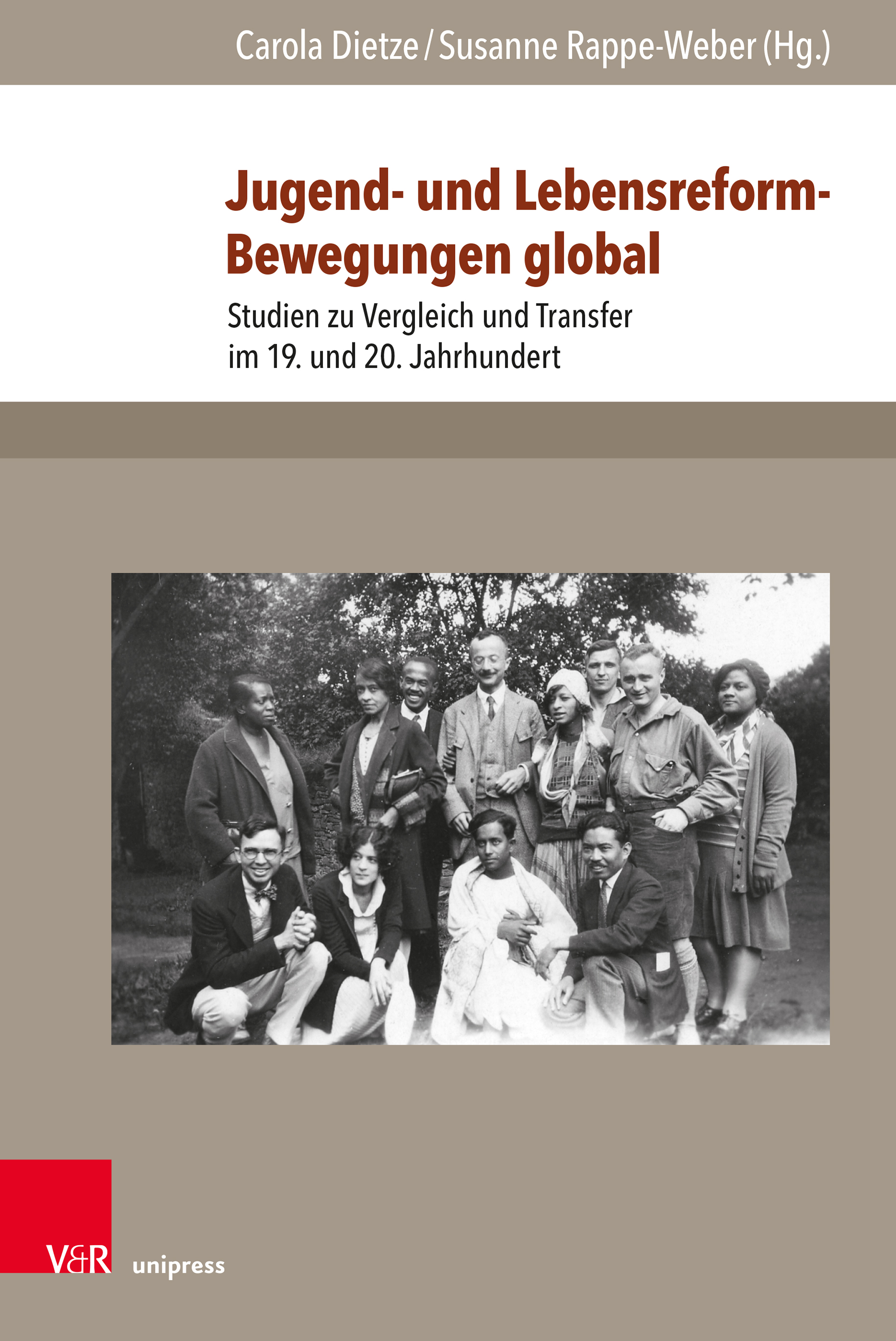 Jugend- und Lebensreform-Bewegungen global
Studien zu Vergleich und Transfer im 19. und 20. Jahrhundert


 Gender in Gandharan Art
Representations and Interactions in the Buddhist Context (1st-4th centuries CE)

 Kings of Cities and Rulers of the Steppes
Representations of Kingship in Pre-Islamic Central Asia
Volume 22
 Liberating the Repressed Self among Contemporary Chinese
A Theoretical Study Involving Tu Weiming and Jürgen Moltmann
Volume 41


 Reflection on the Word and Meaning
A Critical Edition and Translation of Ratnasrijnana's Sabdarthacinta with his Sabdarthacintavivrti 1.16-2.47
Volume 11


 The Lizhi 荔枝 (Lychee) in Chinese Literature
Translation of Chinese Sources by Michael J. Hagerty. With an introduction and edited by Hartmut Walravens
Volume 66