
Zwischen Synoptikern und Gnosis – ein viertes Evangelium
Studien zum Johannesevangelium und zur Gnosis
By (author) Roland Bergmeier

Hardback (Published)
(March 2015)
ISBN: 9783525593660
6.34 x 9.33 inches
Price: $99.00
In stock
Das Verhältnis des vierten Evangeliums zu den Synoptikern.
English summary: In this volume Roland Bergmeier gathers his studies on the Gospel of John and on Gnosis. He looks at the relationship between the temporal and textual nature of this Gospel and the Synoptics and Gnosis. Two basic questions occupy researchers on the Gospel of John: What is the relationship between the fourth Gospel and the Synoptics and what is its relationship to the Gnosis of late antiquity? The hypotheses developed and defended by Roland Bergmeier in this volume attempt to connect these two questions. He answers the question of the literary and textual nature by offering his theory that the three Synoptics, steeped as they are in Old Testament and Jewish traditions, form the fundamental matrix of the Gospel of John. The breach in the gnostic perception of the world was unknown to him. German description: Zwei grundlegende Fragen der johanneischen Forschung drangen sich dem Exegeten immer wieder auf: Wie ist das Verhaltnis des vierten Evangeliums zu den Synoptikern, wie das zur spatantiken Gnosis zu bestimmen? Die These, die Roland Bergmeier entwickelt und zu verteidigen versucht, setzt beide Fragen- und Themenfelder zueinander in Beziehung. Von der Gnosis ist das Johannesevangelium, typologisch und inhaltlich betrachtet, noch nicht beruhrt. Das hat auch historische Grunde. Wohl war 1Tim 6,20 fur den Bischof Irenaus von Lyon Anlass und Grundlage, die Haresien, die er beschrieb, Gnosis zu nennen und als gnostische Irrlehre zu brandmarken, aber weder die Stelle selbst noch die Pastoralbriefe insgesamt belegen schon einen gnostischen Zusammenhang oder Hintergrund. Literarisch betrachtet steht Johannes uberdies, mehr als viele glauben wollten, in nachprufbarem Kontakt mit den drei Synoptikern, die er auf ihm ganz eigene Weise weiterentwickelt zu einem vierten Evangelium. In diesem Sinn ist das Evangelium zwar kein synoptisches mehr, tragt aber auch noch keine gnostischen oder auch antignostischen Zuge. Beispielhaft fur das Verhaltnis zu den Synoptikern stehen Untersuchungen wie die zur Rede vom Kommen zu Jesus oder zum johanneischen Zeugnisthema. Die gnostischen Studien betreffen Fragen zu Dualismus und Eschatologie, zur epochalen Bedeutung valentinianischer Heilsauffassung, aber auch zur inhaltlichen Veranderung des Johanneischen, wenn es in den Strudel gnostischer Auslegung gerat. Im grossen Streit um das Verstandnis des Logospsalms von Joh 1,1-18 kommt der religionsgeschichtlichen Ortsbestimmung der fruhjudischen Weisheit grundlegende Bedeutung zu. Sie weist zwar Verbindung zu spatantiken mythischen Themen auf, gehort aber nicht einem zusammenhangenden Mythos an, zu dessen tragender Figur sie allererst in ihrer gnostischen Metamorphose umgestaltet wird.
Dr. theol. Roland Bergmeier ist evangelischer Religionslehre und Mitglied der Studiorum Novi Testamenti Societas (SNTS).
- By (author) Roland Bergmeier
Other Titles in this Series
 Allegorie – Metapher – Mythos – Schrift
Beiträge zur religiösen Sprache im Neuen Testament und in seiner Umwelt
 Montanistische Orakel und kirchliche Opposition
Der frühe Streit zwischen den phrygischen »neuen Propheten« und dem Autor der vorepiphanischen Quelle als biblische Wirkungsgeschichte des 2. Jh. n.Chr
 Allgegenwärtiger Konflikt im Matthäusevangelium
Exegetische und sozialpsychologische Analyse der Konfliktgeschichte
 »If Christ has not been raised …«
Studies on the Reception of the Resurrection Stories and the Belief in the Resurrection in the Early Church
 Sprachbilder und Bildsprache
Studien zur Kontextualisierung biblischer Texte. Festschrift für Max Küchler zum 75. Geburtstag
 Frühes Christentum und Religionsgeschichtliche Schule
Festschrift zum 65. Geburtstag von Gerd Lüdemann
 The ‘New Testament’ as a Polemical Tool
Studies in Ancient Christian Anti-Jewish Rhetoric and Beliefs

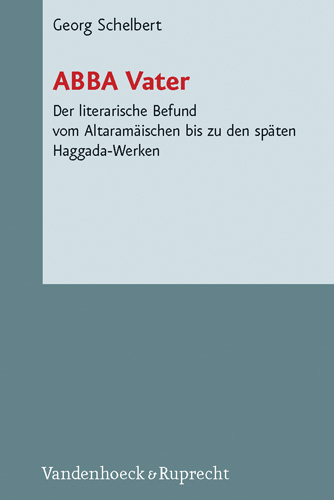 ABBA Vater
Der literarische Befund vom Altaramäischen bis zu den späten Midrasch- und Haggada-Werken in Auseinandersetzung mit den Thesen von Joachim Jeremias
 “Montanism” in the Roman World
The New Prophecy Movement from Historical, Sociological, and Ecclesiological Perspectives. Festschrift for William Tabbernee on the Occasion of His 80th Birthday

 Idumea and the Idumeans
An Oriental Ethnos at the Crossroads of Levantine Cultures in Hellenistic and Roman Times
 Asceticism and Exegesis in Early Christianity
The Reception of New Testament Texts in Ancient Ascetic Discourses
 Paulus als Briefroman erzählt
Studien zum antiken Briefroman und seiner christlichen Rezeption in den Pastoralbriefen


 The Great Controversy
The Individual’s Struggle Between Good and Evil in the Testaments of the Twelve Patriarchs and in their Jewish and Christian Contexts


Similar Books


 Apocrypha, Magic, Liturgy
The Multiple Identities of Coptic Prayers in Late Antique and Early Islamic Egypt
 Athanasius of Alexandria, Epistula ad episcopos Aegypti et Libyae
Old Slavonic Version and English Translation
Volume 261



 Contesting Labeled Identities
The Sociology of Gentilics in Biblical and Northwest Semitic Literature
 Cyril of Alexandria’s Christological Exegesis
Explorations of Partitive Exegesis in the Dialogues on the Trinity
Volume 70


 Epiphanies of the Divine in the Septuagint and the New Testament
Fifth International Symposium of the Corpus Judaeo-Hellenisticum Novi Testamenti (CJHNT), 14-17 May 2015, Nottingham


 Extracanonical Traditions and the Holy Land
Texts, Rituals, and Material Culture in Late Antique Palestine
 From Joseph to Jesus
The Joseph Narrative as a Compositional Template from Old Greek Esther to the Gospel of Luke
Volume 125





 Nicholas of Lyra’s Commentaries on the Gospels of Matthew and Luke
Franciscan Exegesis in a Time of Crisis
 Paradise Lost in Transmission
The Return to Eden in the Apocalypse of Peter within Its Ethiopic and Early Christian Contexts




 Punning in Odd or Elegant Constructions in Jeremiah
The Convergence of Linguistics, Rhetoric, and Textuality in the Hebrew Text of Jeremiah


 Reformed Covenantal Eudaimonism
Wilhelmus à Brakel (1635–1711) on Highest Good, Virtue, and Law
Volume 87