
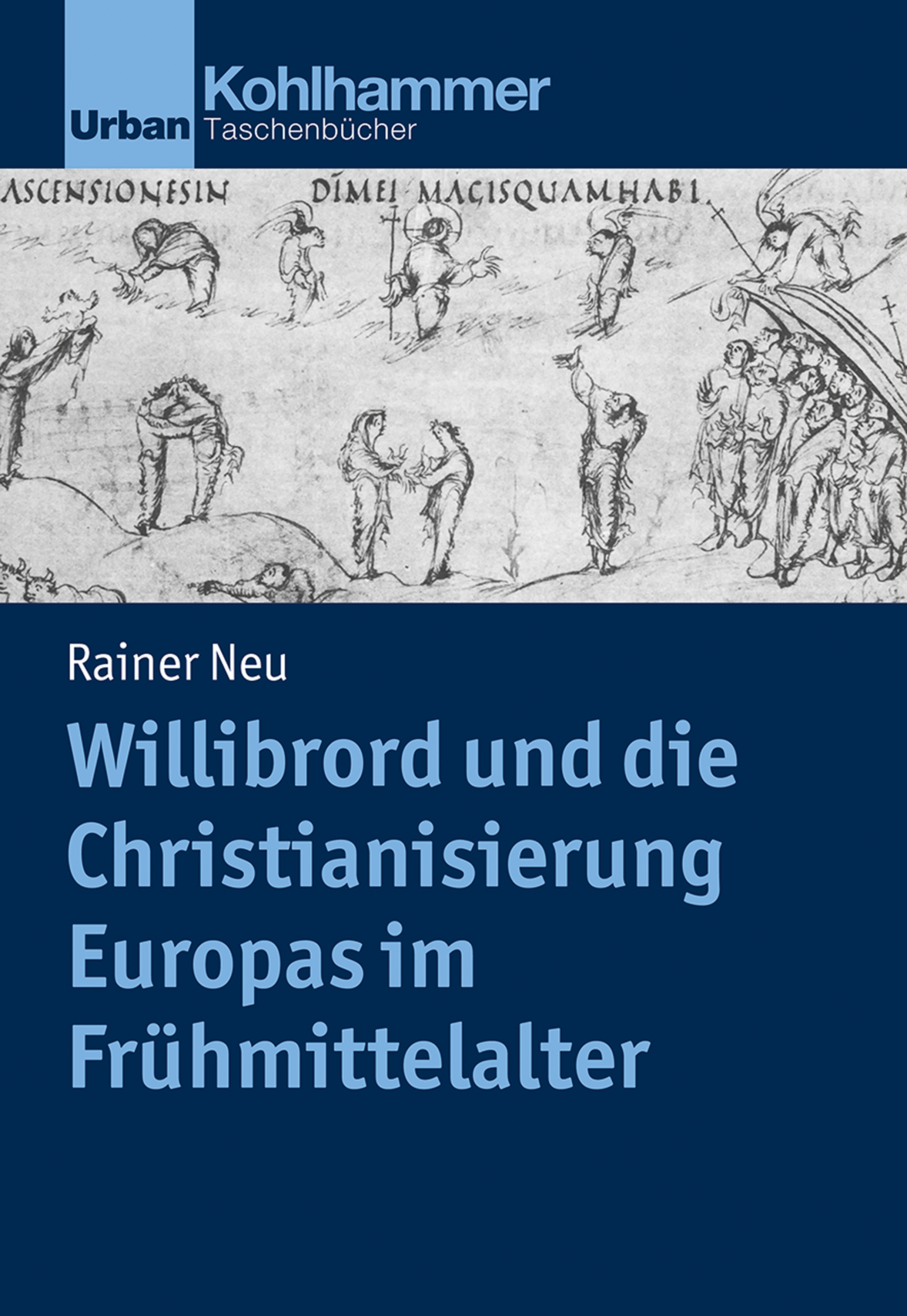
Willibrord und die Christianisierung Europas im Frühmittelalter
by Rainer Neu
Paperback (Published)
(July 2021)
ISBN: 9783170396463
5.51 x 7.99 inches
Price: $34.00
In stock
English summary: The transition from antiquity to the Middle Ages is still an enigmatic period in history. Too few documents from the time have survived. It was during this period, however, that the foundations were laid for the cultural and political entity we now call Europe. The transmitters of cultural values during those centuries accomplished a double feat: they saved the heritage of Greco-Roman antiquity from its final disappearance and, along with the new elements of the Judeo-Christian religion, passed it on to the fragmented and ?barbaric= peoples of the Celts and Germanic tribes. This cultural transfer was possible because the heritage of antiquity had survived on the extreme edge of Europe, of all places, in a region that had never been occupied by the Romans: in Ireland. As a result of the Christianization of Ireland in the fourth century, Greco-Roman culture also made its way from the Mediterranean via Gaul to the ?Emerald Isle= and took root there in the monasteries, before the Roman Empire collapsed into chaos. From the end of the sixth century, Irish monks, later followed by Anglo-Saxon ones, also migrated to the continent and spread the Christian faith and ancient learning among the newly gathering tribes of Gaul and Germania. Something unique and novel emerged out of the ruins of the age of migration: Europe. One of the men who stood out from the darkness of these centuries was Willibrord, who later became known as the ?Apostle of the Netherlands=. Only a few contemporary documents about his life and work have survived, and it is scarcely possible to obtain a well-rounded picture of his biography. However, a few highlights can provide glimpses into the enigmatic period in which the last of the Germanic tribes converted to Christianity, the advance of Islam ended and important foundations for Europe were laid. On the basis of detailed source research, Rainer Neu traces the life of Willibrord and his significance for the development of the Christian West. German description: Der Ubergang vom Altertum zum Mittelalter ist nach wie vor eine ratselhafte Epoche unserer Geschichte. Zu wenige Dokumente aus dieser Phase sind erhalten geblieben. Doch es wurden in dieser Zeit die Fundamente jenes kulturellen und politischen Gebildes gelegt, das wir heute Europa nennen. Die Kulturtrager dieser Jahrhunderte vollbringen eine doppelte Leistung: Sie retten das Erbe der griechisch-romischen Antike vor dem endgultigen Verschwinden und uberbringen es zusammen mit dem Neuen der judisch-christlichen Religion den zersplitterten und “barbarischen” Volkern der Kelten und Germanen. Dieser Kulturtransfer wurde moglich, weil das antike Erbe ausgerechnet am aussersten Rand Europas, der nie von den Romern okkupiert wurde, uberlebt hatte: in Irland. Als Folge der Christianisierung Irlands im 4. Jahrhundert war auch die griechisch-romische Kultur aus dem Mittelmeerraum uber Gallien auf die “grune Insel” gekommen und hatte sich dort in den Klostern festgesetzt, ehe das Romische Reich ins Chaos taumelte. Seit dem ausgehenden 6. Jahrhundert wanderten irische Monche, spater gefolgt von angelsachsischen, auch auf den Kontinent aus und verbreiteten christlichen Glauben und antike Bildung unter den sich neu formierenden Volkern Galliens und Germaniens. Aus den Trummern der Volkerwanderungszeit entstand etwas einmalig Neues: Europa. Einer dieser Manner, die aus dem Dunkel dieser Jahrhunderte hervorragen, ist Willibrord, der spater als “Apostel der Niederlande” bekannt wurde. Auch uber sein Leben und Wirken sind nur wenige zeitgenossische Dokumente erhalten geblieben und wir durfen nicht erwarten, von ihm ein abgerundetes Lebensbild entwerfen zu konnen. Aber Schlaglichter werden uns Einblicke in jene ratselhafte Zeit gewahren, in der sich die letzten germanischen Volker dem Christentum zuwandten, der Vormarsch des Islam endete und wichtige Grundlagen Europas gelegt wurden. Basierend auf detaillierter Quellenarbeit zeichnet R. Neu den Lebensweg Willibrords und seine Bedeutung fur das Werden eines Christlichen Abendlandes nach.
English summary: The transition from antiquity to the Middle Ages is still an enigmatic period in history. Too few documents from the time have survived. It was during this period, however, that the foundations were laid for the cultural and political entity we now call Europe. The transmitters of cultural values during those centuries accomplished a double feat: they saved the heritage of Greco-Roman antiquity from its final disappearance and, along with the new elements of the Judeo-Christian religion, passed it on to the fragmented and ?barbaric= peoples of the Celts and Germanic tribes. This cultural transfer was possible because the heritage of antiquity had survived on the extreme edge of Europe, of all places, in a region that had never been occupied by the Romans: in Ireland. As a result of the Christianization of Ireland in the fourth century, Greco-Roman culture also made its way from the Mediterranean via Gaul to the ?Emerald Isle= and took root there in the monasteries, before the Roman Empire collapsed into chaos. From the end of the sixth century, Irish monks, later followed by Anglo-Saxon ones, also migrated to the continent and spread the Christian faith and ancient learning among the newly gathering tribes of Gaul and Germania. Something unique and novel emerged out of the ruins of the age of migration: Europe. One of the men who stood out from the darkness of these centuries was Willibrord, who later became known as the ?Apostle of the Netherlands=. Only a few contemporary documents about his life and work have survived, and it is scarcely possible to obtain a well-rounded picture of his biography. However, a few highlights can provide glimpses into the enigmatic period in which the last of the Germanic tribes converted to Christianity, the advance of Islam ended and important foundations for Europe were laid. On the basis of detailed source research, Rainer Neu traces the life of Willibrord and his significance for the development of the Christian West. German description: Der Ubergang vom Altertum zum Mittelalter ist nach wie vor eine ratselhafte Epoche unserer Geschichte. Zu wenige Dokumente aus dieser Phase sind erhalten geblieben. Doch es wurden in dieser Zeit die Fundamente jenes kulturellen und politischen Gebildes gelegt, das wir heute Europa nennen. Die Kulturtrager dieser Jahrhunderte vollbringen eine doppelte Leistung: Sie retten das Erbe der griechisch-romischen Antike vor dem endgultigen Verschwinden und uberbringen es zusammen mit dem Neuen der judisch-christlichen Religion den zersplitterten und “barbarischen” Volkern der Kelten und Germanen. Dieser Kulturtransfer wurde moglich, weil das antike Erbe ausgerechnet am aussersten Rand Europas, der nie von den Romern okkupiert wurde, uberlebt hatte: in Irland. Als Folge der Christianisierung Irlands im 4. Jahrhundert war auch die griechisch-romische Kultur aus dem Mittelmeerraum uber Gallien auf die “grune Insel” gekommen und hatte sich dort in den Klostern festgesetzt, ehe das Romische Reich ins Chaos taumelte. Seit dem ausgehenden 6. Jahrhundert wanderten irische Monche, spater gefolgt von angelsachsischen, auch auf den Kontinent aus und verbreiteten christlichen Glauben und antike Bildung unter den sich neu formierenden Volkern Galliens und Germaniens. Aus den Trummern der Volkerwanderungszeit entstand etwas einmalig Neues: Europa. Einer dieser Manner, die aus dem Dunkel dieser Jahrhunderte hervorragen, ist Willibrord, der spater als “Apostel der Niederlande” bekannt wurde. Auch uber sein Leben und Wirken sind nur wenige zeitgenossische Dokumente erhalten geblieben und wir durfen nicht erwarten, von ihm ein abgerundetes Lebensbild entwerfen zu konnen. Aber Schlaglichter werden uns Einblicke in jene ratselhafte Zeit gewahren, in der sich die letzten germanischen Volker dem Christentum zuwandten, der Vormarsch des Islam endete und wichtige Grundlagen Europas gelegt wurden. Basierend auf detaillierter Quellenarbeit zeichnet R. Neu den Lebensweg Willibrords und seine Bedeutung fur das Werden eines Christlichen Abendlandes nach.
- By (author) Rainer Neu
Other Titles in this Series





Similar Books

 A Companion to Christianity and Sport in Europe and North America (19th-21st centuries)
Volume 1: Western and Eastern Europe
 A Connecting Polemic in the Medieval Mediterranean
The Correspondence of Leo III and ʿUmar II
Volume 6





 Ars Prophetica
Theology in the Poetry of Twentieth-Century Hebrew Poets Avraham Halfi, Shin Shalom, Amir Gilboa, and T. Carmi
 As Messianism Turns to Heresy
The Regenstein Chair Lectures On Lurianic Kabbalah and Shabbatai Tzevi at Hebrew Union College - Cincinnati


 Creating the Woman in Antiquity
Proceedings of the 16th Melammu Workshop, Innsbruck, 2–3 June 2022
Volume 13
 Cultic Kisses
Fruitful Encounters Between Deities and Humans. Festschrift for Angelika Berlejung on the Occasion of Her 65th Birthday
 De/colonizing Theologies
Glocal Histories, Contemporary Challenges, Theoretical Reflections
Volume 4
 Drunk the Potion, No Whit Charmed
The Doctrine of Pure and Perfect Souls from Iamblichus to Damascius






 Extracanonical Traditions and the Holy Land
Texts, Rituals, and Material Culture in Late Antique Palestine
 Fear, Fear of God, God-Fearers
Philological and Historical Perspectives on the World of Ancient Judaism and Christianity


 Gender and Iconography in Antiquity
Femininities, Masculinities, Ambiguities, and Beyond in the Ancient Levant, Near East, and Mediterranean