
The Quest for the Memory of Jesus
a Viable Path or a Dead End?
by T. Havukainen
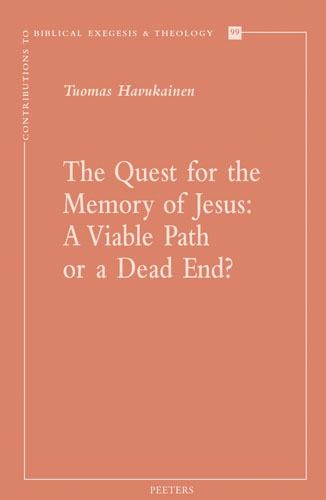
This study is focused on the active international field of study in which various theories of memory (e.g. social/collective memory and individual memory) and ancient media studies (e.g. study of oral tradition and history) are applied to historical Jesus research. The main purpose of the monograph is to study whether the memory approach constitutes a coherent methodological school of thought. The dissertation discusses in what ways the memory approach distinguishes itself from earlier research and whether one can speak of a new beginning in historical Jesus research. A central focus of the study is the research-historical discussion on the nature and processes of the transmission of the Jesus traditions in early Christianity, which is a significant research problem for both earlier historical Jesus research and the memory approach.
This study is focused on the active international field of study in which various theories of memory (e.g. social/collective memory and individual memory) and ancient media studies (e.g. study of oral tradition and history) are applied to historical Jesus research. The main purpose of the monograph is to study whether the memory approach constitutes a coherent methodological school of thought. The dissertation discusses in what ways the memory approach distinguishes itself from earlier research and whether one can speak of a new beginning in historical Jesus research. A central focus of the study is the research-historical discussion on the nature and processes of the transmission of the Jesus traditions in early Christianity, which is a significant research problem for both earlier historical Jesus research and the memory approach.
- By (author) T Havukainen
Other Titles in this Series

 The Akedah Servant Complex
The Soteriological Linkage of Genesis 22 and Isaiah 53 in Ancient Jewish and Early Christian Writings
Volume 69
 In Spirit and Truth
An Exegetical Study of John 4:19-26 and a Theological Investigation of the Replacement Theme in the Fourth Gospel
Volume 46

 Synopsis of the Book of Esther
Masoretic Text, Old Greek, Alpha Text, Old Latin, Vulgate, Jewish Antiquities
 Prophecy after the Prophets?
The Contribution of the Dead Sea Scrolls to the Understanding of Biblical and Extra-Biblical Prophecy
Volume 52


 “With All Your Soul Fear the Lord” (Sir. 7:27)
Collected Essays on the Book of Ben Sira II
Volume 87



 Re-thinking the Death of Jesus
An Exegetical and Theological Study of Hilasmos and Agape in 1 John 2:1-2 and 4:7-10
Volume 73




 In the Footsteps of Sherlock Holmes
Studies in the Biblical Text in Honour of Anneli Aejmelaeus
Volume 72
 “If Christ is Preached as Raised from the Dead…”
Studies in Honour of Riemer Roukema on the Occasion of His Retirement
Volume 123


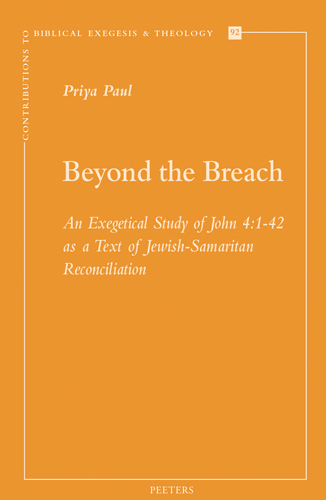 Beyond the Breach
An Exegetical Study of John 4:1-42 as a Text of Jewish-Samaritan Reconciliation
Volume 92

Similar Books


 Athanasius of Alexandria, Epistula ad episcopos Aegypti et Libyae
Old Slavonic Version and English Translation
Volume 261



 Contesting Labeled Identities
The Sociology of Gentilics in Biblical and Northwest Semitic Literature
 Cyril of Alexandria’s Christological Exegesis
Explorations of Partitive Exegesis in the Dialogues on the Trinity
Volume 70


 Epiphanies of the Divine in the Septuagint and the New Testament
Fifth International Symposium of the Corpus Judaeo-Hellenisticum Novi Testamenti (CJHNT), 14-17 May 2015, Nottingham


 Extracanonical Traditions and the Holy Land
Texts, Rituals, and Material Culture in Late Antique Palestine
 From Joseph to Jesus
The Joseph Narrative as a Compositional Template from Old Greek Esther to the Gospel of Luke
Volume 125





 Nicholas of Lyra’s Commentaries on the Gospels of Matthew and Luke
Franciscan Exegesis in a Time of Crisis
 Paradise Lost in Transmission
The Return to Eden in the Apocalypse of Peter within Its Ethiopic and Early Christian Contexts




 Punning in Odd or Elegant Constructions in Jeremiah
The Convergence of Linguistics, Rhetoric, and Textuality in the Hebrew Text of Jeremiah


 Reformed Covenantal Eudaimonism
Wilhelmus à Brakel (1635–1711) on Highest Good, Virtue, and Law
Volume 87
