
The Psalter. Book Three (Ps 73-89)
By (author) R. Meynet

The third book of the Psalter is considerably shorter than the first book and especially than the fifth book. Nevertheless, its seventeen psalms form a composition which is not at all inferior to that of the other two books. The general tone of the book is extremely dark. There are only complaints, supplications and anguished questions: “Why?”, “How long?” And the answers given to these questions do not seem to console the unfortunate. If they are in distress and anguish, it is their fault. They pay the price for their sins (Ps 78 & Ps 89). Having betrayed the covenant at the time of the exodus, having repeated it at the time of the Davidic monarchy, they are now left to the violence and oppression of their enemies. The voice of the Servant is heard crying out at the centre of the first book: “My God, my God, why have you forsaken me?” (Ps 22:2). However, Ps 22 does not end in the grave. The psalmist is saved from the lion’s mouth and can say: “I will recount your name to my brothers, and in the midst of the assembly I will praise you” (22:23) and even: “all the families of the nations will bow down before you” (22:28). Likewise, there are three psalms in the third book where praise resounds, each of them is found in a strategic position. At the centre of the first sequence of the initial section (Ps 75) with all his people the psalmist gives thanks seeing that the Lord is pronouncing judgment on the arrogant and he rejoices that soon he will be able to cut off their horns. At the centre of the central section (Ps 81), a fervent call to praise celebrating the exodus from Egypt precedes a lengthy speech by God promising new liberation from the present enemies and their conversion. Finally, at the centre of the first sequence of the final section, David in his misery and lament confirms the conversion of the Gentiles: “All the nations which you have made will come and will bow down to your face, O Lord, and will give glory to your name” (86:9). Like the servant in Ps 22, the people and their king had to pass through death so that the light of revelation could reach all the ends of the earth.
- By (author) R. Meynet
Other Titles in this Series


 La Paque du Seigneur
Passion et resurrection de Jesus dans les evangiles synoptiques. Troisieme edition revue
Volume 27


 Treatise on Biblical Rhetoric
Second Complete English Edition. Translation of the Third Revised and Enlarged Edition
Volume 52


Similar Books


 Athanasius of Alexandria, Epistula ad episcopos Aegypti et Libyae
Old Slavonic Version and English Translation
Volume 261


 Cyril of Alexandria’s Christological Exegesis
Explorations of Partitive Exegesis in the Dialogues on the Trinity
Volume 70


 Epiphanies of the Divine in the Septuagint and the New Testament
Fifth International Symposium of the Corpus Judaeo-Hellenisticum Novi Testamenti (CJHNT), 14-17 May 2015, Nottingham

 Extracanonical Traditions and the Holy Land
Texts, Rituals, and Material Culture in Late Antique Palestine
 From Joseph to Jesus
The Joseph Narrative as a Compositional Template from Old Greek Esther to the Gospel of Luke
Volume 125


 Paradise Lost in Transmission
The Return to Eden in the Apocalypse of Peter within Its Ethiopic and Early Christian Contexts



 Punning in Odd or Elegant Constructions in Jeremiah
The Convergence of Linguistics, Rhetoric, and Textuality in the Hebrew Text of Jeremiah

 Shame in the Worlds of the Hebrew Bible and Akkadian Texts
A Linguistic Study and Its Implications
Volume 33

 Tabernacle, Table, Ark, and Text
Richard of Saint Victor on the Interpretation of Scripture
Volume 67
 The Anglo-Norman Bible’s Books of Kings, a Critical Edition
(BL Royal 1 C III, fols 234r-274v)
Volume 37
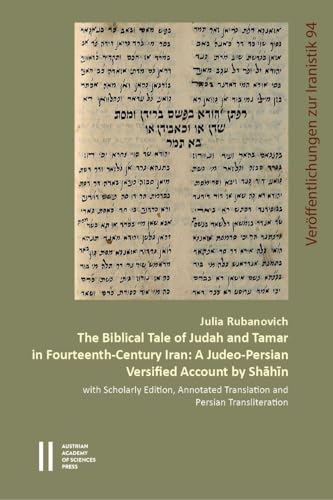 The Biblical Tale of Judah and Tamar in Fourteenth-Century Iran
A Judeo-Persian Versified Account by Shāhīn with Scholarly Edition, Annotated Translation and Persian Transliteration
Volume 94, 951
 The Body
Lived, Cultured, Adorned: Essays on Dress and the Body in the Bible and Ancient Near East in Honor of Nili S. Fox

 The Compositional History of the Book of Kings
An Analysis of the Evaluative Frameworks in 1 Kings 14–2 Kings 25
 The Discourse of Rites
Shaping and Reshaping the (Counter-)Priestly Rituals Conducted Outside the Tabernacle


