
The Heresy of the Brothers, a Heterodox Community in Sixteenth-Century Italy
By (author) Matteo Al Kalak

A study of one of the largest Italian heretical communities, that developed in the city of Modena in the sixteenth century.
Around the mid-sixteenth century, one of the largest Italian heterodox communities developed in Modena: the community of ‘Brothers’. At the beginning of the century, a flourishing humanistic tradition had inspired protests against the authority of the Church and had led many of the city’s prominent figures to sympathize with Luther and the Reformation. Over the following decades, such positions became more extreme: most of the ‘Brothers’ held radical convictions, ranging from belief in predestination to contestation of the Antichrist pope. In some cases, the ‘Brothers’ even went so far as to deny the value of baptism. This heterodox community in Modena created a hidden network for the free expression of its reformed faith. Within twenty years, however, the election of Pope Pius V (1566-1572) and the consolidation of the Holy Office led to a harsh campaign to disperse dissenters in the city. Despite the protection of illustrious members of the Roman Catholic hierarchy, the bishops of Modena, and the dukes of Ferrara, the Holy Office succeeded in repressing the community. The history of the ‘Brothers’ of Modena therefore provides a case study for understanding how the Inquisition influenced the balance of religious Italy, changing the face of the Peninsula forever.
- By (author) Matteo Al Kalak
Other Titles in this Series
 Careers and Opportunities at the Roman Curia, 1300-1500
A Socio-Economic History of Papal Administration
Volume 29
 Nature, Virtue, and the Boundaries of Encyclopaedic Knowledge
The Tropological Universe of Alexander Neckam (1157-1217)
Volume 13


 Mulieres Religiosae
Shaping Female Spiritual Authority in the Medieval and Early Modern Periods
Volume 12


 Gendered Identities in Bernard of Clairvaux’s ‘Sermons on the Song of Songs’
Performing the Bride
Volume 15

 Witchcraft, Superstition, and Observant Franciscan Preachers
Pastoral Approach and Intellectual Debate in Renaissance Milan
Volume 18
 Communities of Learning
Networks and the Shaping of Intellectual Identity in Europe, 1100-1500
Volume 9


 Confraternity, Mendicant Orders, and Salvation in the Middle Ages
The Contribution of the Hungarian Sources (c.1270-c.1530)
Volume 23


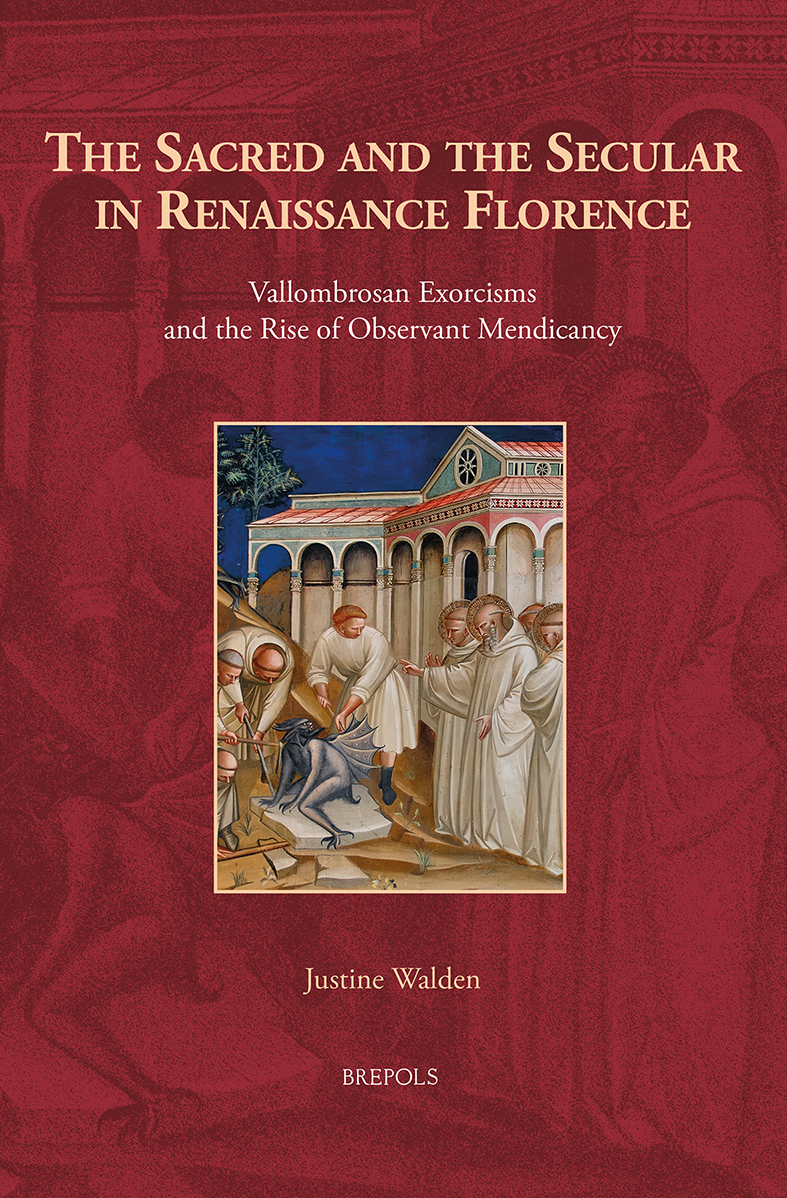 The Sacred and the Secular in Renaissance Florence
Vallombrosan Exorcisms and the Rise of Observant Mendicancy
Volume 31
 Orthodoxy and Controversy in Twelfth-Century Religious Discourse
Peter Lombard's 'Sentences' and the Development of Theology
Volume 8
Similar Books

 A Companion to Christianity and Sport in Europe and North America (19th-21st centuries)
Volume 1: Western and Eastern Europe
 A Connecting Polemic in the Medieval Mediterranean
The Correspondence of Leo III and ʿUmar II
Volume 6





 Ars Prophetica
Theology in the Poetry of Twentieth-Century Hebrew Poets Avraham Halfi, Shin Shalom, Amir Gilboa, and T. Carmi
 As Messianism Turns to Heresy
The Regenstein Chair Lectures On Lurianic Kabbalah and Shabbatai Tzevi at Hebrew Union College - Cincinnati
 Balthasar Caymox of Nuremberg
Early Modern German Print Publishers: Popular Prints of the Seventeenth Century


 Behind the Scenes of Medieval Roofs
An Overview of the Roofing Systems of Italian Churches
Volume 90


 Beyond Sovereign Courts
Agents and Practices in Early Modern Spanish and Habsburg Diplomacy
Volume 3


 Circulation, Use, Impact
The Consumption of Architectural Books in the Early Modern Eastern Adriatic
Volume 1



 Councils, Conflicts, Correspondence
Urban Diplomacy in Reval (Tallinn) and Lübeck (c. 1470–1570)
Volume 67
 Creating the Woman in Antiquity
Proceedings of the 16th Melammu Workshop, Innsbruck, 2–3 June 2022
Volume 13
 Cultic Kisses
Fruitful Encounters Between Deities and Humans. Festschrift for Angelika Berlejung on the Occasion of Her 65th Birthday
 De/colonizing Theologies
Glocal Histories, Contemporary Challenges, Theoretical Reflections
Volume 4

 Drunk the Potion, No Whit Charmed
The Doctrine of Pure and Perfect Souls from Iamblichus to Damascius
