
Sedulius Scottus, ‘Collectaneum in Apostolum: Ad Romanos’
By (author) M.C. Sloan
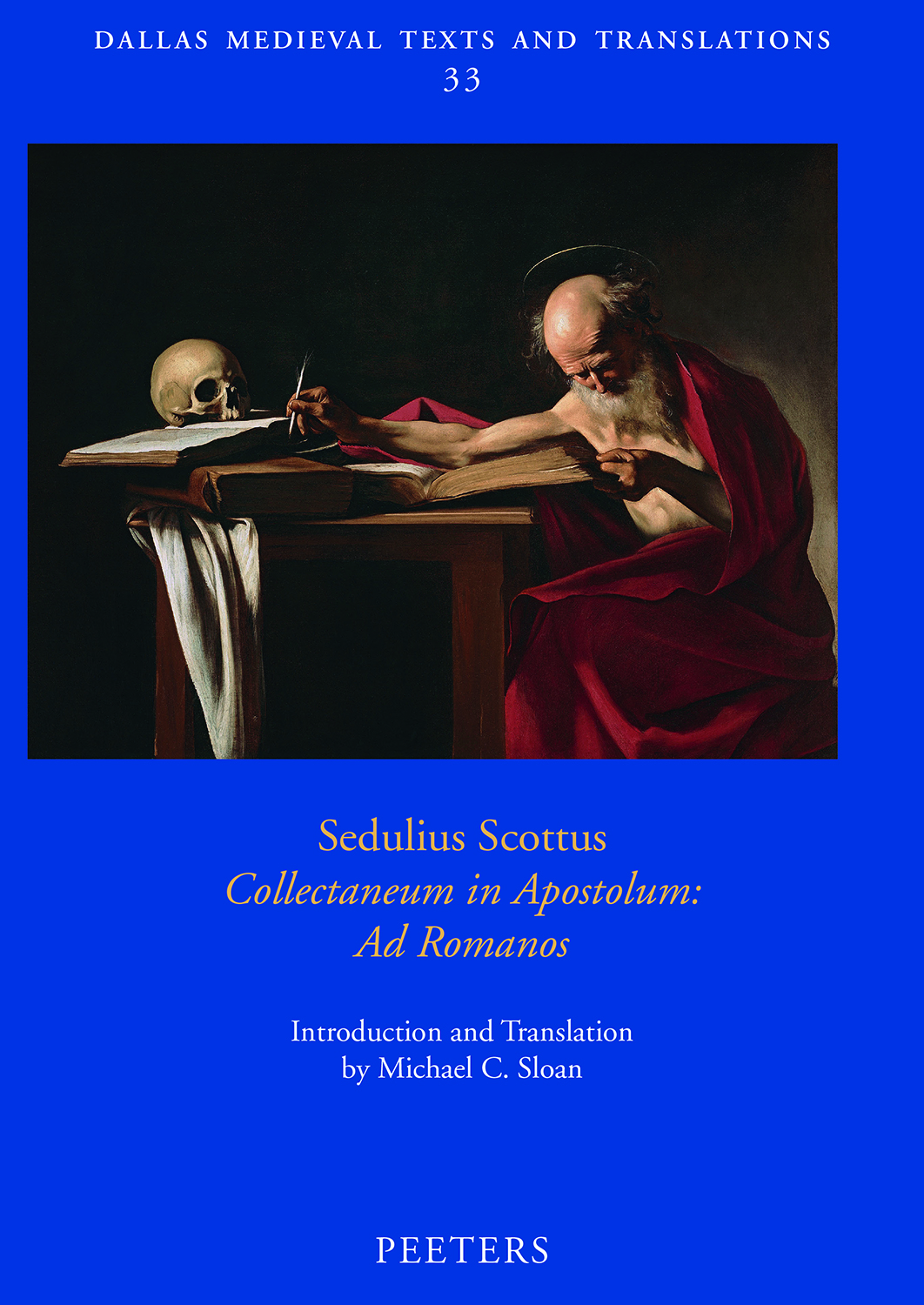
Paperback (Published)
(August 2026)
ISBN: 9789042956629
Price: $119.00
On back order
Sedulius Scottus (fl. 840–860), who moved from Ireland to Continental Europe, was a significant intellectual figure of the Carolingian age. Sedulius was a proto-humanist who served as the chief bard of Charles the Bald (d. 877), helped to form the genre in which Machiavelli flourished with <i>The Prince</i>, and advanced Pauline exegesis in a manner intentionally patterned after Servius’s commentaries on Vergil.
This book introduces and translates Sedulius’s commentary on Romans from his <i>Collectaneum in Apostolum</i>, his collection of commentaries on the letters attributed to Paul the Apostle. It offers the first translation of Sedulius’s commentary on Romans into any modern language. The translation is based on Hermann Josef Frede and Herbert Stanjek’s 1997 critical edition, published in the Vetus Latina series by Herder, which is reprinted here. The introduction outlines the historical context of the composition; explores Sedulius’s reception of preeminent sources, including Origen, Pelagius, Ambrosiaster, and Augustine; and examines his treatment of foremost theological issues including, among others, original sin and baptism. This work advances the discussions on Origen’s reception in the West, Pelagius’s standing in orthodox exegetical circles, and Sedulius’s contributions as one of the Irish <i>peregrini</i>, and offers insight into Carolingian-era exegetical practices. It highlights the differences between Sedulius and some of his more famous contemporaries, such as Alcuin, Rhabanus Maurus, Haimo of Auxerre, and John Scottus—namely, that Sedulius employs his own exegesis less often than these others, and yet shares many of their exegetical traits, such as a penchant for lists, numerology, and employing the three sacred languages.
- By (author) M.C. Sloan
Other Titles in this Series




 Paul of Venice, ‘Logica magna’: The Treatise on Insolubles
Edited with an Introduction, English Translation, and Commentary
Volume 27


 The Notory Art of Shorthand (Ars notoria notarie)
A Curious Chapter in the History of Writing in the West
Volume 20



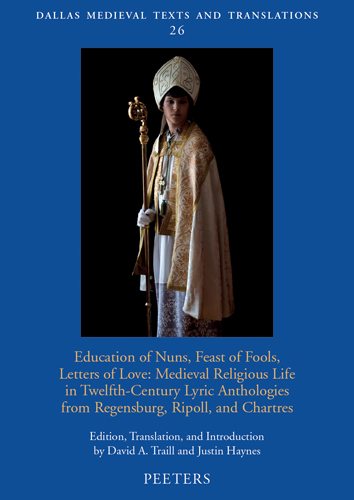 Education of Nuns, Feast of Fools, Letters of Love
Medieval Religious Life in Twelfth-Century Lyric Anthologies from Regensburg, Ripoll, and Chartres
Volume 26


 Robert Grosseteste at Munich
The Abbreviatio by Frater Andreas, O.F.M., of the Commentaries by Robert Grosseteste on the Pseudo-Dionysius
Volume 14

 A Thirteenth-Century Textbook of Mystical Theology at the University of Paris
The «Mystical Theology» of Dionysius the Aeropagite in Eriugena's Latin Translation with the Scholia translated by Anastasius the Librarian and Excerpts from Eriugena's «Periphyseon»
Volume 4




Similar Books
 «Solazoxa festa, stradolze e stracomplia»
Festschrift für Raymund Wilhelm zum 65. Geburtstag mit Beiträgen zu Diskurstraditionen und mittelalterlicher Philologie
Volume 249

 A Collaborative Tapestry in Honour of Shirley Ann Brown / Une fresque brodée en l’honneur de Shirley Ann Brown
The Bayeux Tapestry Seen by her Colleagues and Friends / La Tapisserie de Bayeux vue par ses collègues et amis
 A Companion to Christianity and Sport in Europe and North America (19th-21st centuries)
Volume 1: Western and Eastern Europe
 A Connecting Polemic in the Medieval Mediterranean
The Correspondence of Leo III and ʿUmar II
Volume 6








 Ars Prophetica
Theology in the Poetry of Twentieth-Century Hebrew Poets Avraham Halfi, Shin Shalom, Amir Gilboa, and T. Carmi
 As Messianism Turns to Heresy
The Regenstein Chair Lectures On Lurianic Kabbalah and Shabbatai Tzevi at Hebrew Union College - Cincinnati


 Behind the Scenes of Medieval Roofs
An Overview of the Roofing Systems of Italian Churches
Volume 90


 Cahiers de recherches médiévales et humanistes – Journal of Medieval and Humanistic Studies
Volume 51



 Creating the Woman in Antiquity
Proceedings of the 16th Melammu Workshop, Innsbruck, 2–3 June 2022
Volume 13
 Cultic Kisses
Fruitful Encounters Between Deities and Humans. Festschrift for Angelika Berlejung on the Occasion of Her 65th Birthday
 De/colonizing Theologies
Glocal Histories, Contemporary Challenges, Theoretical Reflections
Volume 4

 Drunk the Potion, No Whit Charmed
The Doctrine of Pure and Perfect Souls from Iamblichus to Damascius

