
Remember Amalek!
Vengeance, Zealotry, and Group Destruction in the Bible according to Philo, Pseudo-Philo, and Josephus
by Louis H. Feldman

Paperback (Published)
(October 2004)
ISBN: 9780878204632
5.98 x 9.02 inches
Price: $29.95
In stock
The divine command to exterminate Amalek–men, women, children and even animals who have no free will–is what in contemporary terms has been called genocide. This book explores how the earliest commentators wrestled with the issues involved in this divine command that an entire people must be eternally punished for the misdeeds of their ancestors.
The divine command to exterminate Amalek–men, women, children, and even animals who have no free will–is what in contemporary terms has been called genocide. Louis Feldman explores how the earliest systematic commentators on the Bible–the Hellenistic Jewish philosopher Philo in his many essays on biblical themes; the mysterious, still unclassified Pseudo-Philo in his Biblical Antiquities; the premier Jewish historian and polymath Josephus in his Jewish Antiquities; and the Rabbis in the Mishnah, Talmud, and other literature-wrestled with the issues involved in this divine command, especially its provision that an entire people must be eternally punished for the misdeeds of their ancestors. Feldman contextualizes his study of Amalek by considering how these ancient commentators relate to other cases where God commands the destruction of whole groups of people: the flood, the destruction of Sodom and Gomorrah, the plague of the first-born Egyptians, and the command to annihilate the Canaanites. He also studies accounts of mass destruction where there was no specific divine commandment-the annihilation of the Hivites because one of them raped Dinah, the annihilation of the nations of Sihon and Og, the complete destruction of the inhabitants of Jericho, and the extermination of the priests of Nob-as well as the challening issue of why God justifies Phinehas’s zealotry, which involved transgressing the law to kill a Jew and a non-Jew for their immorality. All of these biblical passages raise difficult questions and provide no simple answers. Feldman shows us how ancient commentators received and struggled with Amalek and other genocide passages: Psuedo-Philo had the fewest problems and is most insistent on interpreting the divine command literally, while Philo turned to allegory to resolve the tensions these passages raised with the principle that the innocent should not suffer for the sins of the guilty, and Josephus was concerned to counter the impression that Jews hate non-Jews. Feldman’s study exposes the deep roots of biblical reception in contemporary political and moral issues.
- By (author) Louis H. Feldman
Other Titles in this Series



 Modernism and Cultural Transfer
Gabriel Preil and the Tradition of Jewish Literary Bilingualism
Volume 10




 My Dear Daughter
Rabbi Benjamin Slonik and the Education of Jewish Women in Sixteenth-Century Poland
Volume 33


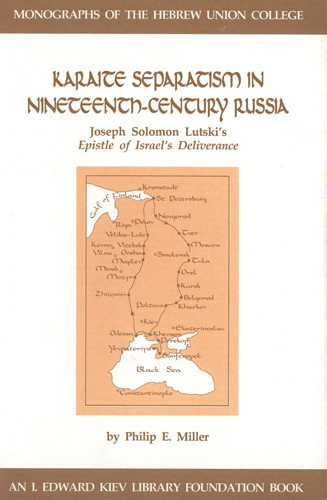 Karaite Separatism in Nineteenth-Century Russia
Joseph Solomon Lutski's Epistle of Israel's Deliverance
Volume 16




Similar Books


 Apocrypha, Magic, Liturgy
The Multiple Identities of Coptic Prayers in Late Antique and Early Islamic Egypt
 Athanasius of Alexandria, Epistula ad episcopos Aegypti et Libyae
Old Slavonic Version and English Translation
Volume 261



 Contesting Labeled Identities
The Sociology of Gentilics in Biblical and Northwest Semitic Literature
 Cyril of Alexandria’s Christological Exegesis
Explorations of Partitive Exegesis in the Dialogues on the Trinity
Volume 70


 Epiphanies of the Divine in the Septuagint and the New Testament
Fifth International Symposium of the Corpus Judaeo-Hellenisticum Novi Testamenti (CJHNT), 14-17 May 2015, Nottingham


 Extracanonical Traditions and the Holy Land
Texts, Rituals, and Material Culture in Late Antique Palestine
 From Joseph to Jesus
The Joseph Narrative as a Compositional Template from Old Greek Esther to the Gospel of Luke
Volume 125





 Nicholas of Lyra’s Commentaries on the Gospels of Matthew and Luke
Franciscan Exegesis in a Time of Crisis
 Paradise Lost in Transmission
The Return to Eden in the Apocalypse of Peter within Its Ethiopic and Early Christian Contexts




 Punning in Odd or Elegant Constructions in Jeremiah
The Convergence of Linguistics, Rhetoric, and Textuality in the Hebrew Text of Jeremiah


 Reformed Covenantal Eudaimonism
Wilhelmus à Brakel (1635–1711) on Highest Good, Virtue, and Law
Volume 87