
Mesopotamische Hemerologien und ihre gesellschaftliche Bedeutung
by Saki Kikuchi

In ancient Mesopotamia, days were interpreted as inherently positive or negative, which affected the results of activities or what happened on that day. This doctrine of essentially good and bad days was documented in a group of calendrical texts called “hemerologies” in modern terminology. Hemerologies determine whether a certain day is positive or negative. In addition, we have texts that ask about the appropriateness of a certain activity based on the quality of the day. These texts thus offered advice on everyday life about whether the desired action should be carried out or not on the day in question. – The aim of this work is to present a systematic presentation of hemerologies from Mesopotamia in the first millennium BC with thematic studies on various aspects. The study begins with a general overview of hemerologies in ancient Mesopotamia (Chapter 2): the terminology in modern scholarship, the divinatory tradition to which hemerologies belonged, as well as the sources and their temporal and geographical distribution. Chapter 3 presents the calendars that served as the basis for the temporal orientation of the prescribed activities of the hemerologies and of everyday life. Chapter 4 deals with the collective tables and compilations that are products of scholarly editorial work. On the one hand, their creation reflects a certain interest of the authors, which is a key to the use of hemerologies in practice. On the other hand, the active processing of the existing texts through compilation is important when considering the role of the hemerological corpus in the scholarly tradition and the question of standardization. Chapter 5 explains the logic and systematics by which a certain hemerological idea was associated with a specific calendar day. Chapter 6 examines how hemerologies were used in practice, based on the texts themselves, the archival context, and the texts that cite or refer to hemerologies (chapters 6.1-4). They provide information on the people who copied and studied hemerologies, as well as on the academic, political dimensions of hemerologies, while subsection 6.5 examines the social influence by comparing it with everyday texts. The last chapter presents the changes in the hemerological tradition in the last centuries of cuneiform culture and the influence of Mesopotamian hemerologies on later ancient cultures. The study is supplemented by editions of 14 selected hemerologies, hemerological compilations and relevant texts (transcription, transliteration, translation and commentary) that have not yet been published, have only been published in autographs or that update the known text with newly identified text representatives. The appendices provide a systematic overview of evaluated letters and royal inscriptions as well as dated everyday documents (marriage certificates, purchase documents) and requests for viewing sacrifices, which were used to examine the practical use of the hemerologies in Chapter 6.
- By (author) Saki Kikuchi
Other Titles in this Series
 The Ilia A Archive
The Babylonian Socio-economic Landscape as Mirrored in the Archive of a Priestly Family in the First Millennium BCE
Volume 34
 Explaining Disaster
Tradition and Transformation of the 'Catastrophe of Ibbi-Sin' in Babylonian Literature
Volume 13


 mu-zu an-za3-se3 kur-ur2-se3 he2-gal2
Altorientalistische Studien zu Ehren von Konrad Volk
Volume 17
 Kultur – Kontakt – Kultur
Beiträge anlässlich der 66. Rencontre Assyriologique Internationale in Frankfurt/Main und Mainz, 25.–29. Juli 2022
Volume 35
 ‘I Passed over Difficult Mountains’
Studies on the Ancient Near East in Honor of Mario Liverani
Volume 28
 Current Research in Early Mesopotamian Studies
Workshop Organized at the 65th Rencontre Assyriologique Internationale, Paris 2019
Volume 21
 Grenzuberschreitungen. Studien zur Kulturgeschichte des Alten Orients
Festschrift fur Hans Neumann zum 65. Geburtstag am 9. Mai 2018
Volume 5
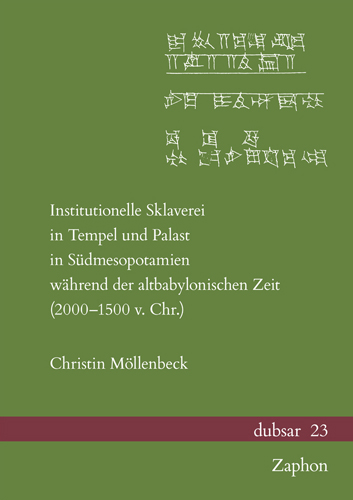 Institutionelle Sklaverei in Tempel und Palast in Sudmesopotamien wahrend der altbabylonischen Zeit
Volume 23
 Beitrage zur Kenntnis und Deutung altorientalischer Archivalien
Festschrift fur Helmut Freydank zum 80. Geburtstag
Volume 6
Similar Books




 Boğazköy Tablets in the Museum of Anatolian Civilizations (Bo 9032–Bo 9097)
Anadolu Medeniyetleri Müzesinde Bulunan Boğazköy Tabletleri (Bo 9032–Bo 9097)
Volume 4

 Exploring Gender Dynamics across the Ancient Near East
Collected Essays of Gender and Methodology in the Ancient Near East (GeMANE) 4 and 5
Volume 7

 Ḫattušaš utnē išḫameški
Hittite and Other Ancient Near Eastern Studies Presented to Piotr Taracha on the Occasion of His 65th Birthday
Kultur – Kontakt – Kultur
Beiträge anlässlich der 66. Rencontre Assyriologique Internationale in Frankfurt/Main und Mainz, 25.–29. Juli 2022
Volume 35
 Old Aramaic Inscriptions and their Contexts
An Epigraphic, Archaeological, and Historical Synthesis
Volume 63
 Politics, Peoples, and Polities in the Ancient Near East
Proceedings of the 69th Rencontre Assyriologique Internationale, Helsinki
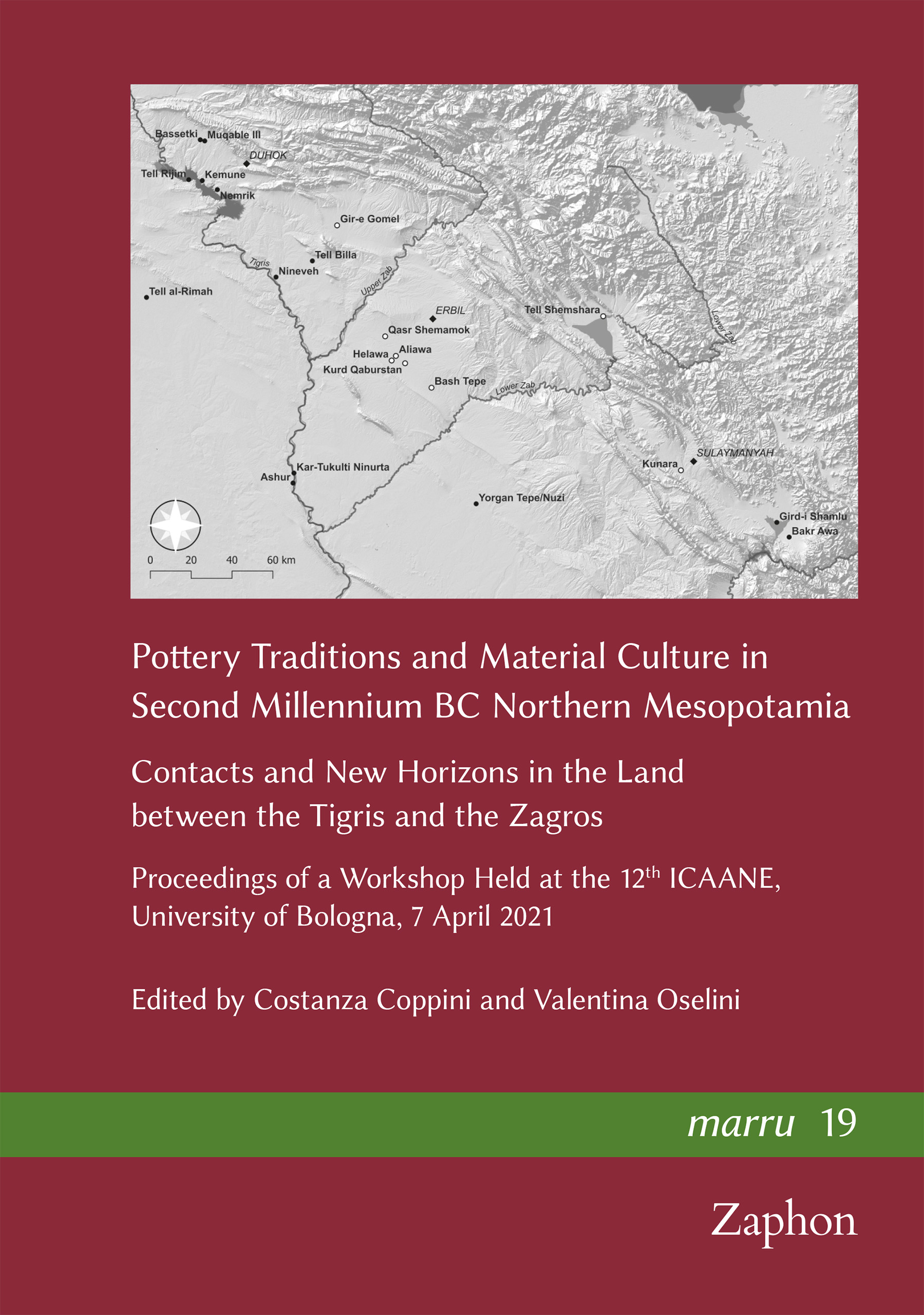 Pottery Traditions and Material Culture in Second Millennium BC Northern Mesopotamia
Contacts and New Horizons in the Land between the Tigris and the Zagros. Proceedings of a Workshop Held at the 12th ICAANE, University of Bologna, 7 April 2021
Volume 19
 Punning in Odd or Elegant Constructions in Jeremiah
The Convergence of Linguistics, Rhetoric, and Textuality in the Hebrew Text of Jeremiah
 Telling Contexts
Archaeological and Textual Studies in Honor of Elizabeth Bloch-Smith and Mark S. Smith
 The Body
Lived, Cultured, Adorned: Essays on Dress and the Body in the Bible and Ancient Near East in Honor of Nili S. Fox

 Die Entwicklung erdbebensicherer Bautechniken in der Frühen und Mittleren Eisenzeit in Ostanatolien
Volume 11
 Menschenwürde und Menschenrechte im Altem Orient, Israel und Hellas. Band 1
Human Dignity and Human Rights in the Ancient Near East, Ancient Israel, and Hellas. Volume 1
Volume 311
 Sprachwissenschaftliche und kulturhistorische Reflexionen
Festschrift zu Ehren von Jörg Klinger
Volume 31


 Archaeology of Eastern Anatolia II: From Prehistoric Times to the End of the Iron Ages
Proceedings of the 2nd Archaeology of Eastern Anatolia Colloquium, 23-25 April 2021, Online (Arkeolojihaber Youtube Channel)
Volume 43
 Assyria and the West
A Fresh Look at the Unshakeable Pillars of Late Bronze and Iron Age Chronology in the Eastern Mediterranean World

 Autocratic Rule in Antiquity
Proceedings of the 14th Melammu Workshop, Krakow, 46 October 2021
Volume 12
 Boğazköy Tablets in the Museum of Anatolian Civilisations (Bo 95–Bo 3993)
Anadolu Medeniyetleri Müzesinde Bulunan Boğazköy Tabletleri (Bo 95–Bo 3993)
Volume 3
 Bridging the Gap: Disciplines, Times, and Spaces in Dialogue – Volume 2
Sessions 3, 7 and 8 from the Conference Broadening Horizons 6 Held at the Freie Universität Berlin, 24–28 June 2019
 Ceramic Finds in Context (Roman to Early Islamic Times)
Final Publications from the Danish-German Jerash Northwest Quarter Project VII
Volume 13
 Change, Order, Remembrance
Crisis and Religion in the Ancient Near East: Proceedings of the Workshop held at the 18th EASR Conference, Pisa, August 30th - September 3rd 2021
Volume 13
 Domestic Trade and Maritime Trade in the Eastern Mediterranean and the Ancient Near East
Proceedings of the 10th Melammu Workshop, TRANSMARE Institute Trier, 11–13 December 2019
Volume 11
 From Egypt to the Levant and Beyond
African Individuals and Groupsain Cuneiform Texts from the Late Bronze Age
Volume 133
 Groundbreaking Technologies in the Middle Paleolithic of the Levant
8igh Resolution and Multi-scale Functional Analysis of Ground Stone Tools
Volume 3
 It All Began with Stratigraphy and Chronology
Archaeology in Central Anatolia. Festschrift Dedicated to Sachihiro Omura on his 77th Birthday