
The Babylonian summa immeru Omens
Transmission, Reception and Text Production
by Yoram Cohen

Hardback (Published)
(December 2020)
ISBN: 9783963270420
Price: $124.00
On back order
The Babylonian summa immeru (‘If the Sheep’) omens are concerned with ominous signs drawn from the behaviour of the sacrificial sheep at the time of its sacrifice. They are part of the diviner’s craft of divination and are related to the technique of extispicy (i.e., the examination of the entrails). The literary history and the transmission of the summa immeru omens is long and convoluted. The omens are attested from the Old Babylonian period to almost the very end of cuneiform civilization at Seleucid Uruk. Manuscripts of the omens and of their commentaries arrive from Babylonia, Assyria, Anatolia and Northern Syria. This book is the first comprehensive study of this omen genre. It offers complete text editions and commentaries of the omens, some previously unpublished. It places the summa immeru omens within the context of Babylonian divination, and investigates how texts reached a “canonical” status that had become immune from changes during millennia of textual production, transmission and reception.
List of Figures / Acknowledgements / Preface / Abbreviations / The summa immeru Omens Textual Sources Chapter 1 Introduction Part I - Research and Publication History of the summa immeru Omens 1. The Standard Version (ca. 1880s-1940s
1980) 2. The Assur Manuscripts (1930s
2012) 3. The Old Babylonian Version (ca. 1940s-1950s) 4. The Late Bronze Age Version (1970s-Present) 5. The Sealand Dynasty Manuscript (2013) 6. General Discussions and Related Sources Part II An Introduction to the summa immeru Omens 1. Mesopotamia--Land of Sheep and Wool 2. Sheep Terminology and the Terms for the Sacrificial Animal in Divination 3. How did Extispicy Omens Come About? 4. Divination Literature, Omen Compendia and the summa immeru Omens 5. How to Read the summa immeru Omens? 6. The Name of the summa immeru Omen Compendium Part III--The Extispicy Ritual 1. The Ritual Purity of the Diviner 2. Finding the Right Sheep for the Extispicy Ritual 3. Placing the Oracle Question in Front of the Gods 4. The Slaughter of the Sacrificial Animal 5. "Reading" the Sheep 6. "Reading" the Liver Chapter 2 The Old Babylonian summa immeru Version 1. Edition and Translation 2. Commentary 3. Discussion Chapter 3 The Late Bronze Age summa immeru Version 1. Edition and Translation 2. Commentary 3. Discussion Chapter 4 The Intermediate Versions of the summa immeru Omens 1. Intermediate Version 1 (= IMV1) 1.1 Edition 1.2 Commentary 1.3. Discussion 2. Intermediate Version 2 (= IMV2) 2.1 Edition 2.2 Commentary 2.3 Discussion 3. Intermediate Version 3 (= IMV3) 3.1 Edition 3.2 Commentary 3.3 Discussion 4. An Extract of an Intermediate Version of the Series (IMV4) 4.1 Edition 4.2 Discussion Chapter 5 The Standard Version of the summa immeru Omens 1. Edition 2. Commentary 3. Discussion Chapter 6 The summa immeru Commentaries of the Standard Version 1. The Uruk Commentary 1 1.1 Edition 1.2 Commentary 2. The Uruk Commentary 2 2.1 Edition 2.2 Commentary 3. The Late Babylonian Commentary (LBC) 3.1 Edition 3.2 Commentary 4. Discussion Chapter 7 Related Sources to the summa immeru Omens Part I: Divination Literature 1. The Sealand Dynasty Omen Compendium 1.1 Identifying the Compendium 1.2 The Structure and Content of the Sealand Dynasty Manuscript 1.3 Characteristic Features of the Sealand Dynasty Manuscript 1.4 The Sealand Dynasty Manuscript and Other Sealand Dynasty Omen Compendia 2. The Assur Bone Omen Compendia 2.1. KAL 5 2 2.2. KAL 5 3 (KAR 432) 2.3. KAL 5 4 3. The Emar Bone Omen Compendia 4. The Barutu Series and Related Texts 4.1 Barutu Ch. 1 and its Commentary 4.2 KAL 5 1 (KAR 423) 4.3 K 6788--A Nineveh Fragment Relating to the Lower Parts of the Sheep 4.4 Tablets Related to the Sheep's Stomach body Parts (Boissier DA 97-99 and K 4112) 5. Omen Reports and Queries 5.1 Old Babylonian and Kassite Omen Reports 5.2 Neo-Assyrian Queries and Reports 6. Bird Divination 6.1 Bird Divination Compendia: Sources and Distribution 6.2 Bird Divination Omens and the summa immeru Omens 7. An Omen Compendium from Tigunanum of Severed Hooves and Fetlocks 8. Tablet 41 of the summa alu Omen Series 9. The summa izbu Omen Series 10. Omens from a Ewe Confined Overnight 11. The Hittite sasta Oracles Part II: Manuals, Vocabularies and Lexical Lists Relating to the Body Parts of the Sacrifical Sheep 12. The Ritual of the Diviner 13. A Manual of Sacrificial Procedure 14. Vocabulary Lists and Lexical Lists 14.1 An Old Babylonian List of Sheep Body Parts (BM 29663) 14.2 An Akkadian-Hittite List of (Sheep) Body Parts (KBo 1.51) 14.3 The 15th Tablet of the ur5-ra=hubullu Lexical List 14.4. The Practical Vocabulary (The Assur Version) Chapter 8 The Sheep Body Parts 1. The Head Region 2. The Hind Area of the Animal 3. Areas of the Abdomen and Rib Cage Chapter 9 Conclusion and Discussion Part I: The Apodoses of the summa immeru Omens--Past, Present and Future 1. The Past: The Presence of the God during the Extispicy Ritual 2. The Present: The summa immeru Formula--Let Go of the Sheep! Kill the Enemy! 3. The Future: How will the exta look like? Part II: The Structure, Content and Development of the summa immeru Omens 1. The Old Babylonian Version and Related Texts 2. The Sealand Dynasty Manuscript 3. The Late Bronze Age Version and Related Texts 4. The Intermediate Versions 1-4 5. The Standard Version and the Barutu 6. The Commentaries of the Standard Version 7. A Cross-Cut Comparsion between the summa immeru Versions Part III: The Many Lives of the summa immeru Omens 1. Text Standardization or Canonization? 2. Text Production of Omen Collections 3. Extispicy Omens: From Old Babylonian Collections to the Barutu 4. The Many Lives of the summa immeru Omens Bibliography Indices
- By (author) Yoram Cohen
Other Titles in this Series





 Institutionelle Sklaverei in Tempel und Palast in Sudmesopotamien wahrend der altbabylonischen Zeit
Volume 23


 Beitrage zur Kenntnis und Deutung altorientalischer Archivalien
Festschrift fur Helmut Freydank zum 80. Geburtstag
Volume 6
 ṭupšar lā šanān
Der Prolog des Chicago-Prismas Sanheribs von Assyrien. Intertextuelle und motivgeschichtliche Studien
Volume 36


 The Sumerian Zame Hymns from Tell Abū Ṣalābīḫ
With an Appendix on the Early Dynastic Colophons
Volume 12
 Explaining Disaster
Tradition and Transformation of the 'Catastrophe of Ibbi-Sin' in Babylonian Literature
Volume 13
 The Ilia A Archive
The Babylonian Socio-economic Landscape as Mirrored in the Archive of a Priestly Family in the First Millennium BCE
Volume 34


 mu-zu an-za3-se3 kur-ur2-se3 he2-gal2
Altorientalistische Studien zu Ehren von Konrad Volk
Volume 17


 Kultur – Kontakt – Kultur
Beiträge anlässlich der 66. Rencontre Assyriologique Internationale in Frankfurt/Main und Mainz, 25.–29. Juli 2022
Volume 35
 Current Research in Early Mesopotamian Studies
Workshop Organized at the 65th Rencontre Assyriologique Internationale, Paris 2019
Volume 21
 ‘I Passed over Difficult Mountains’
Studies on the Ancient Near East in Honor of Mario Liverani
Volume 28

Similar Books


 Connecting the Dots: Counting, Writing, and the Beginnings of Civilization
The Secret Lives of Clay Tokens: A Memoir

 Exploring Gender Dynamics across the Ancient Near East
Collected Essays of Gender and Methodology in the Ancient Near East (GeMANE) 4 and 5
Volume 7


 Ḫattušaš utnē išḫameški
Hittite and Other Ancient Near Eastern Studies Presented to Piotr Taracha on the Occasion of His 65th Birthday

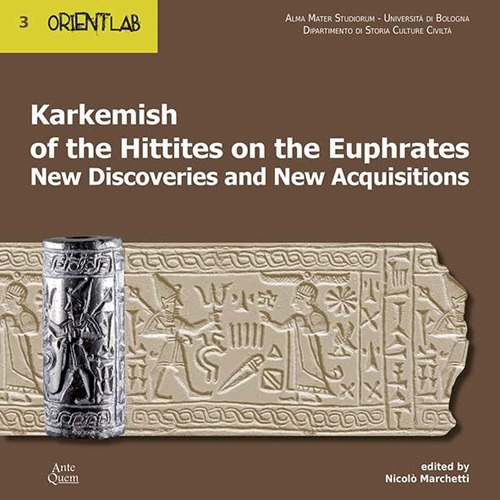
 New Research on Old Collections in Southwest Asian Archaeology
Proceedings of the Workshop Held at the British Museum, London, 31 July – 2 August, 2023
 Old Aramaic Inscriptions and their Contexts
An Epigraphic, Archaeological, and Historical Synthesis
Volume 63

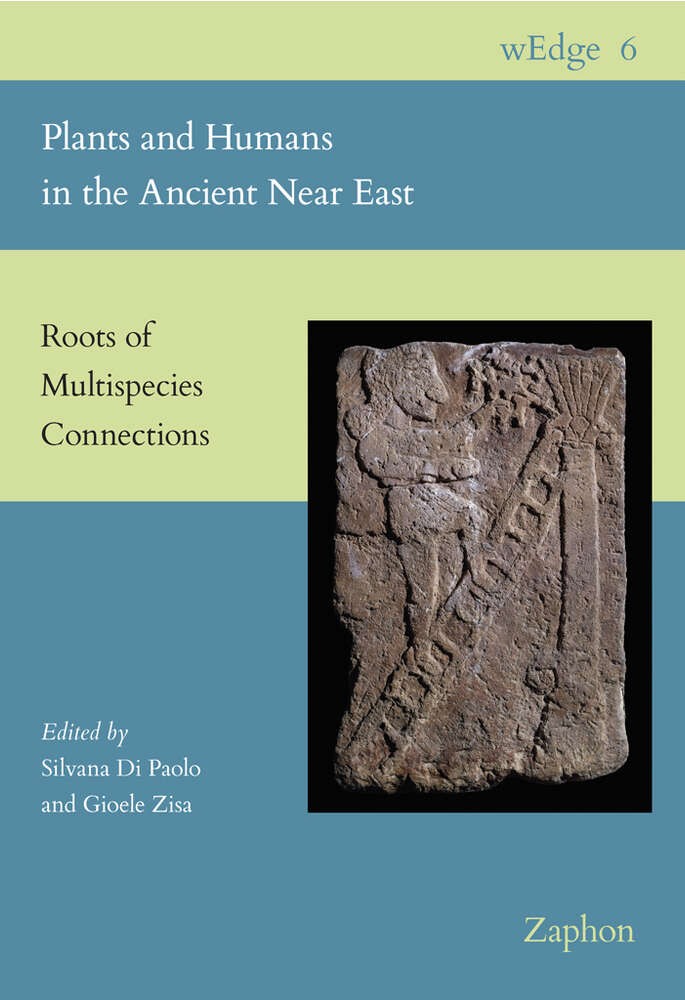
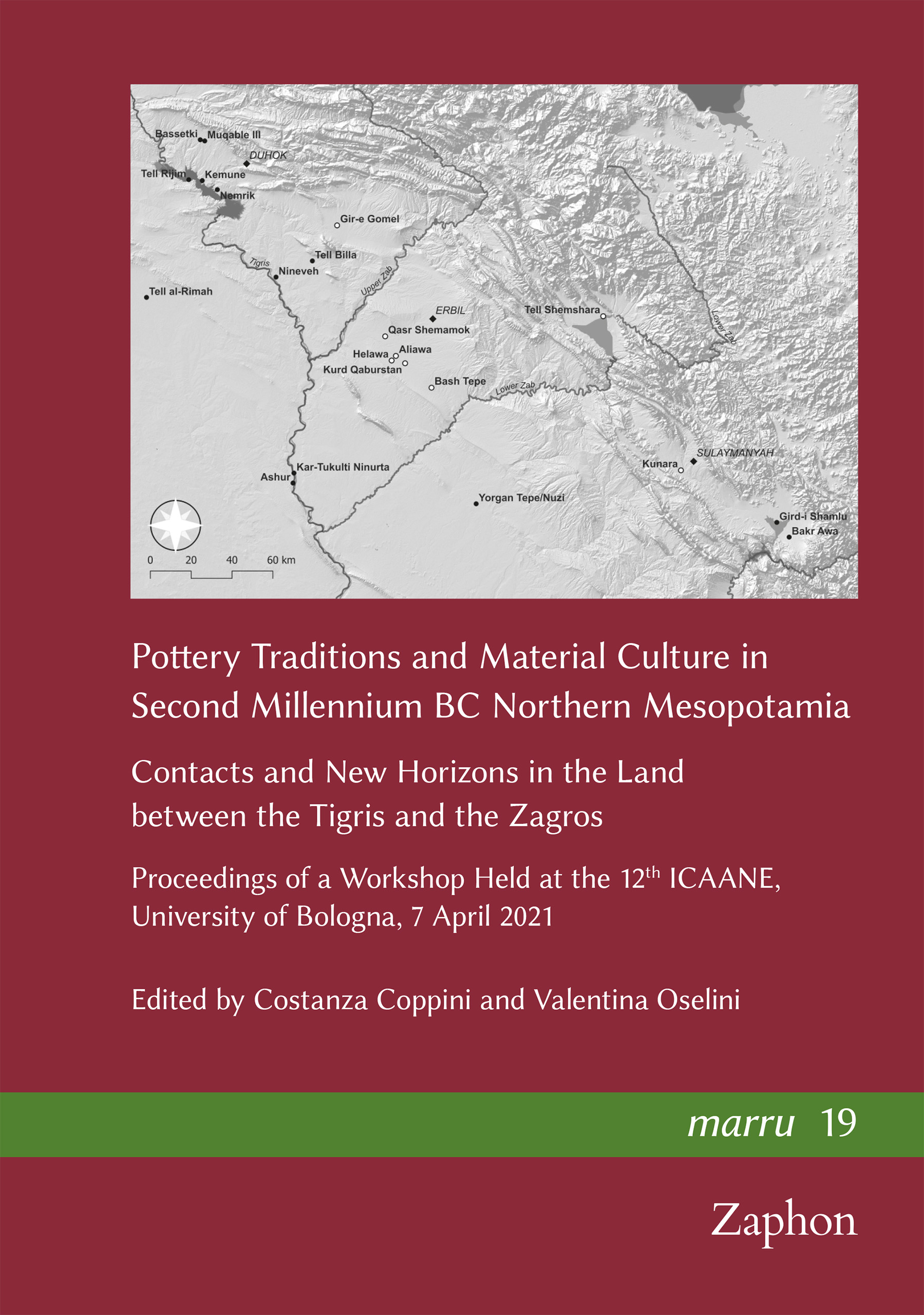 Pottery Traditions and Material Culture in Second Millennium BC Northern Mesopotamia
Contacts and New Horizons in the Land between the Tigris and the Zagros. Proceedings of a Workshop Held at the 12th ICAANE, University of Bologna, 7 April 2021
Volume 19
 Punning in Odd or Elegant Constructions in Jeremiah
The Convergence of Linguistics, Rhetoric, and Textuality in the Hebrew Text of Jeremiah
 Shame in the Worlds of the Hebrew Bible and Akkadian Texts
A Linguistic Study and Its Implications
Volume 33
 Telling Contexts
Archaeological and Textual Studies in Honor of Elizabeth Bloch-Smith and Mark S. Smith
 The Body
Lived, Cultured, Adorned: Essays on Dress and the Body in the Bible and Ancient Near East in Honor of Nili S. Fox
 The Discourse of Rites
Shaping and Reshaping the (Counter-)Priestly Rituals Conducted Outside the Tabernacle
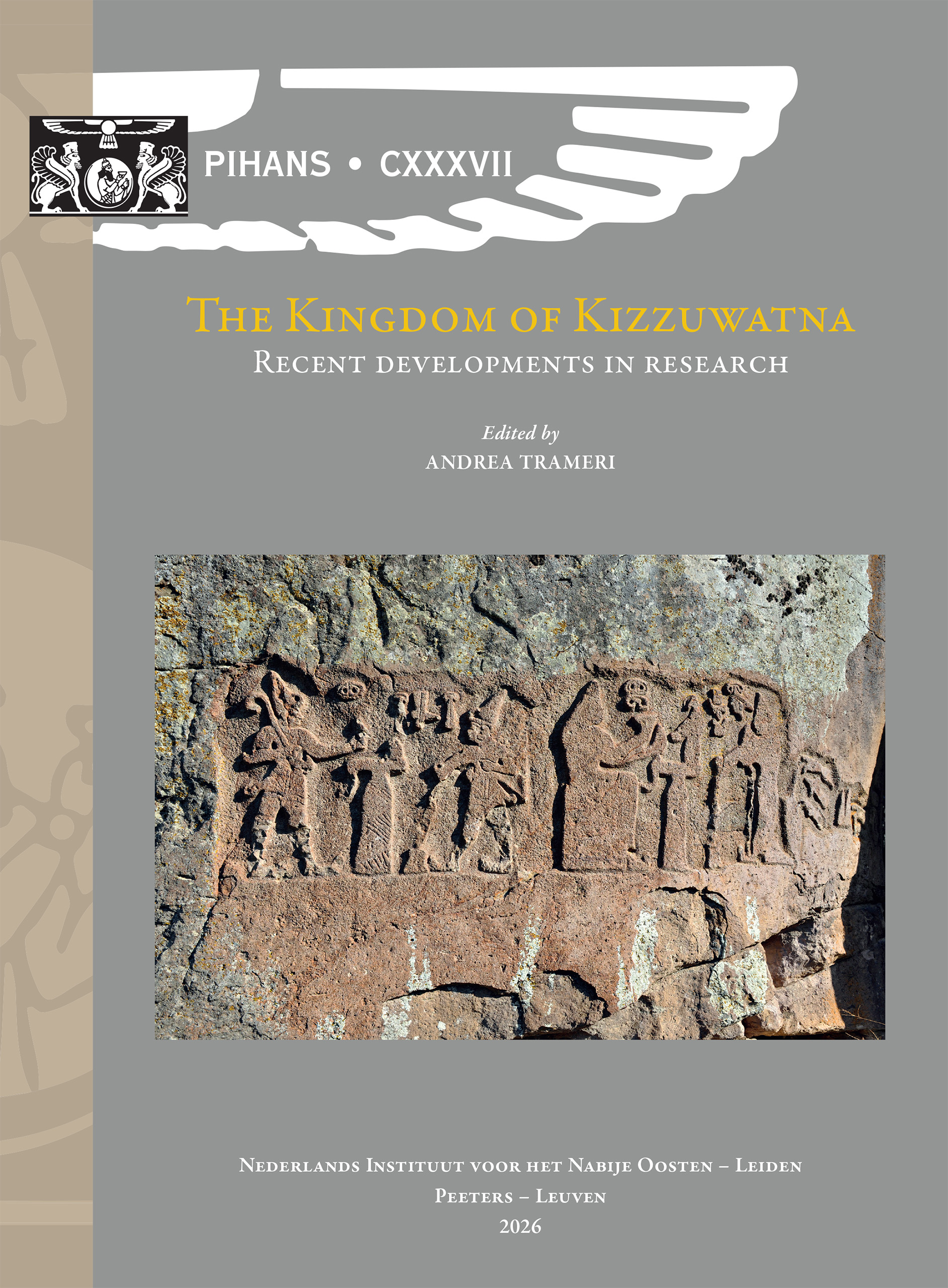 The Kingdom of Kizzuwatna: Recent Developments in Research
Proceedings of the Third NINO Postdoctoral Research Fellow Annual Conference, Leiden, 23rd-25th March 2023
Volume 137


 Die Entwicklung erdbebensicherer Bautechniken in der Frühen und Mittleren Eisenzeit in Ostanatolien
Volume 11
 Die JHWH-Religion und die Vorstellung göttlicher Gesetzgebung
Überschneidungen zwischen der Rechtsentwicklung und der Sphäre der Religion in der Geschichte des antiken Israel und Juda
 Kultur – Kontakt – Kultur
Beiträge anlässlich der 66. Rencontre Assyriologique Internationale in Frankfurt/Main und Mainz, 25.–29. Juli 2022
Volume 35
 Menschenwürde und Menschenrechte im Altem Orient, Israel und Hellas. Band 1
Human Dignity and Human Rights in the Ancient Near East, Ancient Israel, and Hellas. Volume 1
Volume 311
 Ptolemaiou Procheiroi Kanones. Les «Tables Faciles» de Ptolemée. Volume 2a: Tables A3-A13
Édition critique, Transcription
 Sprachwissenschaftliche und kulturhistorische Reflexionen
Festschrift zu Ehren von Jörg Klinger
Volume 31

 Vom Mädchen zur Frau
Weihgaben als Indikatoren rituellen und kommunikativen Handelns von Frauen in griechischen Kulten
Volume 188
 Von der Symmachie zur Arché und zurück
Die Entwicklungsphasen des Ersten Attischen Seebundes (478/7–404 v. Chr.)