
Das babylonisch-assyrische Konzept von Zeit im 2. und 1. Jahrtausend v. Chr.
by Tim Brandes

The aim of the present work is to systematically examine and present the Babylonian-Assyrian concept of time. It is designed as an overview work that can form the starting point for further research. In general, the question is asked which properties and characteristics were attributed to the phenomenon of time. Inseparably linked to this is the question of which texts emphasize the individual characteristics and what role time plays in the context of the respective sources. Since no abstract word for time is known in the languages of the ancient Near East, it should also be analyzed how the phenomenon is represented on the lexical level. In the course of the work, time is viewed as a natural phenomenon on the one hand, and its social relevance and function on the other. With regard to time as a natural phenomenon, the question arises as to which natural occurrences formed the basis of time perception and which functions these fulfilled in detail. Since nature in the ancient Near East was closely linked to people’s beliefs, the theological conceptions that were linked to ideas about time will also be examined. The starting point of the present investigation on the Babylonian-Assyrian concept of time of the 1st millennium B.C. is the supposed problem that neither Akkadian nor Sumerian reveal a word that can be equated with an abstract concept of time. In the course of the investigation, however, it was found that instead of a single, abstract concept of time, a comprehensive network of specific concepts of time was used. With regard to the conceptualization of time, the concepts of time can be divided into two major groups: The first group consists of the concepts of day, month and year. In contrast to this are the secondary concepts of time, which – with the exception of the day and night watches (massartu) – play no recognizable role in the concept of time under study. The secondary concepts of time are derived from social, economic and sometimes also physical events. The time terms adannu and simanu occupy a special position, which designate points in time and periods of time that are fixed in advance (adannu) or considered appropriate (simanu). These nuances of meaning come into their own in the context of the ideality of the passage of time and divination. The theoretical knowledge of the passage of time is only available to a very small group of people. However, through the practical activities of scholars, the concept of time also unfolds on a broader societal level. This in turn affects the qualitative and numinous properties of time as expressed in divination, hemerology and rituals. A sound knowledge of the passage of time and the methods of observation and measurement were of crucial importance for the scholars, as this was the only way to ensure the maintenance of the calendar and its necessary regulation. The importance of this knowledge is also expressed in the “Manual of the Art of Conjuration” by the concluding request not to be careless when carrying out the calendar activities. The importance of this activity is made clear by the primary tasks of the scholars: A correctly regulated calendar was an essential prerequisite for the scholars to be able to correctly interpret occurring omens and observe hemerological specifications. In the worst case, an insufficiently regulated calendar could have fatal consequences for the king and the entire country. The importance of time to scholars has also found echoes at the mythical level, albeit in much older textual material. The myth “Enki and the World Order” describes how the wisdom god Enki follows the passage of time and uses it to regulate the calendar. In Old Babylonian “Atram-hasis-Myth” it is shown how Enki measures the time until the coming deluge with the help of a water clock. Thus, in the late 2nd and 1st millennium B.C. several mythical texts and text passages take up the topic of time. These texts explain how, why and by whom time was made perceptible. The “Enuma eli” describes how time was made perceptible by being divided into units of time by the cyclic movements of the celestial bodies. This makes it clear that the establishment of perceptible time was geared directly to the calendar. The “Enuma eli” accordingly has close intertextual references to other astrological-calendrical texts such as “MUL.APIN” or “Twelve Times Three”. In addition to the “Enuma eli” there are other, shorter text passages that take up the topic. The text “Itar’s Exaltation” shows that the responsibility of telling the time was given to the sun and moon. The composition “Enuma Anu Enlil”, the extensive series of astral and meteorological omens, contains three different mythical passages, each bringing the stars, the sun and the moon to the fore and thereby bringing them into connection with the establishment of time. Above all, the Akkadian version marked as ani shows again that the establishment of the time is connected to the plans already mentioned. In addition, the passage explains that the introduction of perceivable time was done specifically with humanity in mind. All mythical texts thus share the same literary motifs regarding the establishment of cyclically perceptible time. However, differences can be noted with regard to the divine actors. In the “Enuma eli” Marduk is regarded as the one who created and ordered the cosmos and thus made it possible to perceive time. In the other texts, this task falls to the triad of gods Anu, Enlil and Ea.
- By (author) Tim Brandes
Other Titles in this Series

 Grenzuberschreitungen. Studien zur Kulturgeschichte des Alten Orients
Festschrift fur Hans Neumann zum 65. Geburtstag am 9. Mai 2018
Volume 5





 Institutionelle Sklaverei in Tempel und Palast in Sudmesopotamien wahrend der altbabylonischen Zeit
Volume 23


 Beitrage zur Kenntnis und Deutung altorientalischer Archivalien
Festschrift fur Helmut Freydank zum 80. Geburtstag
Volume 6
 ṭupšar lā šanān
Der Prolog des Chicago-Prismas Sanheribs von Assyrien. Intertextuelle und motivgeschichtliche Studien
Volume 36
 The Sumerian Zame Hymns from Tell Abū Ṣalābīḫ
With an Appendix on the Early Dynastic Colophons
Volume 12


 Explaining Disaster
Tradition and Transformation of the 'Catastrophe of Ibbi-Sin' in Babylonian Literature
Volume 13
 The Ilia A Archive
The Babylonian Socio-economic Landscape as Mirrored in the Archive of a Priestly Family in the First Millennium BCE
Volume 34


 mu-zu an-za3-se3 kur-ur2-se3 he2-gal2
Altorientalistische Studien zu Ehren von Konrad Volk
Volume 17


 Kultur – Kontakt – Kultur
Beiträge anlässlich der 66. Rencontre Assyriologique Internationale in Frankfurt/Main und Mainz, 25.–29. Juli 2022
Volume 35
 Current Research in Early Mesopotamian Studies
Workshop Organized at the 65th Rencontre Assyriologique Internationale, Paris 2019
Volume 21
Similar Books



 Connecting the Dots: Counting, Writing, and the Beginnings of Civilization
The Secret Lives of Clay Tokens: A Memoir


 Exploring Gender Dynamics across the Ancient Near East
Collected Essays of Gender and Methodology in the Ancient Near East (GeMANE) 4 and 5
Volume 7


 Ḫattušaš utnē išḫameški
Hittite and Other Ancient Near Eastern Studies Presented to Piotr Taracha on the Occasion of His 65th Birthday


 New Research on Old Collections in Southwest Asian Archaeology
Proceedings of the Workshop Held at the British Museum, London, 31 July – 2 August, 2023
 Old Aramaic Inscriptions and their Contexts
An Epigraphic, Archaeological, and Historical Synthesis
Volume 63

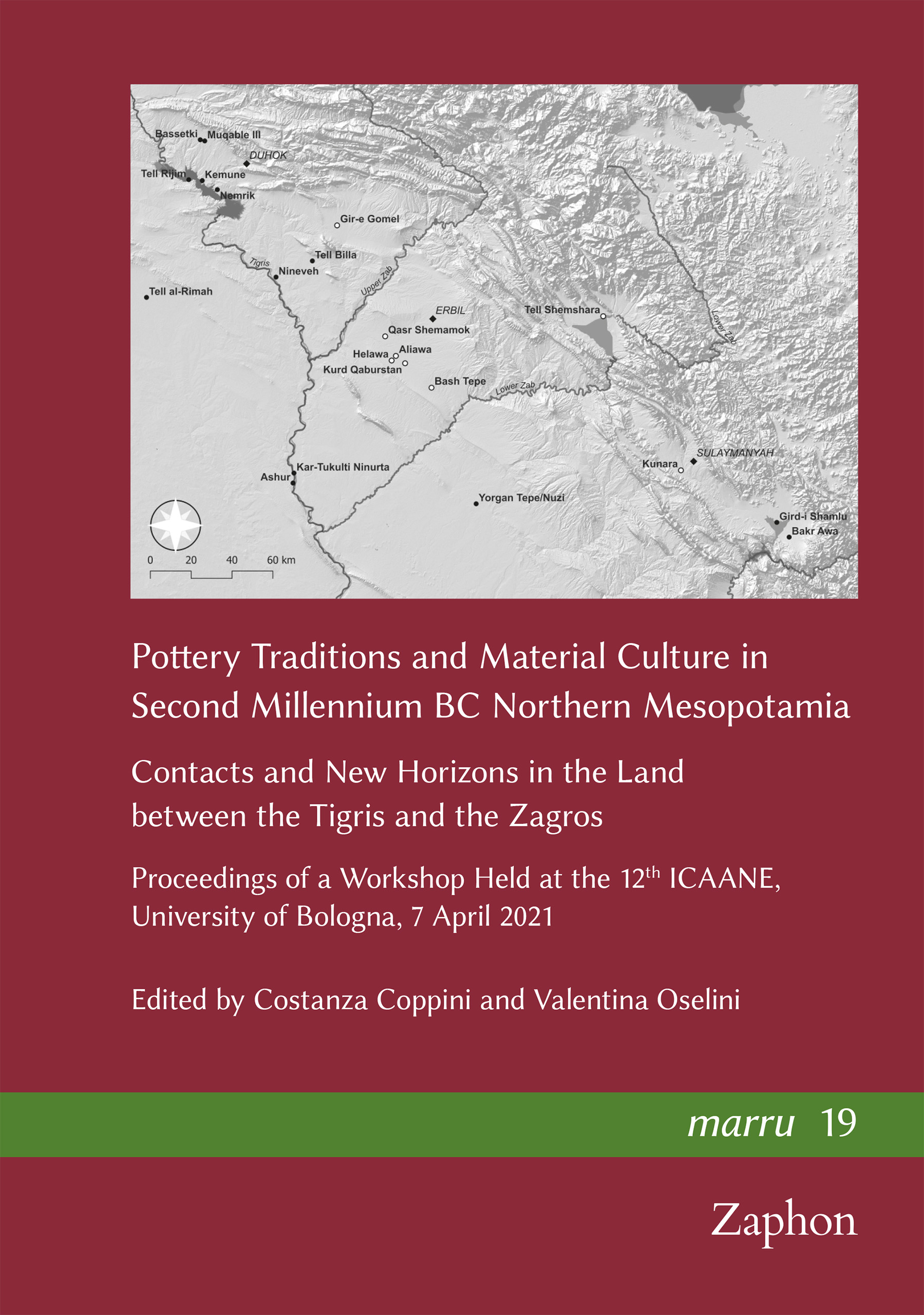 Pottery Traditions and Material Culture in Second Millennium BC Northern Mesopotamia
Contacts and New Horizons in the Land between the Tigris and the Zagros. Proceedings of a Workshop Held at the 12th ICAANE, University of Bologna, 7 April 2021
Volume 19
 Punning in Odd or Elegant Constructions in Jeremiah
The Convergence of Linguistics, Rhetoric, and Textuality in the Hebrew Text of Jeremiah
 Shame in the Worlds of the Hebrew Bible and Akkadian Texts
A Linguistic Study and Its Implications
Volume 33
 Telling Contexts
Archaeological and Textual Studies in Honor of Elizabeth Bloch-Smith and Mark S. Smith
 The Body
Lived, Cultured, Adorned: Essays on Dress and the Body in the Bible and Ancient Near East in Honor of Nili S. Fox
 The Discourse of Rites
Shaping and Reshaping the (Counter-)Priestly Rituals Conducted Outside the Tabernacle
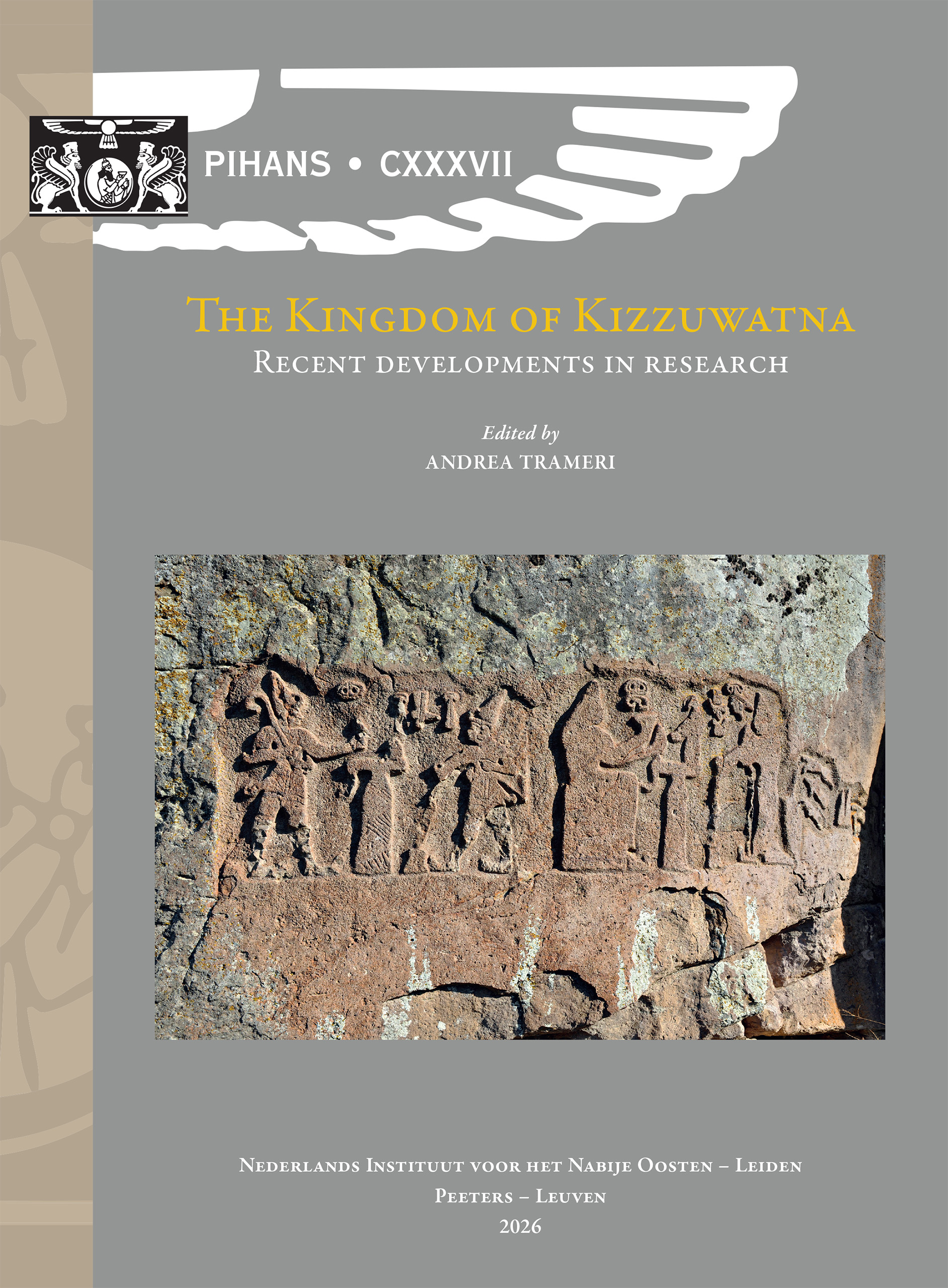 The Kingdom of Kizzuwatna: Recent Developments in Research
Proceedings of the Third NINO Postdoctoral Research Fellow Annual Conference, Leiden, 23rd-25th March 2023
Volume 137


 Die Entwicklung erdbebensicherer Bautechniken in der Frühen und Mittleren Eisenzeit in Ostanatolien
Volume 11
 Die JHWH-Religion und die Vorstellung göttlicher Gesetzgebung
Überschneidungen zwischen der Rechtsentwicklung und der Sphäre der Religion in der Geschichte des antiken Israel und Juda
 Kultur – Kontakt – Kultur
Beiträge anlässlich der 66. Rencontre Assyriologique Internationale in Frankfurt/Main und Mainz, 25.–29. Juli 2022
Volume 35
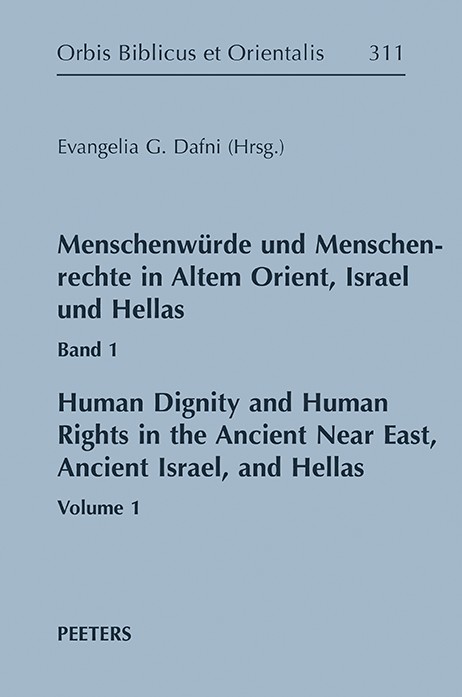 Menschenwürde und Menschenrechte im Altem Orient, Israel und Hellas. Band 1
Human Dignity and Human Rights in the Ancient Near East, Ancient Israel, and Hellas. Volume 1
Volume 311
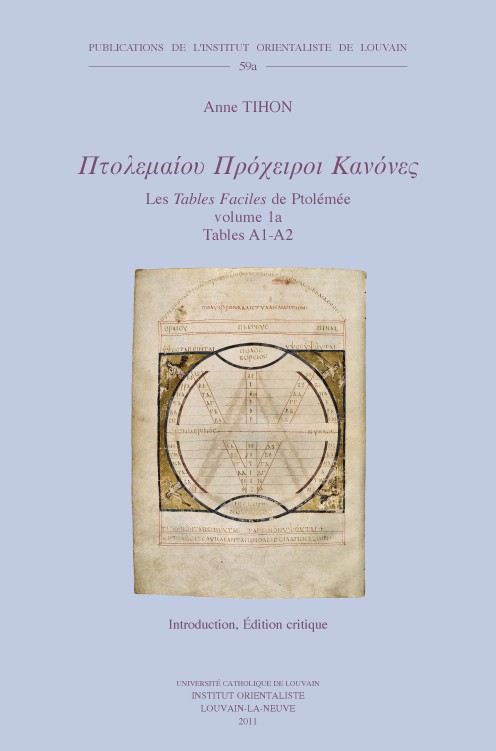
 Ptolemaiou Procheiroi Kanones. Les «Tables Faciles» de Ptolemée. Volume 2a: Tables A3-A13
Édition critique, Transcription
 Sprachwissenschaftliche und kulturhistorische Reflexionen
Festschrift zu Ehren von Jörg Klinger
Volume 31

 Vom Mädchen zur Frau
Weihgaben als Indikatoren rituellen und kommunikativen Handelns von Frauen in griechischen Kulten
Volume 188
 Von der Symmachie zur Arché und zurück
Die Entwicklungsphasen des Ersten Attischen Seebundes (478/7–404 v. Chr.)