
Latomus and Luther
The Debate: Is every Good Deed a Sin?
By (author) Anna Vind Series edited by Herman J. Selderhuis Associate editor Christopher B. Brown Associate editor Günter Frank Associate editor Bruce Gordon Associate editor Barbara Mahlmann-Bauer Associate editor Tarald Rasmussen Associate editor Violet Soen Associate editor Zsombor Tóth Associate editor Günther Wassilowsky Associate editor Siegrid Westphal

Hardback (Published)
(September 2019)
ISBN: 9783525552513
6.34 x 9.33 inches
Price: $163.00
In stock
Who was Jacob Latomus?
Who was Jacob Latomus? What did he write in the series of lectures to which Luther penned an answer in 1521, an answer which is now so central to many interpretations of the great reformer? And how is the reading of that answer affected when it is preceded by an interpretation of what Latomus wrote? The study goes through the most important parts of Latomus’ treatise against Luther (1521). The aim is to identify Latomus’ theological convictions and thus to pin down who and what Luther was up against. The second and major part of the book is a reading of Luther’s pamphlet against Latomus (1521). Parallels are drawn with Latomus’ theology in order to facilitate as much as possible an appreciation of the differences between the two.The comparison between the two theologians shows that they speak completely different languages and that their viewpoints do not square at all. Basically their ways depart in their understanding of God’s word and how it is communicated to man. This generates two ways of perceiving the matter of theology, and of speaking theologically -: and prevents mutual understanding. Latomus cannot understand Luther’s view of the autonomy of God’s word and the special character of proclamation, and hence a theology which is incompatible with natural reason. Even though he accepts a division between a natural and a supernatural rationality, and thus admits that natural reason has a limit, he grants the very same natural reason an important role in the ascent of cognition towards revelation. Everything else – such as Luther’s theology – is a dehumanization of the human being. Luther, on the other hand, regards Latomus’ theology as a result of the impulse in sinful man towards ruling and controlling the word of God with his own inadequate natural abilities. In Luther’s eyes that proclamation of Christ, which in the shape of a human being comes to man in contradiction of everything human, here disappears in the twinkling of an eye.
- By (author) Anna Vind
- Series edited by Herman J. Selderhuis
- Associate editor Christopher B. Brown
- Associate editor Günter Frank
- Associate editor Bruce Gordon
- Associate editor Barbara Mahlmann-Bauer
- Associate editor Tarald Rasmussen
- Associate editor Violet Soen
- Associate editor Zsombor Tóth
- Associate editor Günther Wassilowsky
- Associate editor Siegrid Westphal
Other Titles in this Series
 Lutheran Theology and the shaping of society: The Danish Monarchy as Example
The Danish Monarchy as Example


 Anton Engelbrecht 1487–1556
Eine Biografie und eine vollständige Edition der Acten des sunderlichen sinodums die oberkeit belangend (1533)

 From Europe to Overseas
Saints, Martyrs, Heroes, Models and Soft Power in an Early Modern Global Perspective
 allen winkeln auff erden durch so viel bucher furgetragen
Formierung und Konsolidierung des lutherischen Bekenntnisses in Siebenbürgen aufgezeigt am Medium Buch (1550–1650)






 Konfessionelle Vielfalt als Herausforderung und Perspektive
Zur Verschränkung von Religion und Politik im frühneuzeitlichen Ostmitteleuropa
 Konsolidierung des reformierten Bekenntnisses im Reich der Stephanskrone
Ein Beitrag zur Kommunikationsgeschichte zwischen Ungarn und der Schweiz in der frühen Neuzeit (1500–1700)
 Sebastian Castellio (1515–1563) – Dissidenz und Toleranz
Beiträge zu einer internationalen Tagung auf dem Monte Verità in Ascona 2015

 The Doctrine of Election in Reformed Perspective
Historical and Theological Investigations of the Synod of Dordt 1618–1619


 Petrus Dathenus und der Heidelberger Katechismus
Eine traditionsgeschichtliche Untersuchung zum konfessionellen Wandel in der Kurpfalz um 1563
 The Council of Trent: Reform and Controversy in Europe and Beyond (1545-1700)
Vol. 1: Between Trent, Rome and Wittenberg

Similar Books

 A Companion to Christianity and Sport in Europe and North America (19th-21st centuries)
Volume 1: Western and Eastern Europe
 A Connecting Polemic in the Medieval Mediterranean
The Correspondence of Leo III and ʿUmar II
Volume 6





 Ars Prophetica
Theology in the Poetry of Twentieth-Century Hebrew Poets Avraham Halfi, Shin Shalom, Amir Gilboa, and T. Carmi
 As Messianism Turns to Heresy
The Regenstein Chair Lectures On Lurianic Kabbalah and Shabbatai Tzevi at Hebrew Union College - Cincinnati
 Balthasar Caymox of Nuremberg
Early Modern German Print Publishers: Popular Prints of the Seventeenth Century


 Beyond Sovereign Courts
Agents and Practices in Early Modern Spanish and Habsburg Diplomacy
Volume 3


 Circulation, Use, Impact
The Consumption of Architectural Books in the Early Modern Eastern Adriatic
Volume 1


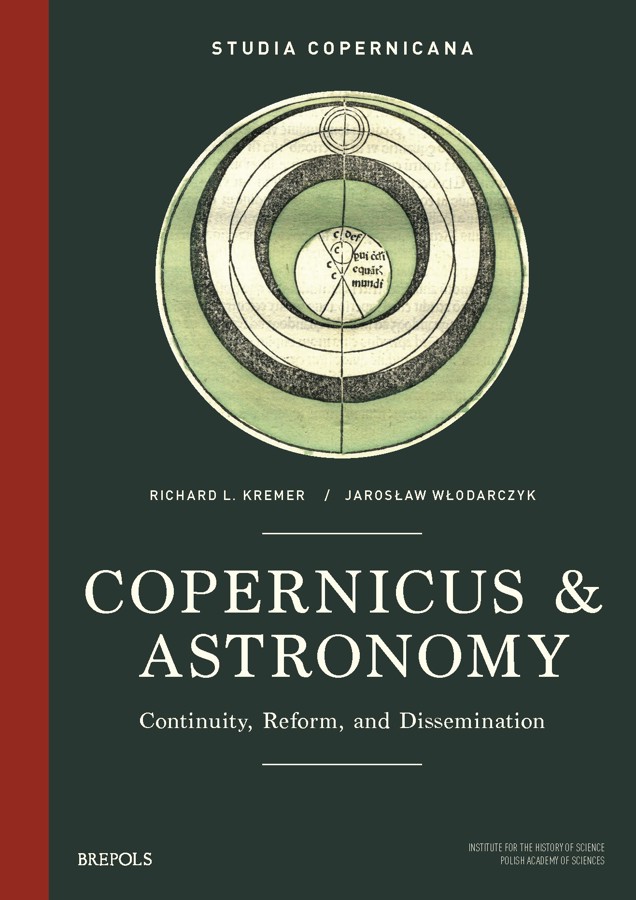
 Councils, Conflicts, Correspondence
Urban Diplomacy in Reval (Tallinn) and Lübeck (c. 1470–1570)
Volume 67
 Creating the Woman in Antiquity
Proceedings of the 16th Melammu Workshop, Innsbruck, 2–3 June 2022
Volume 13
 Cultic Kisses
Fruitful Encounters Between Deities and Humans. Festschrift for Angelika Berlejung on the Occasion of Her 65th Birthday
 De/colonizing Theologies
Glocal Histories, Contemporary Challenges, Theoretical Reflections
Volume 4

 Drunk the Potion, No Whit Charmed
The Doctrine of Pure and Perfect Souls from Iamblichus to Damascius

