
Diseases of the Imagination and Imaginary Disease in the Early Modern Period
Edited by Yasmin Haskell

The essays in this volume, by established and emerging scholars from diverse intellectual and cultural traditions, explore Latin and vernacular, philosophical, medical, poetic, dramatic, epistolary, and juridical sources to expose the tangled conceptual roots of our modern affective, anxiety and somatoform disorders. They confirm tha
The early modern period was arguably the greatest ‘age of the imagination’ in Europe, and certainly the period in which the powers attributed to that faculty had the greatest consequences – both in theory and in ordinary people’s lives. Theologians and physicians debated the reality of witchcraft (no simple battle between Religion and Science, as believers and doubters could be found on both sides); the existence and pathology of werewolves and vampires; the role of the imagination in influencing the unborn child and in causing disease even in remote others. The imagination was implicated in conditions from plague, lovesickness, and anger through to hysteric and hypochondriac disease – the latter a frightening syndrome of gastric, respiratory, cardiac, and psychiatric problems believed to be epidemic. The essays in this volume, by established and emerging scholars from diverse intellectual and cultural traditions, explore Latin and vernacular, philosophical, medical, poetic, dramatic, epistolary, and juridical sources to expose the tangled conceptual roots of our modern affective, anxiety and somatoform disorders. They confirm that controversies about ‘mad’ versus ‘bad’, ‘real’ versus ‘psychosomatic’ complaints, and the interdependence of perception, emotion, and physical illness are by no means a monopoly of our times.
- Edited by Yasmin Haskell
Other Titles in this Series

 Inter-Ethnic Relations and the Functioning of Multi-Ethnic Societies
Cohesion in Multi-Ethnic Societies in Europe from c. 1000 to the Present, II
Volume 18

 Legal Norms and Political Action in Multi-Ethnic Societies
Cohesion in Multi-Ethnic Societies in Europe from c. 1000 to the Present, III
Volume 20
 Republicanism, Sinophilia, and Historical Writing
Thomas Gordon (c.1691-1750) and his 'History of England'
Volume 4


 Memories in Multi-Ethnic Societies
Cohesion in Multi-Ethnic Societies in Europe from c. 1000 to the Present, I
Volume 15

 Historiography and the Shaping of Regional Identity in Europe
Regions in Clio's Looking Glass
Volume 16
 Sociability and its Discontents
Civil Society, Social Capital, and their Alternatives in Late Medieval and Early Modern Europe
Volume 1


 Communicating the Passion
The Socio-Religious Function of an Emotional Narrative (1250-1530)
Volume 21


Similar Books



 Balthasar Caymox of Nuremberg
Early Modern German Print Publishers: Popular Prints of the Seventeenth Century
 Beyond Sovereign Courts
Agents and Practices in Early Modern Spanish and Habsburg Diplomacy
Volume 3

 Circulation, Use, Impact
The Consumption of Architectural Books in the Early Modern Eastern Adriatic
Volume 1


 Councils, Conflicts, Correspondence
Urban Diplomacy in Reval (Tallinn) and Lübeck (c. 1470–1570)
Volume 67


 Innovationes Lovanienses: Arts, Law and Theology at the University of Louvain (1425–1797)
Studium Lovaniense: Learning across Borders, 2
Volume 18

 Legal Visuality
Exegesis, Ambiguity, and Dissimulation of the Donation of Constantine in the Early Modern Period


 Naples as Laboratory / Laboratorium Neapel
Style Options, Artistic Rivalry and Self Fashioning in Neapolitan Baroque Painting / Plurale Stilbildung, Kunstlerkonkurrenz und Self Fashioning in der neapolitanischen Barockmalerei

 Power and Women in Southeast and Central Europe in Late Medieval and Early Modern Period (1300-1600)
Volume 10
 Recycling and Regeneration of Spent Lithium-Ion Batteries
Technologies, Applications, and Sustainable Futures


 Staging the Spectacle of Majesty
Ceremonial, Courtly Space, and Collecting under the Spanish Habsburgs
Volume 9
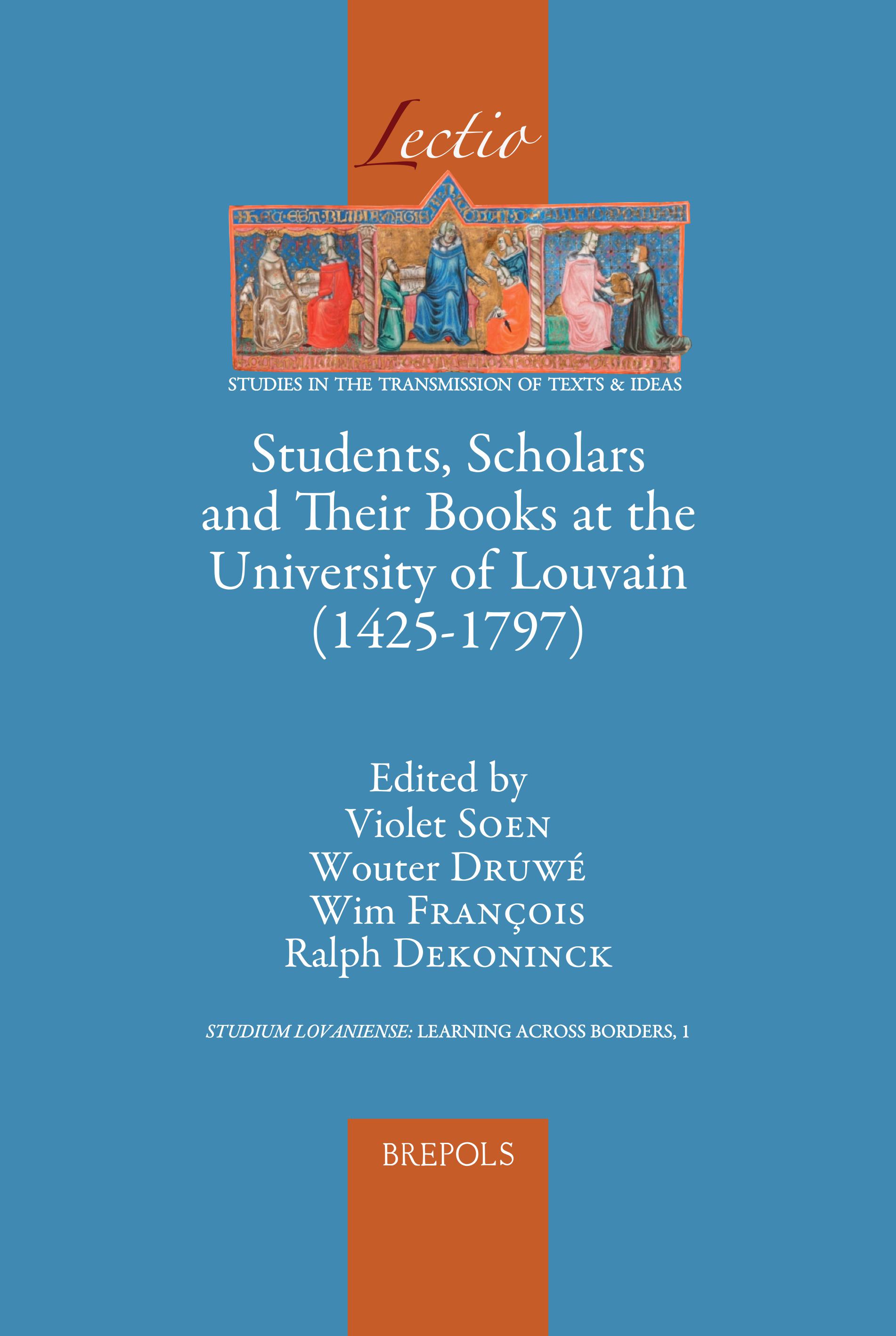 Students, Scholars and Their Books at the University of Louvain (1425-1797)
Studium Lovaniense: Learning across Borders, 1
Volume 17

