
Die ikonoklastische Synode von Hiereia 754
Text, Ubersetzung & Kommentar ihres Horos
edited by Torsten Krannich, Christoph Schubert, Claudia Sode, contributions by Annette von Stockhausen

English summary: Iconoclasm is a major topic in the history of the Byzantine Empire. In the 8th century there was a growing opposition to the significance attributed to the images of Christ, Mary and the saints as the bearers of miraculous characteristics. It was said that the true worship of Christ was the worship to be found in the spirit and in the truth and not in images. In order to have this critical doctrine accepted throughout the entire empire, Constantine V held a council in Hiereia in 754. Along with an introduction to the history of the iconoclastic controversy, the book presents an annotated translation of the definition of this council. This horos is the only substantial iconoclastic document we possess. It was refuted in the Sixth Session of the Council of Nicea in 787. German description: Einleitung, Text, Ubersetzung und Kommentar ihres Horos, besorgt von Torsten Krannich, Christoph Schubert und Claudia Sode, nebst einem Beitrag zur Epistula ad Constantiam des Eusebius von Casarea von Annette von StockhausenSeit dem 7. Jahrhundert gewannen Bilder von Christus, Maria und den Heiligen als Trager wunderwirkender Eigenschaften und als Objekte der Verehrung immer grossere Bedeutung. Dagegen regte sich im 8. Jahrhundert, gelenkt und gefordert von den byzantinischen Kaisern Leo III., Konstantin V. und Leo IV., zunehmend Widerstand: Die wahre Verehrung Christi sei die Verehrung im Geist und in der Wahrheit (Joh. 4, 23f.), nicht in Bildern. Um die bilderkritische Lehre reichsweit durchzusetzen, veranstaltete Konstantin V. im Jahre 754 eine Synode in Hiereia / Konstantinopel. Sie gilt als einer der Hohepunkte des byzantinischen Bilderstreits. Ihr Horos (Lehrdefinition) verwirft den Bilderkult und setzt den Entwurf einer neuen, kritischen Bildertheologie dagegen. Es sollten nur drei Jahrzehnte vergehen, bis ein neues Konzil (Nizaa 787 n.Chr.) die Beschlusse von 754 aufhob und den Bilderkult zur verbindlichen Lehre erklarte.Der Horos der Synode von 754 ist das einzige zusammenhangende Dokument, das uber die Lehre der sogenannten Ikonoklasten Auskunft gibt. Der Text des Horros wurde im Rahmen der sechsten Sitzungseinheit des Konzils von Nizaa (787 n. Chr.) verlesen und anschliessend widerlegt. In dem vorliegenden Studienbuch wird er erstmals vollstandig ins Deutsche ubersetzt und kommentiert. Einleitung und Kommentar ordnen den Text in den historischen Zusammenhang und in die theologischen Fragestellungen der Zeit ein und erlautern die christologischen Grundlagen der Debatte.
English summary: Iconoclasm is a major topic in the history of the Byzantine Empire. In the 8th century there was a growing opposition to the significance attributed to the images of Christ, Mary and the saints as the bearers of miraculous characteristics. It was said that the true worship of Christ was the worship to be found in the spirit and in the truth and not in images. In order to have this critical doctrine accepted throughout the entire empire, Constantine V held a council in Hiereia in 754. Along with an introduction to the history of the iconoclastic controversy, the book presents an annotated translation of the definition of this council. This horos is the only substantial iconoclastic document we possess. It was refuted in the Sixth Session of the Council of Nicea in 787. German description: Einleitung, Text, Ubersetzung und Kommentar ihres Horos, besorgt von Torsten Krannich, Christoph Schubert und Claudia Sode, nebst einem Beitrag zur Epistula ad Constantiam des Eusebius von Casarea von Annette von StockhausenSeit dem 7. Jahrhundert gewannen Bilder von Christus, Maria und den Heiligen als Trager wunderwirkender Eigenschaften und als Objekte der Verehrung immer grossere Bedeutung. Dagegen regte sich im 8. Jahrhundert, gelenkt und gefordert von den byzantinischen Kaisern Leo III., Konstantin V. und Leo IV., zunehmend Widerstand: Die wahre Verehrung Christi sei die Verehrung im Geist und in der Wahrheit (Joh. 4, 23f.), nicht in Bildern. Um die bilderkritische Lehre reichsweit durchzusetzen, veranstaltete Konstantin V. im Jahre 754 eine Synode in Hiereia / Konstantinopel. Sie gilt als einer der Hohepunkte des byzantinischen Bilderstreits. Ihr Horos (Lehrdefinition) verwirft den Bilderkult und setzt den Entwurf einer neuen, kritischen Bildertheologie dagegen. Es sollten nur drei Jahrzehnte vergehen, bis ein neues Konzil (Nizaa 787 n.Chr.) die Beschlusse von 754 aufhob und den Bilderkult zur verbindlichen Lehre erklarte.Der Horos der Synode von 754 ist das einzige zusammenhangende Dokument, das uber die Lehre der sogenannten Ikonoklasten Auskunft gibt. Der Text des Horros wurde im Rahmen der sechsten Sitzungseinheit des Konzils von Nizaa (787 n. Chr.) verlesen und anschliessend widerlegt. In dem vorliegenden Studienbuch wird er erstmals vollstandig ins Deutsche ubersetzt und kommentiert. Einleitung und Kommentar ordnen den Text in den historischen Zusammenhang und in die theologischen Fragestellungen der Zeit ein und erlautern die christologischen Grundlagen der Debatte.
- Contributions by Annette von Stockhausen
- Edited by Torsten Krannich
- Edited by Christoph Schubert
- Edited by Claudia Sode
Other Titles in this Series

 Dealing with Difference
Christian Patterns of Response to Religious Rivalry in Late Antiquity and Beyond
Volume 129


 Mos Christianorum
The Roman Discourse of Exemplarity and the Jewish and Christian Language of Leadership
Volume 99


 Griechische Christen – Christliche Griechen
Plausibilisierungsstrategien des antiken Christentums bei Origenes und Johannes Chrysostomos
Volume 30

 Scriptures, Sacred Traditions, and Strategies of Religious Subversion
Studies in Discourse with the Work of Guy G. Stroumsa
Volume 112

 Angels and Orthodoxy
A Study in their Development in Syria and Palestine from the Qumran Texts to Ephrem the Syrian
Volume 40
 From Protology to Eschatology
Competing Views on the Origin and the End of the Cosmos in Platonism and Christian Thought
Volume 130
 Reading Dionysus
Euripides' Bacchae and the Cultural Contestations of Greeks, Jews, Romans, and Christians
Volume 95

 The Christian-Jewish Debate at Tomei (Thmuis), Egypt, circa 620
Critical Arabic Text, English Translation, and Introduction
 Sophisten in Hellenismus und Kaiserzeit
Orte, Methoden und Personen der Bildungsvermittlung
Volume 101

 Religiose Philosophie und philosophische Religion der fruhen Kaiserzeit
Literaturgeschichtliche Perspektiven. Ratio Religionis Studien I
Volume 51
 Von Leporius bis zu Leo dem Grossen
Studien zur lateinischsprachigen Christologie im funften Jahrhundert nach Christus
Volume 32
 Tertullians Schrift ‘Adversus Valentinianos’
Die argumentative Widersetzung Tertullians gegen die Valentinianer als ein in rhetorischer Perspektive geschlossenes Werk
Volume 120


 Herrscherpanegyrik unter Trajan und Konstantin
Studien zur symbolischen Kommunikation in der romischen Kaiserzeit
Volume 42

 Die Kirche der Reinen
Kirchen- und sozialhistorische Studie zu den Novatianern im 3. bis 5. Jahrhundert
Volume 96
 STUDIA CHRYSOSTOMICA
Aufsatze zu Weg, Werk und Wirkung des Johannes Chrysostomos (ca. 349-407)
Volume 71

 Beyond Conflicts
Cultural and Religious Cohabitations in Alexandria and Egypt between the 1st and the 6th Century CE
Volume 103
Similar Books

 A Companion to Christianity and Sport in Europe and North America (19th-21st centuries)
Volume 1: Western and Eastern Europe
 A Connecting Polemic in the Medieval Mediterranean
The Correspondence of Leo III and ʿUmar II
Volume 6





 Ars Prophetica
Theology in the Poetry of Twentieth-Century Hebrew Poets Avraham Halfi, Shin Shalom, Amir Gilboa, and T. Carmi
 As Messianism Turns to Heresy
The Regenstein Chair Lectures On Lurianic Kabbalah and Shabbatai Tzevi at Hebrew Union College - Cincinnati


 Creating the Woman in Antiquity
Proceedings of the 16th Melammu Workshop, Innsbruck, 2–3 June 2022
Volume 13
 Cultic Kisses
Fruitful Encounters Between Deities and Humans. Festschrift for Angelika Berlejung on the Occasion of Her 65th Birthday
 De/colonizing Theologies
Glocal Histories, Contemporary Challenges, Theoretical Reflections
Volume 4
 Drunk the Potion, No Whit Charmed
The Doctrine of Pure and Perfect Souls from Iamblichus to Damascius






 Extracanonical Traditions and the Holy Land
Texts, Rituals, and Material Culture in Late Antique Palestine
 Fear, Fear of God, God-Fearers
Philological and Historical Perspectives on the World of Ancient Judaism and Christianity


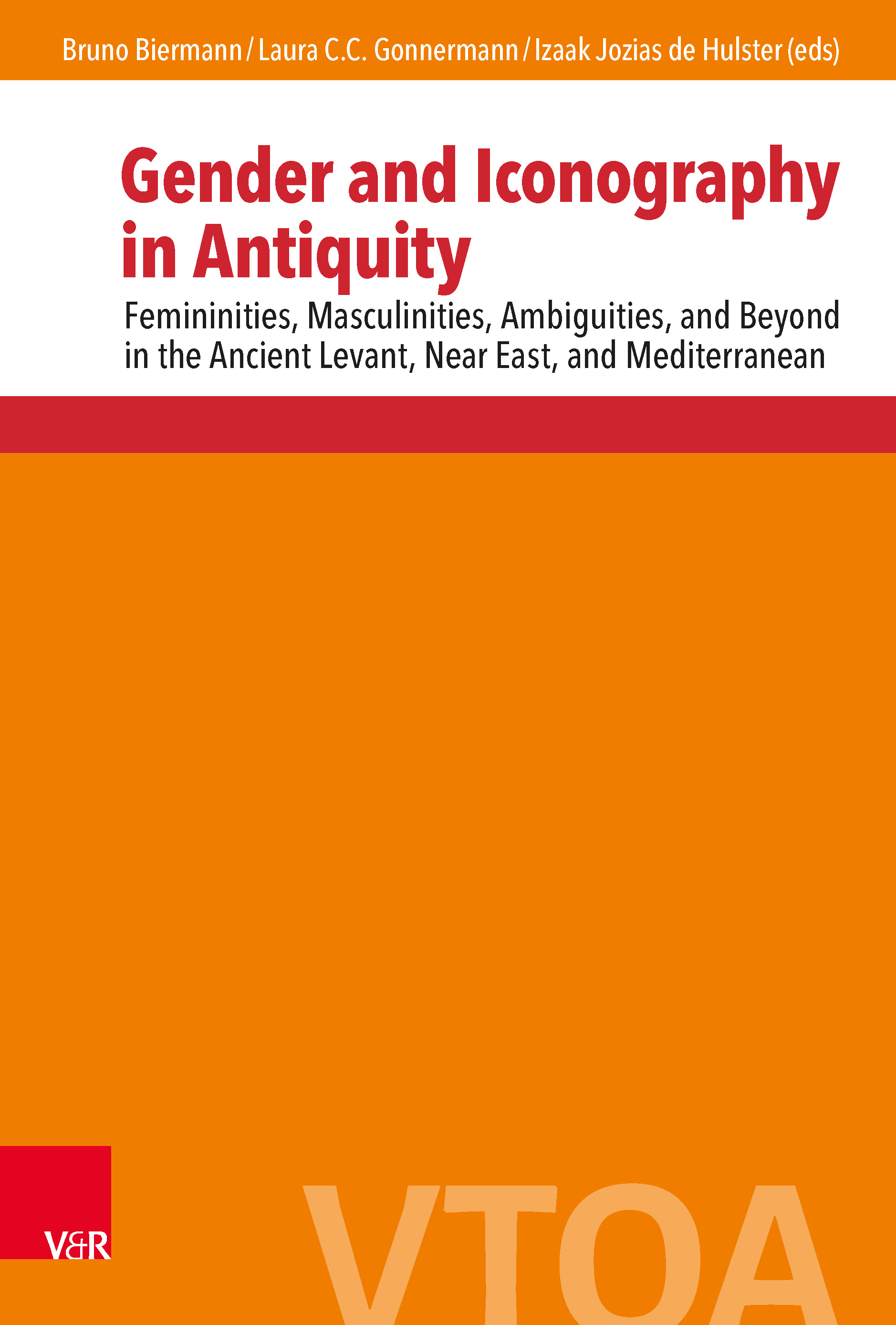 Gender and Iconography in Antiquity
Femininities, Masculinities, Ambiguities, and Beyond in the Ancient Levant, Near East, and Mediterranean