
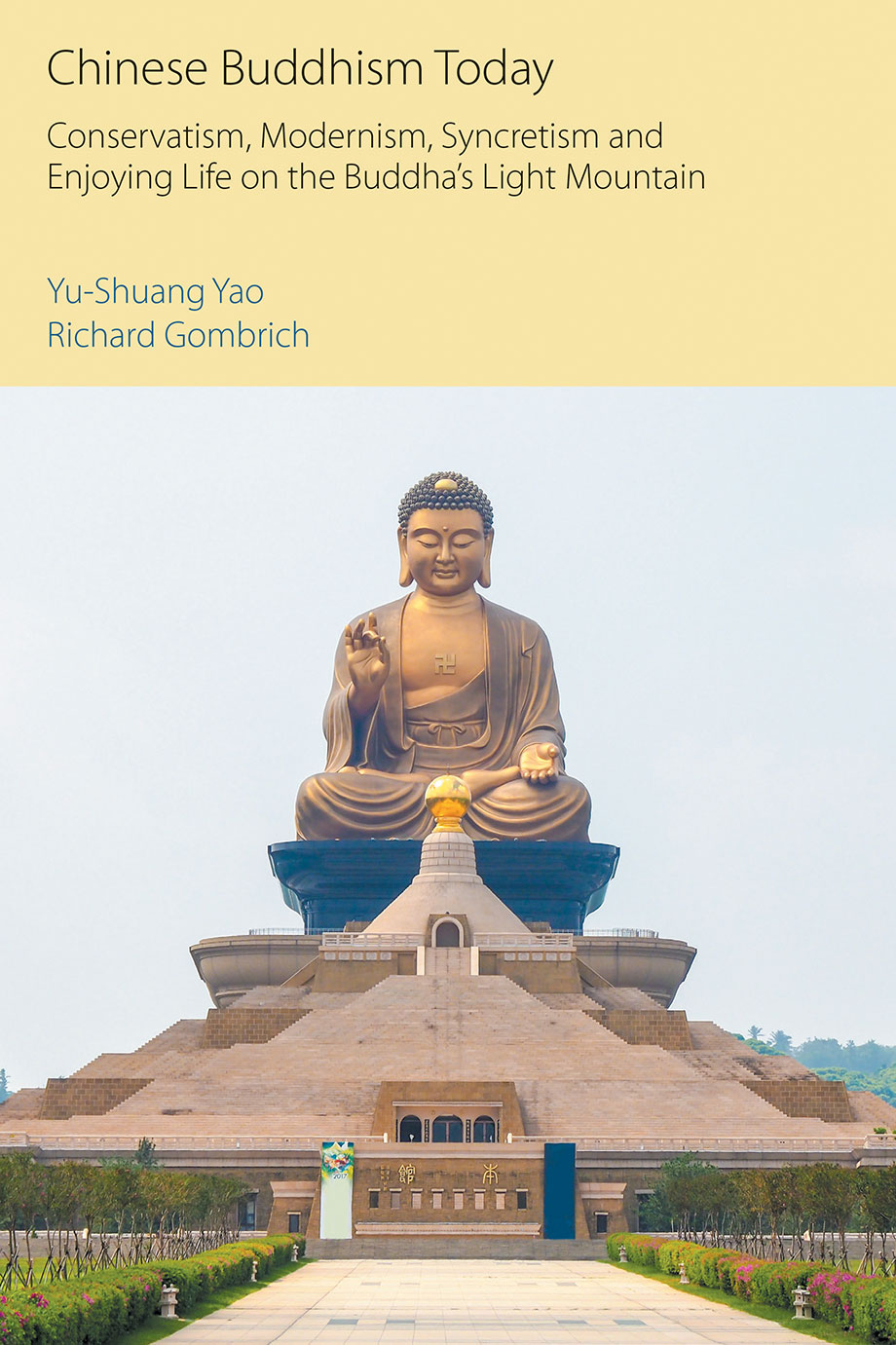
Chinese Buddhism Today
Conservatism, Modernism, Syncretism and Enjoying Life on the Buddha's Light Mountain
by Yu-Shuang and Richard Gombrich
Paperback (Published)
(June 2022)
ISBN: 9781800502321
6.1 x 9.17 inches
Price: $29.95
In stock
Hardback (Published)
(June 2022)
ISBN: 9781800502314
6.1 x 9.17 inches
Price: $80.00
In stock
Fo Guang Shan, “Buddha’s Light Mountain”, is a Buddhist movement founded in Taiwan in 1967 and led by the Ven Hsing Yun (b.1927), who had fled to Taiwan from mainland China in 1949. It stands in the Chinese tradition of Mahāyāna Buddhism and more specifically is a form of Buddhism which in English is usually referred to as “Humanistic Buddhism” or as “engaged Buddhism”. Humanistic Buddhism owes its origin to the Chinese monk Tai Xu (1890-1947). He found the Buddhism which surrounded him in China dreary and moribund, preoccupied with rituals for the dead, and offering nothing to help or guide people living in the world outside monasteries. His determination to reverse this decay centred on the idea that it was the vocation of a Mahayana Buddhist to do good to others, finding their own spiritual benefit in benefitting society. Hsing Yun has been a devoted disciple of Tai Xu. It is telling that he founded a seminary before he founded a monastery, and has laid huge emphasis on education. As the sub-title of this book indicates, in order to make Buddhism widely attractive and relevant he has incorporated every influence available. Gifted with a benign personality, he has turned his seemingly boundless energy and prodigious versatility to creating an institution which presents Buddhism as potentially a source for benefitting society through making life enjoyable. This book hopes to convey the movement’s ethos primarily by focusing on his views and activities.
Yu-Shuang Yao is a Professor at Fo Guang University, Taiwan, specializing in contemporary religions of Taiwan. Richard Gombrich is founder and President of the Oxford Centre for Buddhist Studies. Before his retirement in 2004, he held the Boden Chair of Sanskrit at Oxford University and a Professorial Fellowship at Balliol College for 28 years. He supervised nearly 50 theses on Buddhist topics, and is the author of 200 publications. He continues to lecture and teach at universities round the world.
- By (author) Richard Gombrich
- By (author) Yu-Shuang Yao
Other Titles in this Series
 Buddhist Monks and the Politics of Lanka’s Civil War
Ethnoreligious Nationalism of the Sinhala Sangha and Peacemaking in Sri Lanka, 1995-2010



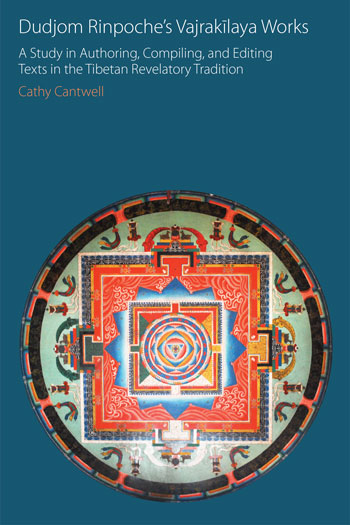 Dudjom Rinpoche’s Vajrakīlaya Works
A Study in Authoring, Compiling, and Editing Texts in the Tibetan Revelatory Tradition
Similar Books

 A Companion to Christianity and Sport in Europe and North America (19th-21st centuries)
Volume 1: Western and Eastern Europe
 A Connecting Polemic in the Medieval Mediterranean
The Correspondence of Leo III and ʿUmar II
Volume 6





 Ars Prophetica
Theology in the Poetry of Twentieth-Century Hebrew Poets Avraham Halfi, Shin Shalom, Amir Gilboa, and T. Carmi
 As Messianism Turns to Heresy
The Regenstein Chair Lectures On Lurianic Kabbalah and Shabbatai Tzevi at Hebrew Union College - Cincinnati


 Creating the Woman in Antiquity
Proceedings of the 16th Melammu Workshop, Innsbruck, 2–3 June 2022
Volume 13
 Cultic Kisses
Fruitful Encounters Between Deities and Humans. Festschrift for Angelika Berlejung on the Occasion of Her 65th Birthday
 De/colonizing Theologies
Glocal Histories, Contemporary Challenges, Theoretical Reflections
Volume 4
 Drunk the Potion, No Whit Charmed
The Doctrine of Pure and Perfect Souls from Iamblichus to Damascius






 Exploring Himalayan Cultural and Textual Heritage
The Legacy and Impact of René Nebesky-Wojkowitz
Volume 35
 Extracanonical Traditions and the Holy Land
Texts, Rituals, and Material Culture in Late Antique Palestine
 Fear, Fear of God, God-Fearers
Philological and Historical Perspectives on the World of Ancient Judaism and Christianity