
Nikaya Buddhism and Early Chan
A Different Meditative Paradigm
by Grzegorz Polak

Paperback (Published)
(May 2024)
ISBN: 9781800504257
6.1 x 9.17 inches
Price: $34.00
In stock
Hardback (Published)
(May 2024)
ISBN: 9781800504240
6.1 x 9.17 inches
Price: $100.00
In stock
This book is the first detailed comparative study of the philosophical and meditative concepts of Nik?ya Buddhism and early Chan. It is inspired by the passages in the texts of both these traditions which appear to express similar and at the same time very unconventional ideas about meditation, cognition and reality. It draws out and discusses the implications of these passages and attempts to assess their coherence and plausibility. It argues that they constitute a specific paradigm of meditation, different from the historically dominant, mainstream Buddhist one.
This book is the first detailed comparative study of the philosophical and meditative concepts of Nik?ya Buddhism and early Chan. It is inspired by the passages in the texts of both these traditions which appear to express similar and at the same time very unconventional ideas about meditation, cognition and reality. It draws out and discusses the implications of these passages and attempts to assess their coherence and plausibility. It argues that they constitute a specific paradigm of meditation, different from the historically dominant, mainstream Buddhist one. The book uses a cross-cultural, interdisciplinary approach and compares Nik?ya and early Chan concepts with the relevant developments in Western philosophy of mind and cognitive science. The problems discussed include: * Can altered psychosomatic meditative states be attained without a meditation method in the sense of a deliberately implemented technique? If so, by what mechanism? * Can insight occur in a meditative state characterized by an absence of thoughts? If so, by what process? What concept of mind is implied by such an idea? * Can the most basic elements of the world that we experience cease in a meditative state which is not a form of insentience or unconsciousness? In what way could such cessation occur? What philosophical vision of reality is implied by this concept? * How can pre-meditative elements of the Buddhist path, such as leading a particular lifestyle and maintaining a specific mindset, contribute to the attainment of altered psychosomatic states? * Are there some crucial elements of the Buddhist path which cannot be straightforwardly practiced by following instructions? If so, what contributes to their development and what pattern does it follow?
Introduction 1. The Right and Wrong Forms of Meditation 2. Calm and Insight, Concentration and Wisdom 3. The World of Experience 4. Meditative Cessation as a Process of Cognitive Deconstruction 5. Can there be a Methodless Meditation? 6. Meditation as an Extension of a Specific Way of Life 7. Calming the Mind through Awareness 8. Beyond Method 9. Conclusions CHAPTER ABSTRACTS: Introduction The first part of the book serves an introduction to the idea of a comparative study of Nikaya Buddhism and early Chan, explains its aims and attempts to provide its rationale. It discusses the scope of the book and the methodological issues that are connected with it. It also contains a brief outline of the contents of the book. 1. The Right and Wrong Forms of Meditation Chapter one takes as its starting point the juxtaposition of wrong and right forms of meditation present in Nikaya and early Chan texts. This juxtaposition is problematic in that both criticized and praised forms of meditation are states of mental calm and absence of thought, which raises the issue of the exact nature of their difference. It is argued that the criticized practices share a common denominator: their cultivation involves various forms of deliberate mental effort and active implementation of a meditative method. It is pointed out that such practices were prevalent in the history of Buddhism and the chapter introduces a notion of the mainstream paradigm of meditation. 2. Calm and Insight, Concentration and Wisdom Chapter two focuses on the early Chan and Nikaya accounts suggesting that insight or wisdom may occur naturally in the meditative state of concentration or unification characterized by mental calm and the absence of thoughts. The chapter attempts to reconstruct the concept of mind implied by these accounts and discusses the issue of psychological plausibility of the notion of insight described in the texts of both traditions. The final part of the chapter reconsiders various Nikaya formulas of insight. 3. The World of Experience Chapter three attempts to reconstruct specific views about the nature of reality, experience and language present in Nik?ya and early Chan texts. It argues that many of these texts imply an anti-realist view that the world as we experience it does not exist independently of our cognitive activities. The character of some of its supposedly most fundamental and objective elements and features is actually a reflection of our cognitive structure and mental processes. The final part of the chapter considers the relation of phenomenal consciousness to noumenal reality. It argues that the former is heavily interpreted and constructed by various processes and thus its content is not a faithful reflection of the latter. It also argues that some of the constitutive features of samsara responsible for suffering are only relevant within the sphere of phenomenal consciousness. 4. Meditative Cessation as a Process of Cognitive Deconstruction Chapter four focuses on the philosophical implications of the idea of an apophatically described meditative state in the texts of both traditions in which the most basic elements constituting the world of our experience are absent or cease. It argues that the said state of cessation need not be understood as a form of insentience but rather as a cognitive deconstruction of our ordinary phenomenal consciousness through suspending various cognitive processes which mediate and shape our experience. Thus, such a meditative cessation may be paradoxically considered to be a form of direct cognition. Final part of the chapter explores the question of what it is like to be in such a state and the issue of its linguistic expressibility. 5. Can there be a Methodless Meditation? Chapter five focuses on the issue of the absence of detailed instructions regarding the methods needed for the attainment of altered psychosomatic meditative states in early Chan and Nik?ya texts. It discusses the possibility of methodless forms of meditation and considers the psychological plausibility of such an hypothesis. It argues that in such a case, the emphasis would need to shift from the method in the strict sense to some other crucial elements of the Buddhist path. It points out the existence of fundamental differences between the Visuddhimagga and the Nikayas regarding the mechanism of attainment of jhana. The final part of the chapter offers a hypothesis regarding the role of pleasure in attaining states of concentration. 6. Meditation as an Extension of a Specific Way of Life Chapter six considers the possibility that mental calm and intense spiritual feelings characterizing altered meditative states arise as a result of a specific lifestyle and mindset and are not produced by meditation itself. It points out that various forms of mental movement are a result of psychological adaptive mechanisms which drive human behavior. The chapter argues that the Buddhist renunciate way of life can lead to the attenuation of these mechanisms, thus removing important sources of mental movement. The final part of the chapter focuses on the significance of renunciate livelihood and right speech for removing the psychological roots of verbal thinking and mental monologue. 7. Calming the Mind through Awareness Chapter seven discusses the role played by awareness as a means of pacifying the mind. The first part of the chapter presents various forms of meditative awareness in Nikaya and early Chan texts. It considers whether meditative awareness can be conceptualized as an active form of meditation which involves the implementation of some method. The final part of the chapter offers a hypothesis regarding the mechanism by which awareness of mental activities may lead to their pacification. 8. Beyond Method Chapter eight argues that in the paradigm present in Nikaya and early Chan texts there are crucial meditative factors which cannot be developed by directly practicing them. They must rather naturally occur to an individual. It is claimed in the chapter that their occurrence is not a chance event, but follows its own specific but implicit logic and is dependent on a set of various conditions, including being in a particular existential situation. The chapter discusses the significance of various paradoxes connected with meditation, such as the fact that the search for spiritual achievement can be detrimental to meditative success. The final part of the chapter analyzes some differences in approach between Nikaya and early Chan texts. 9. Conclusions The last chapter contains a brief recapitulation of the findings of the preceding chapters and offers some final remarks and conclusions.
- By (author) Grzegorz Polak
Other Titles in this Series


 Chinese Buddhism Today
Conservatism, Modernism, Syncretism and Enjoying Life on the Buddha's Light Mountain
 Dudjom Rinpoche’s Vajrakīlaya Works
A Study in Authoring, Compiling, and Editing Texts in the Tibetan Revelatory Tradition
 Buddhist Monks and the Politics of Lanka’s Civil War
Ethnoreligious Nationalism of the Sinhala Sangha and Peacemaking in Sri Lanka, 1995-2010


Similar Books
 ‘For You I Study, For You I Work, For You I Live, For You I Am Ready To Even Give My Life’
Essays in Honour of Francis (Frank) J Moloney, SDB




 Ars Prophetica
Theology in the Poetry of Twentieth-Century Hebrew Poets Avraham Halfi, Shin Shalom, Amir Gilboa, and T. Carmi
 As Messianism Turns to Heresy
The Regenstein Chair Lectures On Lurianic Kabbalah and Shabbatai Tzevi at Hebrew Union College - Cincinnati


 Drunk the Potion, No Whit Charmed
The Doctrine of Pure and Perfect Souls from Iamblichus to Damascius



 Extracanonical Traditions and the Holy Land
Texts, Rituals, and Material Culture in Late Antique Palestine
 Fear, Fear of God, God-Fearers
Philological and Historical Perspectives on the World of Ancient Judaism and Christianity




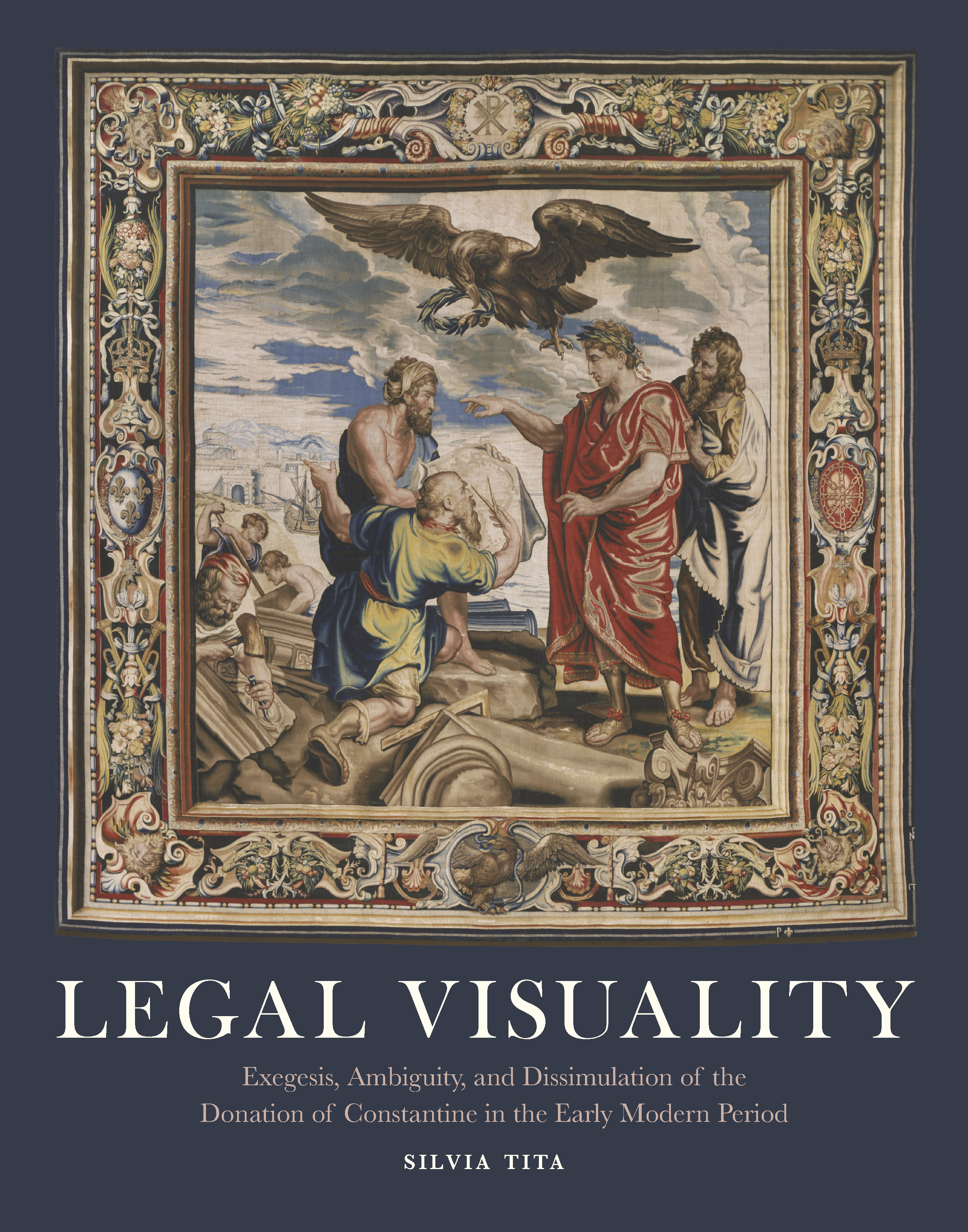 Legal Visuality
Exegesis, Ambiguity, and Dissimulation of the Donation of Constantine in the Early Modern Period