
Unerreichbare Milliarden?
Die Erbschaftsteuer und das Grundgesetz

Paperback (Forthcoming)
(November 2026)
ISBN: 9783162012432
4.49 x 7.17 inches
Price: $36.00
Against the backdrop of ongoing debates on the taxation of large estates and business succession, Alexander Thiele outlines the constitutional framework of inheritance tax reform. At its core, this is a political rather than a legal question.
Given tight public budgets, and above all in light of an anticipated ruling by the Federal Constitutional Court, a possible reform of inheritance tax has recently once again become the subject of intense debate. Against this background, Alexander Thiele discusses the constitutional-policy arguments for and against inheritance tax and examines the constitutional framework governing this long-established form of taxation. This concerns, first, the formal question of legislative competence, which may be exercised by the Federation despite the provision of Article 72(2) of the Basic Law. The main focus, however, is on the substantive limits imposed by fundamental rights, arising on the one hand from the freedoms guaranteed by Article 14(1) and (2) and Article 6(1) of the Basic Law and, on the other, and in particular, from the general principle of equality under Article 3(1) of the Basic Law. The analysis shows that the Basic Law leaves policymakers, and especially the federal legislature, considerable latitude in shaping the “right” form of inheritance tax, provided that they remain faithful, in its essential features and above all in a manner consistent with the principle of equality, to their own underlying legislative decision to tax increases in the ability to pay resulting from inheritance. This is not the case, however, with certain existing provisions, such as the needs-based exemption test under section 28a of the Inheritance and Gift Tax Act (ErbStG). Alexander Thiele makes clear that the taxation of inheritances is essentially a political rather than a legal question.
Similar Books


 Balthasar Caymox of Nuremberg
Early Modern German Print Publishers: Popular Prints of the Seventeenth Century

 East Meets West: Justice, Law, and Politics
The 13th Kobe Lecture and the 2nd IVR Japan International Conference, Chiba, September 2023
 False Friends in Comparative Law
Advantages and Risks of Legal Transplants in Civil Law – the Polish-German Perspective
 Formulary apportionment in international tax law
An allocation method for the age of globalization and digitalization
Volume 210


 Law, Economics, and Inequalities in the Welfare State
Proceedings of the Special Workshops held at the 31st World Congress of the International Association for Philosophy of Law and Social Philosophy in Seoul, Republic of Korea, 2024
 Legal Pluralism and the Tajik Experience of Xinjiang
Between Custom and the Chinese State: An Ethnographic Perspective
 Linguistic and Cultural Dynamics in a Frontier Society
New Perspectives on Northeastern Bavaria and Western Bohemia in the Early Middle Ages
Volume 9
 Liturgia semper reformanda
Adaptations and accommodations in the liturgy in light of canon 838 of the Code of Canon Law


 The Documentation of Historical Facts in Trial Judgments of the International Criminal Court
A Constitutional Theory of International Criminal Proceedings
Volume 66
 The EPPO/OLAF Compendium of National Procedures: Estonia
Desktop codes on the procedural law of the Member States with annotations by national experts
 The EPPO/OLAF Compendium of National Procedures: Greece
Desktop codes on the procedural law of the Member States with annotations by national experts
 The EPPO/OLAF Compendium of National Procedures: Italy
Desktop codes on the procedural law of the Member States with annotations by national experts


 »In die Saiten flüchtig greif’ ich«
Poetik und Praxis romantischer Lied-Lyrik: Vom frühromantischen Experiment zur Leitform im 19. Jahrhundert
Volume 50
 (Bloß) symbolische Rechtsetzung
Eine interdisziplinäre Untersuchung der deutschen Glücksspielregulierung auf ihre funktionelle und symbolische Wirkung
 (Keine) Haftung für Produktfehler?
Eine Untersuchung des deutschen und neuseeländischen Rechts zum Ausgleich von Personenschäden durch fehlerhafte Produkte
 Abwendung sozialrechtlicher Vermögenssanktionen als Abrechnungsbetrug?
Zur Übertragbarkeit der Ausklammerung geldwerter staatlicher Sanktionen aus dem Vermögensbegriff auf den Vergütungsausschluss in der vertragsärztlichen Versorgung
 Althochdeutsche Stabreimdichtungen
Hildebrandslied, Muspilli und kleinere Denkmaler. Von Grund auf neu ediert, mit Erschliessungshilfen versehen, ubersetzt und eingeleitet von Frank Schafer

 Auf Gedeih und Verderb
Die Pestiziddebatte seit dem Kaiserreich zwischen Hunger, Profit und Massenmord
 Ausforschung und Rechtsdurchsetzung im Unionsprivatrecht
Herleitung und Ausgestaltung eines allgemeinen unionsrechtlichen Informationsrechts

 Berthold von Neuffen. Ein heimlicher Ratgeber Kaiser Ludwigs des Bayern
Forschungen zu Kaiser- und Papstgeschichte des Mittelalters. Beihefte zu J. F. Böhmer, Regesta Imperii
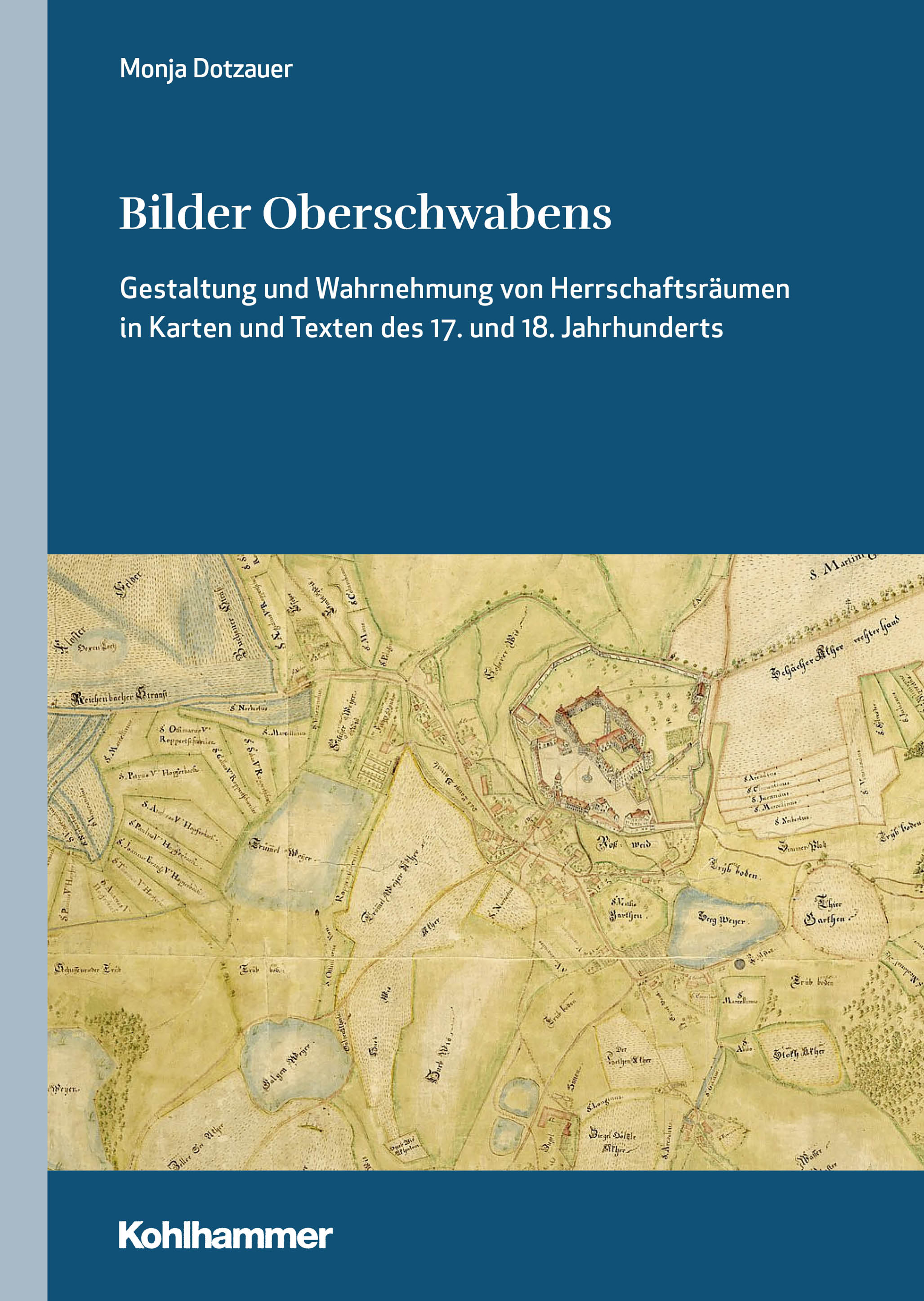 Bilder Oberschwabens
Gestaltung und Wahrnehmung von Herrschaftsräumen in Karten und Texten des 17. und 18. Jahrhunderts
 Britische Verfassungsgerichtsbarkeit
Modellbegründung aus Anlass der graduellen Selbstermächtigung während der Brexit-Krise
 Credit Default Swap-Aktivismus
Eine ökonomische Analyse und rechtliche Bewertung der Einflussnahme von Credit Default Swap-Investoren auf Unternehmen
 Cybergefahrenabwehrrecht
Die staatliche Abwehr von Gefahren für die Cybersicherheit privater IT-Systeme
