
Turn to Reformation
Karlstadt's Commentary on Augustine's De spiritu et littera, 1517-1519
By (author) Alyssa Lehr Evans

Hardback (Published)
(September 2026)
ISBN: 9783161639807
6.1 x 9.13 inches
Price: $194.00
On back order
Alyssa Lehr Evans examines how Andreas Bodenstein von Karlstadt, a central player in the development of the Reformation in Wittenberg, became and continued to self-consciously develop as a reformer. She shows how Karlstadt’s reading and reception of Augustine played a pivotal role in his development and approaches understanding Karlstadt by considering fundamental issues of authority and interpretation.
English summary: Karlstadt’s commentary on Augustine’s “De spiritu et littera” is an exceptional resource for understanding Karlstadt’s conversion and his continued development into a reformer in these years of rapid change in Wittenberg (1517-1519). Alyssa Lehr Evans shows his “learning by doing,” how he self-consciously transitioned away from his scholastic career and developed new ways to move forward, even while still holding on for a time to traditional methods and style. Karlstadt openly wrestled with fundamental questions about which religious sources are authoritative and how they ought to be read. Evans shows how Karlstadt’s reading and reception of Augustine played a pivotal role in his development and affected his theology and its practical applications, even his writing style. Placing this commentary and surrounding writings in their historical context provides a deeper understanding of Karlstadt’s early thought, his reading and working methods, as well as his active role in the emergence of the reformation in Wittenberg. This work was awarded the 2025 Manfred Lautenschlaeger Award for Theological Promise. German description: Alyssa Lehr Evans untersucht, wie Andreas Bodenstein von Karlstadt, zentraler Akteur in der Entwicklung der Wittenberger Reformation, zum Reformator wurde und sich in dieser Rolle bewusst weiterentwickelte. Sie zeigt die wichtige Rolle auf, die die Beschaftigung mit Augustin fur Karlstadts Entwicklung spielte und nahert sich Karlstadt uber die Grundfragen von Autoritat und Interpretation.
Introduction: The Commentary on Augustine as a Snapshot into Karlstadt in Transition
1. The Commentary in Context: Karlstadt as Reformer in Wittenberg 1517-1519
1.1 Reconstruction of the Lectures and Printing of the Commentary: Karlstadt's 151 Theses to his Epitome
1.2 Conclusion
2. Karlstadt Encounters Augustine: The Introduction Materials to the Commentary
2.1 Karlstadt's Scholastic Background and Early Works in the Wittenberg Context
2.2 An Analysis of The Introduction Materials to the Commentary
2.3 Karlstadt's Dedication Letter in Context: Conversion Narratives in Wittenberg
2.4 Conclusion
3. Sources: "Out with the New, in with the Old"
3.1 Karlstadt's Library and Sources
3.2 Authorship Questions in the Commentary
3.3 The Church's Prayers as Authoritative Sources for Theological Debate
3.4 Karlstadt's Explanations to his 151 Theses and their Content
3.5 Compiled Evidences and Sourcebooks
3.6 Conclusion
4. Karlstadt Reads Augustine: A Developing Hermeneutic
4.1 The "Right" Reading of Augustine
4.2 Interpreting Augustine by Augustine
4.3 Imitatio Augustini et Imitatio Pauli: Augustine as Interpreter of Paul par excellence
4.4 The Development of a New Hermeneutic: Karlstadt on Hermeneutical Principles in his 151 Theses
4.5 Karlstadt's Hermeneutical "Rules" in the Commentary
4.6 Karlstadt on Scripture and His Understanding of the Spirit/Letter Distinction
4.7 An Example of Karlstadt Reading and Wrestling with Augustine
4.8 Conclusion
5. Further Development in Style and Theology
5.1 A Change in Style
5.2 Developments in Theology
5.3 Conclusion
6. Karlstadt's Commentary on Augustine and His Development as a Reformer
- By (author) Alyssa Lehr Evans
Other Titles in this Series
 Ritualwandel und Deutungshoheit
Die fruhe Reformation in der Residenzstadt Wittenberg (1500-1533)
Volume 74


 Memoria – theologische Synthese – Autoritätenkonflikt
Die Rezeption Luthers und Melanchthons in der Schülergeneration
Volume 90

 Religiose Dynamik zwischen 1380 und 1520
Antriebskrafte der Mentalitat, Frommigkeit, Theologie, Bildkultur und Kirchenreform
Volume 140
 Aushandlungen religiosen Wissens – Negotiated Religious Knowledge
Verfahren, Synergien und produktive Konkurrenzen in der Vormoderne - Methods, Interactions and Productive Rivalries in Premodern Times
Volume 115
 Potestates und ministerium publicum
Eine Studie zur Amtstheologie im Mittelalter und bei Martin Luther
Volume 78
 Lazarus Spengler (1479-1534)
Der Nurnberger Ratsschreiber im Spannungsfeld von Humanismus und Reformation, Politik und Glaube.Mit einer Edition von Gudrun Litz
Volume 25
 Passionspredigt im 16. Jahrhundert
Das Leiden und Sterben Jesu Christi in den Postillen Martin Luthers, der Wittenberger Tradition und altglaubiger Prediger
Volume 119

 Media Salutis
Gnaden- und Heilsmedien in der abendlandischen Religiositat des Mittelalters und der Fruhen Neuzeit
Volume 58

 Transformationen
Studien zu den Wandlungsprozessen in Theologie und Frommigkeit zwischen Spatmittelalter und Reformation
Volume 86

 Ketzer, Konsuln und Busser
Die stadtischen Eliten von Montauban vor dem Inquisitor Petrus Cellani (1236/1241)
 Netzwerke der Nonnen
Kritische Edition der Briefsammlung der Luner Benediktinerinnen (Hs. 15, ca. 1460-1555)
Volume 143
 Envisioning the Christian Society
Niels Hemmingsen (1513-1600) and the Ordering of Sixteenth-Century Denmark
Volume 116

 Zwei Schwerter – Zwei Reiche
Martin Luthers Zwei-Reiche-Lehre vor ihrem spatmittelalterlichen Hintergrund
Volume 26


 Nonnen und Pröpste im Kloster Lüne
Das Statutenbuch des Klosters Lüne (Lüne, 14), das Tagebuch der Priorin Mechthild Wilde (Lüne, 24), Netzwerke der Pröpste - Nikolaus Graurock, Nikolaus Schomaker und Johannes Lorber
 Ein Kardinal im Zeitalter der Renaissance
Die Karriere des Giovanni di Castiglione (ca. 1413-1460)
Volume 59
 Zwischen Gelehrsamkeit und konfessioneller Identitatsstiftung
Lutherische Kirchen- und Universalgeschichtsschreibung 1546-1617
Volume 37

Similar Books
 ‘For You I Study, For You I Work, For You I Live, For You I Am Ready To Even Give My Life’
Essays in Honour of Francis (Frank) J Moloney, SDB




 Ars Prophetica
Theology in the Poetry of Twentieth-Century Hebrew Poets Avraham Halfi, Shin Shalom, Amir Gilboa, and T. Carmi
 As Messianism Turns to Heresy
The Regenstein Chair Lectures On Lurianic Kabbalah and Shabbatai Tzevi at Hebrew Union College - Cincinnati


 Drunk the Potion, No Whit Charmed
The Doctrine of Pure and Perfect Souls from Iamblichus to Damascius



 Extracanonical Traditions and the Holy Land
Texts, Rituals, and Material Culture in Late Antique Palestine
 Fear, Fear of God, God-Fearers
Philological and Historical Perspectives on the World of Ancient Judaism and Christianity




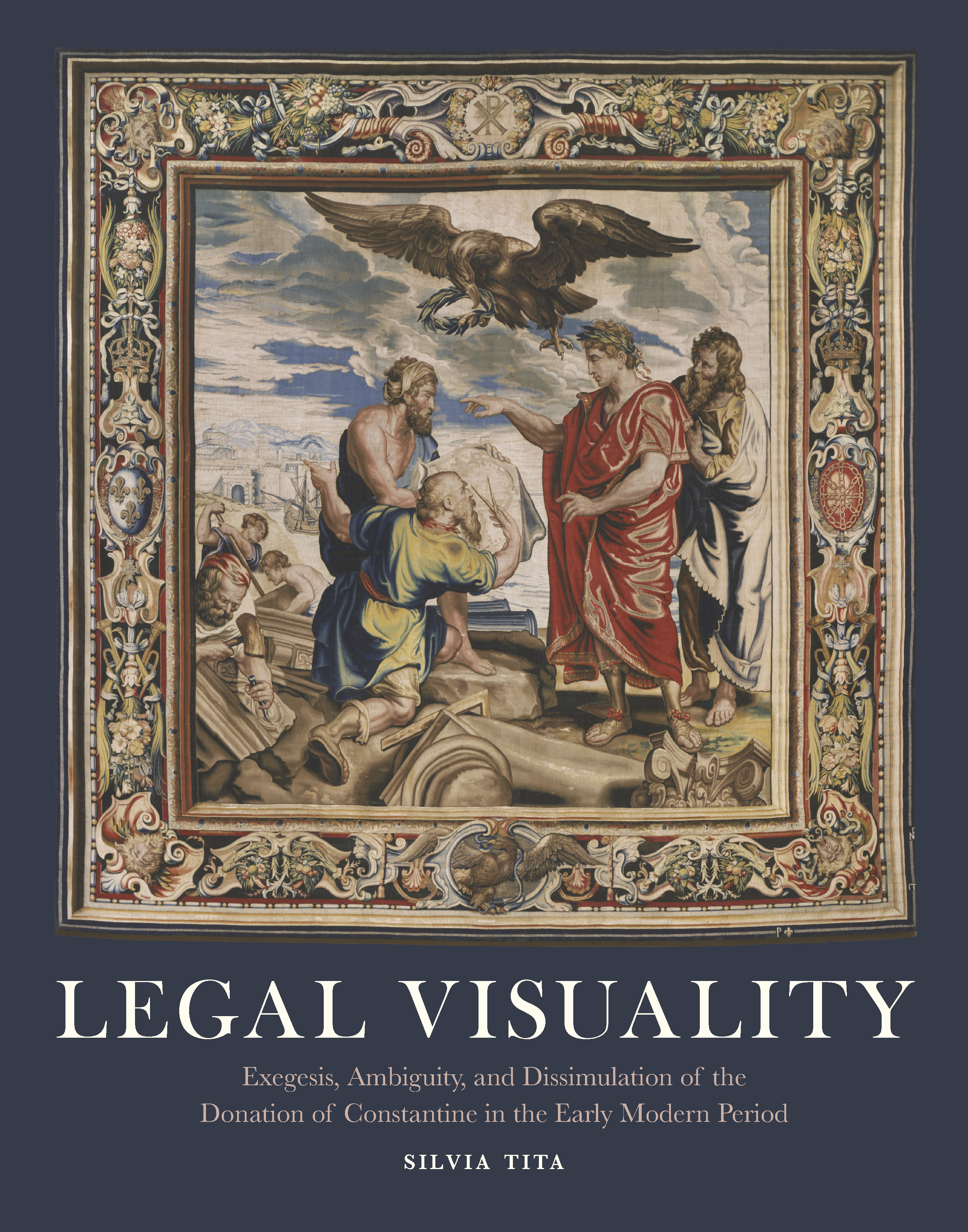 Legal Visuality
Exegesis, Ambiguity, and Dissimulation of the Donation of Constantine in the Early Modern Period
 Liturgia semper reformanda
Adaptations and accommodations in the liturgy in light of canon 838 of the Code of Canon Law


