
The Tombs of Amenhotep, Khnummose, and Amenmose at Thebes
By (author) N. Strudwick By (author) H.M. Strudwick

This book publishes three ‘Tombs of the Nobles’ on the Theban West Bank in Egypt (nos. 294, 253, 254). The tombs, arranged around a single courtyard, date to the 18th dynasty, between about 1400 and 1300 BC, and belonged to middle to low-ranking officials in the granary and treasury administration of Upper Egypt. The owners, Amenhotep, Knummose, and Amenmose, were wealthy enough to build themselves well decorated tombs with some unusual scenes, such as the ‘Granary of Amun’ in the tomb of Khnummose and the house in the tomb of Amenmose. This publication is based on fieldwork carried out by an expedition from the University of Cambridge between 1984 and 1990. The work began as a project to complete work on the tomb of Amenmose initiated by Norman and Nina de Garis Davies, the records of which are stored in the archives of the Griffith Institute. It was subsequently expanded to include the two other tombs in the courtyard and to a full excavation of the underground areas, focussing especially on the later history of the tombs, which is here presented in detail for the first time in a treatment of a comparable group of tombs in the Theban Necropolis. Elements of the original burial equipment were preserved, allowing it to be compared with other groups of the period. The tomb of Amenhotep was usurped in the 20th dynasty by an official called Roma, who cut a new set of burial chambers and added some paintings. Over the next 500 years, all three tombs were used again and again by later priests and officials who were either unable or unwilling to cut new tombs of their own. Ultimately more than 200 individuals may have been buried in the tombs. The publication includes specialist reports on ceramics, human, animal, and botanical remains, and bracelets of the Islamic period.
This book publishes three ‘Tombs of the Nobles’ on the Theban West Bank in Egypt (nos. 294, 253, 254). The tombs, arranged around a single courtyard, date to the 18th dynasty, between about 1400 and 1300 BC, and belonged to middle to low-ranking officials in the granary and treasury administration of Upper Egypt. The owners, Amenhotep, Knummose, and Amenmose, were wealthy enough to build themselves well decorated tombs with some unusual scenes, such as the ‘Granary of Amun’ in the tomb of Khnummose and the house in the tomb of Amenmose. This publication is based on fieldwork carried out by an expedition from the University of Cambridge between 1984 and 1990. The work began as a project to complete work on the tomb of Amenmose initiated by Norman and Nina de Garis Davies, the records of which are stored in the archives of the Griffith Institute. It was subsequently expanded to include the two other tombs in the courtyard and to a full excavation of the underground areas, focussing especially on the later history of the tombs, which is here presented in detail for the first time in a treatment of a comparable group of tombs in the Theban Necropolis. Elements of the original burial equipment were preserved, allowing it to be compared with other groups of the period. The tomb of Amenhotep was usurped in the 20th dynasty by an official called Roma, who cut a new set of burial chambers and added some paintings. Over the next 500 years, all three tombs were used again and again by later priests and officials who were either unable or unwilling to cut new tombs of their own. Ultimately more than 200 individuals may have been buried in the tombs. The publication includes specialist reports on ceramics, human, animal, and botanical remains, and bracelets of the Islamic period.
- By (author) N. Strudwick
- By (author) H.M. Strudwick
Other Titles in this Series


 Topographical Bibliography of Ancient Egyptian Hieroglyphic Texts, Reliefs and Paintings. Volume I: The Theban Necropolis. Part II: Royal Tombs and Smaller Cemeteries
Second Edition, Revised and Augmented


 The Reconstruction of the Furniture of Queen Hetepheres I, the Mother of the Pharaoh Khufu
Completed and Edited by Geoffrey P. Killen with Contributions from Julie Dawson and Helen Farrar

 Principles of Egyptian Art
Edited by Emma Brunner-Traut, Translated and Edited by John Baines with a Foreword by E.H. Gombrich
 Studies in Egyptian Syntax
Second Edition including Previously Unpublished Chapters Edited by R.S. Simpson
 Topographical Bibliography of Ancient Egyptian Hieroglyphic Texts, Reliefs and Paintings. Volume III: Memphis. Part II: Saqqâra to Dahshûr
Second Edition, Revised and Augmented
 A Citizen of Nowhere
Jaroslav Cerny, Egyptologist (1898-1970): A Journey through the Twentieth Century




 Topographical Bibliography of Ancient Egyptian Hieroglyphic Texts, Reliefs and Paintings. Volume I: The Theban Necropolis. Part I: Private Tombs
Second Edition, Revised and Augmented


 Topographical Bibliography of Ancient Egyptian Hieroglyphic Texts, Reliefs and Paintings IV
Lower and Middle Egypt
Volume 4, 4
Similar Books




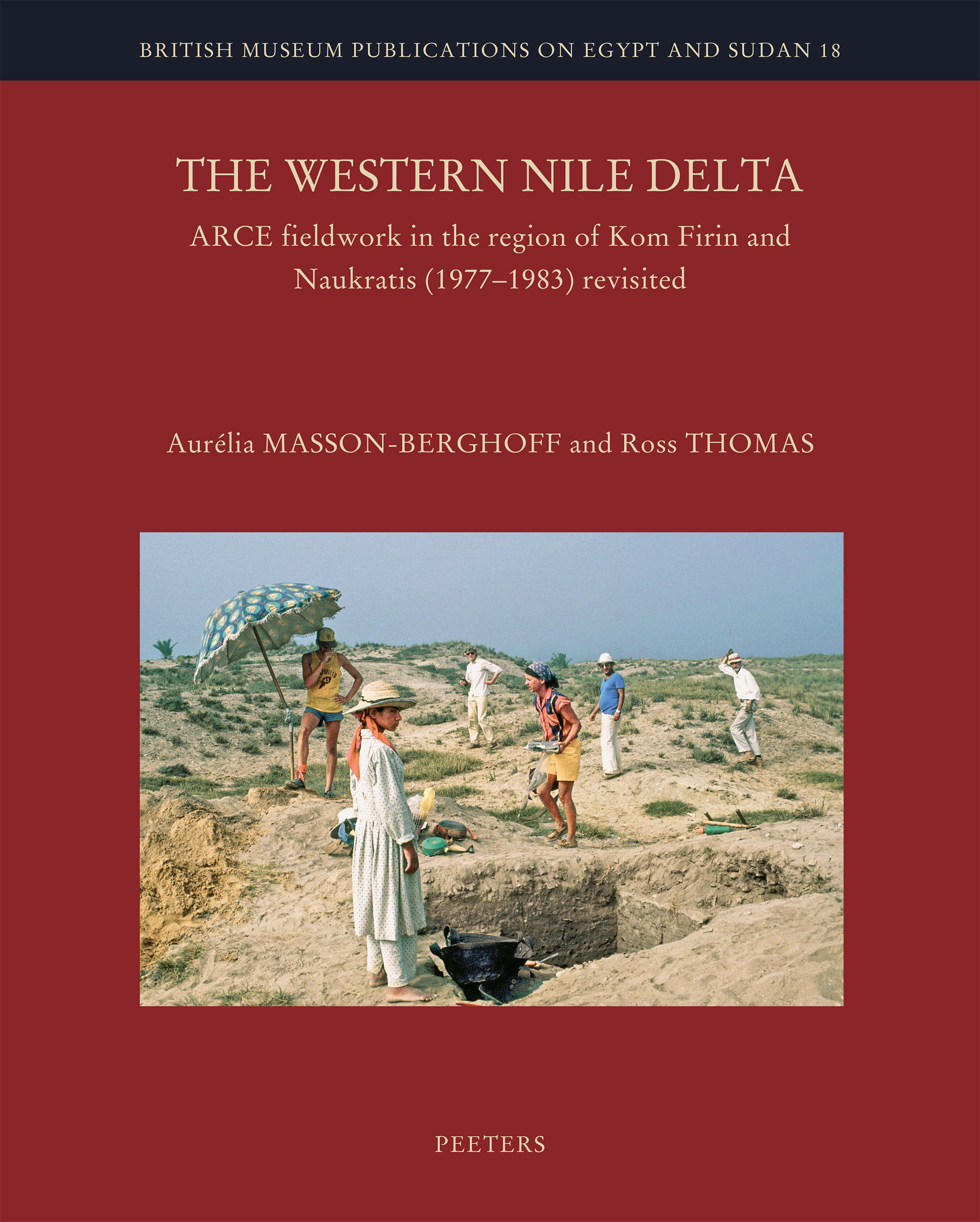 The Western Nile Delta
ARCE Fieldwork in the Region of Kom Firin and Naukratis (1977-1983) Revisited
 Archaeological Discoveries at the Temple of Ramesses II in Abydos
Vol. 2: Old Kingdom Wall, Papyri, Ostraca, and Leather Remains


 The Southern Room of Amun in the Temple of Hatshepsut
Volume 2: Studies on Decoration and Ritual Function
Volume 11

 Die Ägyptenworte im Ezechielbuch
Eine literarhistorische und religionsgeschichtliche Analyse von Ez 29–32
 Du côté de chez Zeus
Fouilles de la Mission archéologique française du désert Oriental à Abû Qurayya (Dios) et Bi’r Bayza (y inclus O.Dios I 1-67)
Volume 98
 La littérature de l’Égypte ancienne. Volume V
Nouvel Empire : XVIIIe dynastie. Eulogies et narrations royales, contes, enseignements et littérature d’idée
 Lehrreiche Literatur
Die didaktische Gestaltung von Plutarchs Quaestiones Graecae und Romanae und Gellius' Noctes Atticae

 Nouvelles perspectives sur le Traité anonyme du Codex Bruce. New Perspectives on the Untitled Treatise of the Bruce Codex
(Colloque international, Québec, Université Laval, 13 avril 2018)
Volume 11


 Ägypten und Levante XXXIV / Egypt and the Levant XXXIV (2024)
Internationale Zeitschrift für ägyptische Archäologie und deren Nachbargebiete / International Journal for Egyptian Archaeology and Related Disciplines

 Ancient Egypt in 50 Discoveries
Highlights from the first century of the Egypt Exploration Society
Volume 8
 Archaeological Discoveries at the Temple of Ramesses II in Abydos
Vol. 1: Magazines, Animal Burials, and Miscellanea
 Building an 18th Dynasty Tomb at Thebes
Construction Records from Mery's Funerary Complex (TT 95) in Context
Volume 4

 Current Research in Egyptology 2024
Proceedings of the Twenty-Fourth Annual Symposium, Jointly Organised by the University of Liverpool, Swansea University, University of Birmingham, University of Oxford, and University of Wales Trinity Saint David, 2–6 September 2024


 From Egypt to the Levant and Beyond
African Individuals and Groupsain Cuneiform Texts from the Late Bronze Age
Volume 133
 Kom al-Ahmer — Kom Wasit III
The Archaeology of Two Ptolemaic Districts in the Western Nile Delta, Egypt
 Language, Semantics, and Cognition in Ancient Egypt and Beyond
Proceedings of the International Conference, Yale University, April 16-18, 2021
Volume 14