
The Spirit’s Relation to the Risen Lord in Paul
An Examination of Its Christological Implications
by Mehrdad Fatehi

Mehrdad Fatehi studies Paul’s letters and shows that the risen Lord is featured in the religious experiences of Paul and the Pauline believers as the present and active lord of the new covenant community. These experiences seem to point beyond the notion of a divine agent alongside God to a redefinition of the very concept of God in a way that it would include Christ within itself . This is confirmed by the way Paul and the Pauline communities believed themselves to have experienced the risen Lord through God’s Spirit.In Judaism in general, as well as in Paul, the Spirit was not regarded as an entity distinct or separable from God but as God himself in his presence and action in and among his people. Yet we have clear evidence in Paul’s letters that the risen Christ was experienced and conceived of as being present and active through the Spirit bestowing grace and gracious gifts, infusing wisdom, communicating his will, regenerating and transforming his people, and dwelling in and among them all through the Spirit in a way which is best understood after the analogy of God’s presence and work through the Spirit in Judaism. In other words, Paul’s ‘the Spirit of Christ’ is best understood after the analogy of ‘the Spirit of God’.Paul’s application of the Spirit-language to describe and interpret the Christians’ experiences of the risen Lord shows that Paul most probably presupposed a redefinition of monotheism in which Christ would be included within the Godhead.
Mehrdad Fatehi, Born 1960; studied Engineering Electronics at the University of Science and Technology in Tehran; 1988-1991 youth pastor and Bible School teacher in Tehran; 1998 Ph.D. in New Testament studies at London Bible College (Brunel University); presently Academic Dean and Lecturer for New Testament Studies at the Elam College (Elam Ministries), UK; Associate Research Fellow of the London Bible College.
- By (author) Mehrdad Fatehi
Other Titles in this Series
 Matthew and the Mishnah
Redefining Identity and Ethos in the Shadow of the Second Temple's Destruction
Volume 418

 Herod Antipas in Galilee
The Literary and Archaeological Sources on the Reign of Herod Antipas and its Socio-Economic Impact on Galilee
Volume 215


 Christusglaube
Studien zum Syntagma pistis Christou und zum paulinischen Verstandnis von Glaube und Rechtfertigung
Volume 227


 Das Romische Imperium im Lukanischen Doppelwerk
Darstellung und Ertragspotenzial fur christliche Leser des spaten ersten Jahrhunderts
Volume 547

 Early Christian Teachers
The 'Didaskaloi' from Their Origins to the Middle of the Second Century
Volume 516


 Der Tag der Plagen
Studien zur Verbindung der Rezeption von Ex 7-11 in den Posaunen- und Schalenvisionen der Johannesoffenbarung und der Tag des Herrn-Tradition
Volume 387
 The Hermeneutics of Divine Testing
Cosmic Trials and Biblical Interpretation in the Epistle of James and Other Jewish Literature
Volume 396


 The Use of the Old Testament in Hebrews
A Case Study in Early Jewish Bible Interpretation
Volume 260


 Colometric Analysis of Paul’s Letters
Methodological Foundations and Application to 2 Corinthians 10-13
Volume 603
 La reconfiguration epistemique du lecteur de Marc
Perspectives synchroniques et diachroniques sur le recit du demoniaque de Gerasa (Mc 5.1-20) mis en resonance avec les jeunes hommes de 14.51-52 et 16.1-8
Volume 569
 Johannine Belief and Graeco-Roman Devotion
Reshaping Devotion for John's Graeco-Roman Audience
Volume 528

 Proclaiming the Judge of the Living and the Dead
The Christological Significance of Judgement in Acts 10 and 17
Volume 494

Similar Books



 Cyril of Alexandria’s Christological Exegesis
Explorations of Partitive Exegesis in the Dialogues on the Trinity
Volume 70


 Reformed Covenantal Eudaimonism
Wilhelmus à Brakel (1635–1711) on Highest Good, Virtue, and Law
Volume 87

 The Biblical Tale of Judah and Tamar in Fourteenth-Century Iran
A Judeo-Persian Versified Account by Shāhīn with Scholarly Edition, Annotated Translation and Persian Transliteration
Volume 94, 951

 The Therapeutae as the Best Paradigm for the Contemplative Life
A Contextual Reading of Philo of Alexandria's De Vita Contemplativa

 De Moïse à Jésus: une messianité en discussion
Une interprétation de Jean 6 à partir de la section narrative (vv. 1-25a)
Volume 244


 Die Sprache der Psalmen
Skizzierung eines lyrischen Prototyps der hebräischen Psalmen mithilfe von gattungs- und lyriktheoretischen Ansätzen
Volume 440

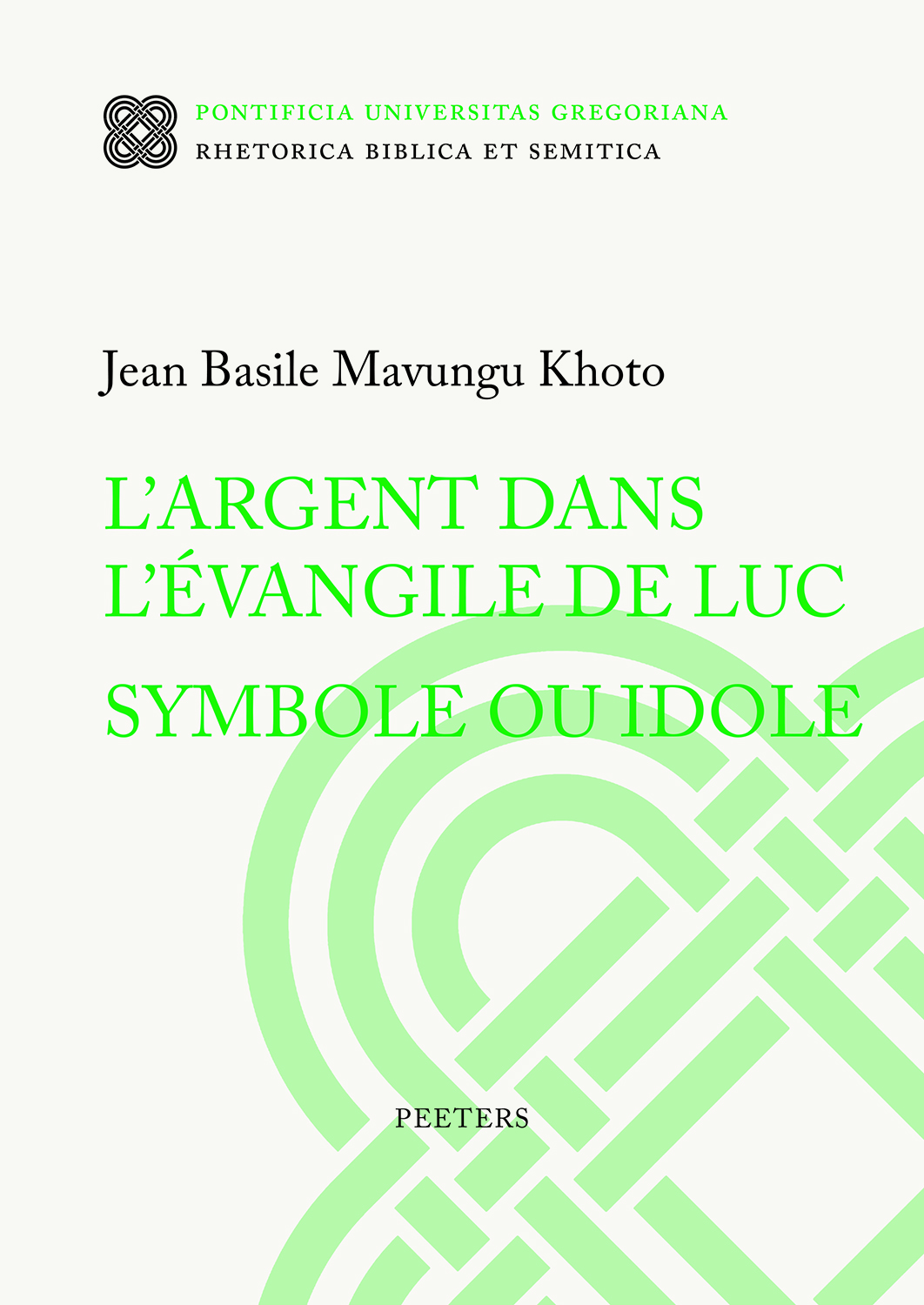
 Makrothymia im Neuen Testament
Semantik und Ethik einer vergessenen ethischen Norm. Kontexte und Normen neutestamentlicher Ethik / Contexts and Norms of New Testament Ethics. Band XV
 Parola di Dio, di uomo e di Re
L'assoluta verità della Bibbia nella dottrina cattolica di Bacchisio Raimondo Motzo


 Breaking New Ground in John
Imagery, Parables, Characters, Christology, and Ethics in the Fourth Gospel
Volume 531
 But the Wise Shall Understand
Reuse of Prophecies, Chronotope, and Merging of Eschatological Horizons in Daniel 10-12
 Creation Concepts and Creation Care
Perspectives from Early Judaism, Early Christianity, and Beyond. Kontexte und Normen neutestamentlicher Ethik / Contexts and Norms of New Testament Ethics XVII
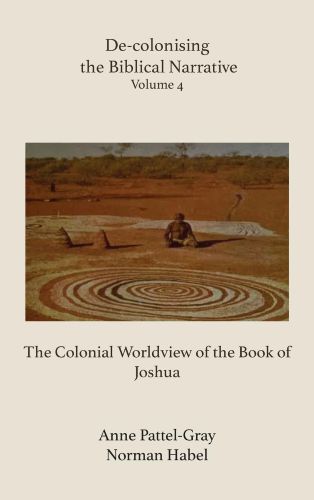 De-colonising the Biblical Narrative. Volume 4
The Colonial Worldview of the Book of Joshua
Volume 4


 Personified Mountains in Ancient Canonical Narratives
Spatial and Mythic Studies of Mesopotamian, Greek, and Hebrew Bible Landscapes
Volume 62
