
The South American Camelids
by Duccio Bonavia, translated by Javier Flores Espinoza

Paperback (Published)
(February 2009)
ISBN: 9781931745406
8.46 x 10.94 inches
Price: $10.00
In stock
Hardback (Published)
(February 2009)
ISBN: 9781931745413
8.46 x 10.94 inches
Price: $25.00
In stock
One of the most significant differences between the New World’s major areas of high culture is that Mesoamerica had no beasts of burden and wool, while the Andes had both. Four members of the camelid family–wild guanacos and vicunas, and domestic llamas and alpacas–were native to the Andes. South American peoples relied on these animals for meat and wool, and as beasts of burden to transport goods all over the Andes. In this book, Duccio Bonavia tackles major questions about these camelids, from their domestication to their distribution at the time of the Spanish conquest. One of Bonavia’s hypotheses is that the arrival of the Europeans and their introduced Old World animals forced the Andean camelids away from the Pacific coast, creating the (mistaken) impression that camelids were exclusively high-altitude animals. Bonavia also addresses the diseases of camelids and their population density, suggesting that the original camelid populations suffered from a different type of mange than that introduced by the Europeans. This new mange, he believes, was one of the causes behind the great morbidity of camelids in Colonial times. In terms of domestication, while Bonavia believes that the major centers must have been the puna zone intermediate zones, he adds that the process should not be seen as restricted to a single environmental zone. Bonavia’s landmark study of the South American camelids is now available for the first time in English. This new edition features an updated analysis and comprehensive bibliography. In the Spanish edition of this book, Bonavia lamented the fact that the zooarchaeological data from R. S. MacNeish’s Ayacucho Project had yet to be published. In response, the Ayacucho’s Project’s faunal analysts, Elizabeth S. Wing and Kent V. Flannery, have added appendices on the Ayacucho results to this English edition. This book will be of broad interest to archaeologists, zoologists, social anthropologists, ethnohistorians, and a wide range of students.
- By (author) Duccio Bonavia
- Translated by Javier Flores Espinoza
Other Titles in this Series


 Recent advances in the Archaeology of the Northern Andes
In memory of Gerardo Reichel-Dolmatoff
Volume 39
 Berenike 1999/2000
Report on the Excavations at Berenike, Including Excavations in Wadi Kalalat and Siket, and the Survey of the Mons Smaragdus Region
Volume 56

 Roman Foodprints at Berenike
Archaeobotanical Evidence of Subsistence and Trade in the Eastern Desert of Egypt
Volume 55


 Ceramics of Postclassic Cholula, Mexico
Typology and Seriation of Pottery from the UA-1 Domestic Compound
Volume 43


 Ceramic Production and Circulation in the Greater Southwest
Source Determination by INAA and Complementary Mineralogical Investigations
Volume 44
 Settlement and Subsistence in Early Formative Soconusco
El Varal and the Problem of Inter-Site Assemblage Variation
Volume 65


Similar Books




 Colour Concept “Secoli bui” a colori
Codici cromatici e architetture dipinte nell’età tardoantica e medievale

 Creating the Woman in Antiquity
Proceedings of the 16th Melammu Workshop, Innsbruck, 2–3 June 2022
Volume 13
 Crossing Disciplines in the Study of Archaeology and Prehistoric Art: Insights from the Sahara and Mediterranean Africa
Proceedings of the XX UISPP World Congress (5–9 September 2023, Timișoara, Romania) Volume / Session 18
 Crossing Sacred Landscapes
Contacts and Continuities in the Desert Cults and Beliefs of Ancient Northern Arabia and the Arid Southern Levant
 Cuneiform Artefacts from Archaeological Contexts: New Research on Ancient Iraq
Proceedings of a Conference Held at the Bavarian Academy of Sciences and Humanities, July 4–5, 2024
Volume 2



 Exploring Prehistoric Pottery in Japan
A Study of Organic Inclusions, Adhering Materials, and Impressions of Woven Items
 From Coast to Coast
Current Archaeological Research on Cultural Exchange along and across the Baltic Sea
Volume 19


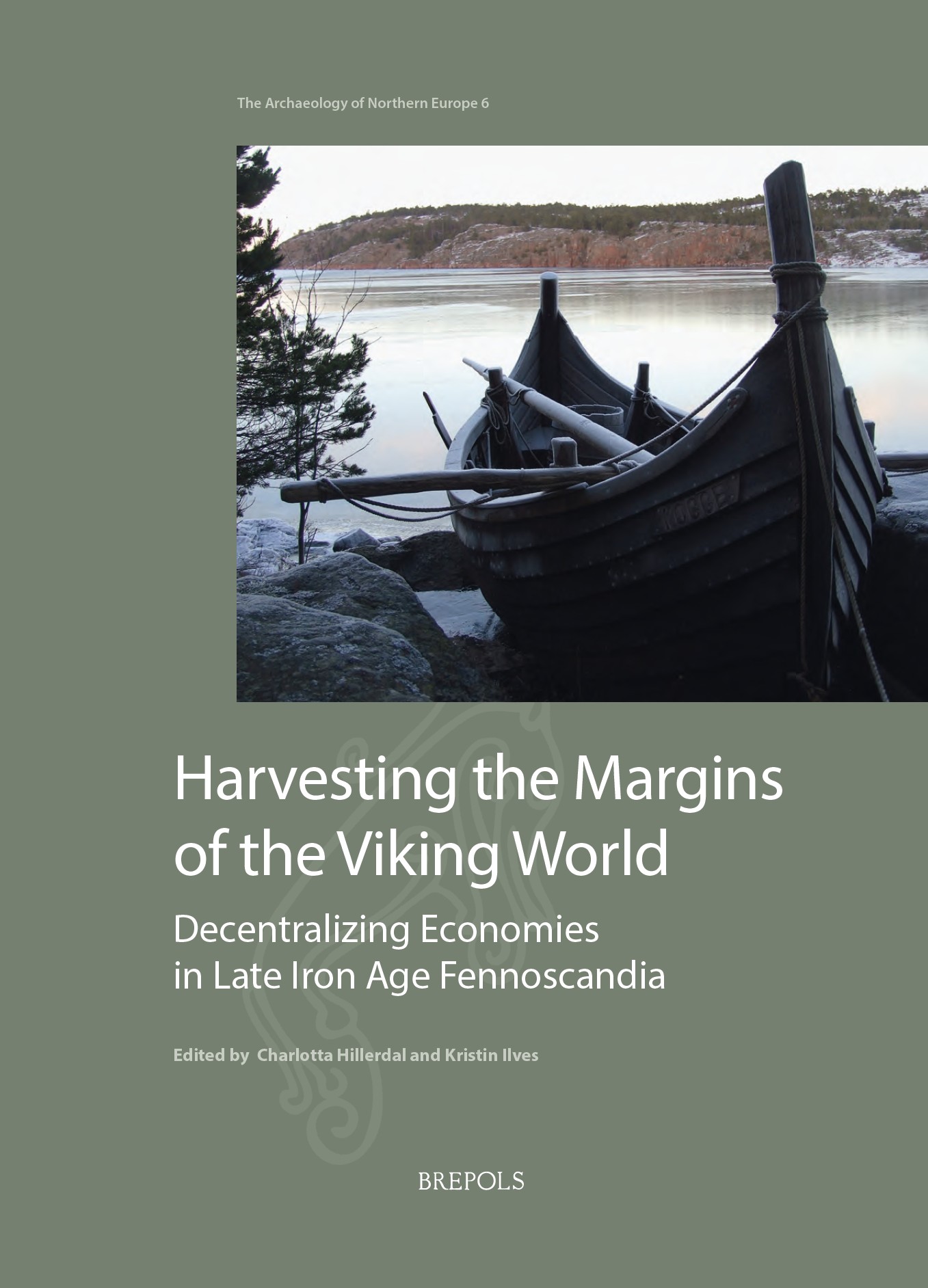 Harvesting the Margins of the Viking World
Decentralizing Economies in Late Iron Age Fennoscandia
Volume 6


 Linguistic and Cultural Dynamics in a Frontier Society
New Perspectives on Northeastern Bavaria and Western Bohemia in the Early Middle Ages
Volume 9

 Making and Meaning in the Bronze and Iron Ages
Chronology, Landscapes and Societies across Europe. Proceedings from the METALAGES2024 Colloquium (Florence, 23 October 2024)
 Medieval Yeghegis, Armenia
History, Archaeology, Society. Local Multiplicities and Global Connections of a Rural Centre on the Silk Road(s)

