
Roman Foodprints at Berenike
Archaeobotanical Evidence of Subsistence and Trade in the Eastern Desert of Egypt
by Rene T. J. Cappers

Paperback (Out of print)
(August 2006)
ISBN: 9781931745260
8.46 x 10.94 inches
Price: $9.95
On back order
Hardback (Out of print)
(August 2006)
ISBN: 9781931745277
8.46 x 10.94 inches
Price: $14.95
On back order
During the Graeco-Roman period, Berenike served as a gateway to the outside world together with Myos Hormos. Commodities were imported from Africa south of the Sahara, Arabia, and India into the Greek and Roman Empire, the importance of both harbors evidenced by several contemporary sources. Between 1994 and 2002, eight excavation seasons were conducted at Berenike by the University of Delaware and Leiden University, the Netherlands. This book presents the results of the archaeobotanical research of the Roman deposits. It is shown that the study of a transit port such as Berenike, located at the southeastern fringe of the Roman Empire, is highly effective in producing new information on the import of all kinds of luxury items. In addition to the huge quantities of black pepper, plant remains of more than 60 cultivated plant species could be evidenced, several of them for the first time in an archaeobotanical context. For each plant species detailed information on its (possible) origin, its use, its preservation qualities, and the Egyptian subfossil record is provided. The interpretation of the cultivated plants, including the possibilities of cultivation in Berenike proper, is supported by ethnoarchaeobotanical research that has been conducted over the years. The reconstruction of the former environment is based on the many wild plant species that were found in Berenike and the study of the present desert vegetation.
- By (author) Rene T. J. Cappers
"Summing up, this useful and interesting book is a precious tool for anyone wanting to explore the world of archaeobotany; at the same time, it is an easy read for non-experts intent on discovering the history of Berenike from a different perspective." Anna Maria Mercuri, Antiquity 2007 (81:313): 806-807 "The book is beautifully produced, with an abundance of highly useful maps, tables and black and white photographs. The colour photograph section at the end offers a real sense of the landscape and natural world surrounding the sites. The book is exemplary in its presentation and analysis of difficult archaeological data in a way that is intelligent, engaging and understandable for both specialists and non-specialists alike, and it will no doubt serve as a highly valuable tool for both archaeologists and ancient historians researching Roman trade with the east and Roman settlement in the Egyptian Eastern Desert for many years to come." Arjan Zuiderhoek, Bryn Mawr Classical Review 2006.10.41
—
Other Titles in this Series


 Recent advances in the Archaeology of the Northern Andes
In memory of Gerardo Reichel-Dolmatoff
Volume 39
 Berenike 1999/2000
Report on the Excavations at Berenike, Including Excavations in Wadi Kalalat and Siket, and the Survey of the Mons Smaragdus Region
Volume 56


 Ceramics of Postclassic Cholula, Mexico
Typology and Seriation of Pottery from the UA-1 Domestic Compound
Volume 43


 Ceramic Production and Circulation in the Greater Southwest
Source Determination by INAA and Complementary Mineralogical Investigations
Volume 44
 Settlement and Subsistence in Early Formative Soconusco
El Varal and the Problem of Inter-Site Assemblage Variation
Volume 65


Similar Books
 Archaeological Discoveries at the Temple of Ramesses II in Abydos
Vol. 2: Old Kingdom Wall, Papyri, Ostraca, and Leather Remains


 Drunk the Potion, No Whit Charmed
The Doctrine of Pure and Perfect Souls from Iamblichus to Damascius

 Epiphanies of the Divine in the Septuagint and the New Testament
Fifth International Symposium of the Corpus Judaeo-Hellenisticum Novi Testamenti (CJHNT), 14-17 May 2015, Nottingham



 Language and Power in the Roman Empire and Early India
Hierarchy, Ambiguity, and the Art of Reading the Signs in Cosmopolitan Cultures
 Late Antique villae in the Balkans (3rd–7th c. AD): Current Research Questions and Perspectives
HAEMUS Companion to the Late Antique Balkans 1
Volume 4


 Nurturing the Elite
Representations of Drinking, Eating, and Religious Vessels in Palmyrene Funerary Iconography
Volume 13


 The Compositional History of the Book of Kings
An Analysis of the Evaluative Frameworks in 1 Kings 14–2 Kings 25
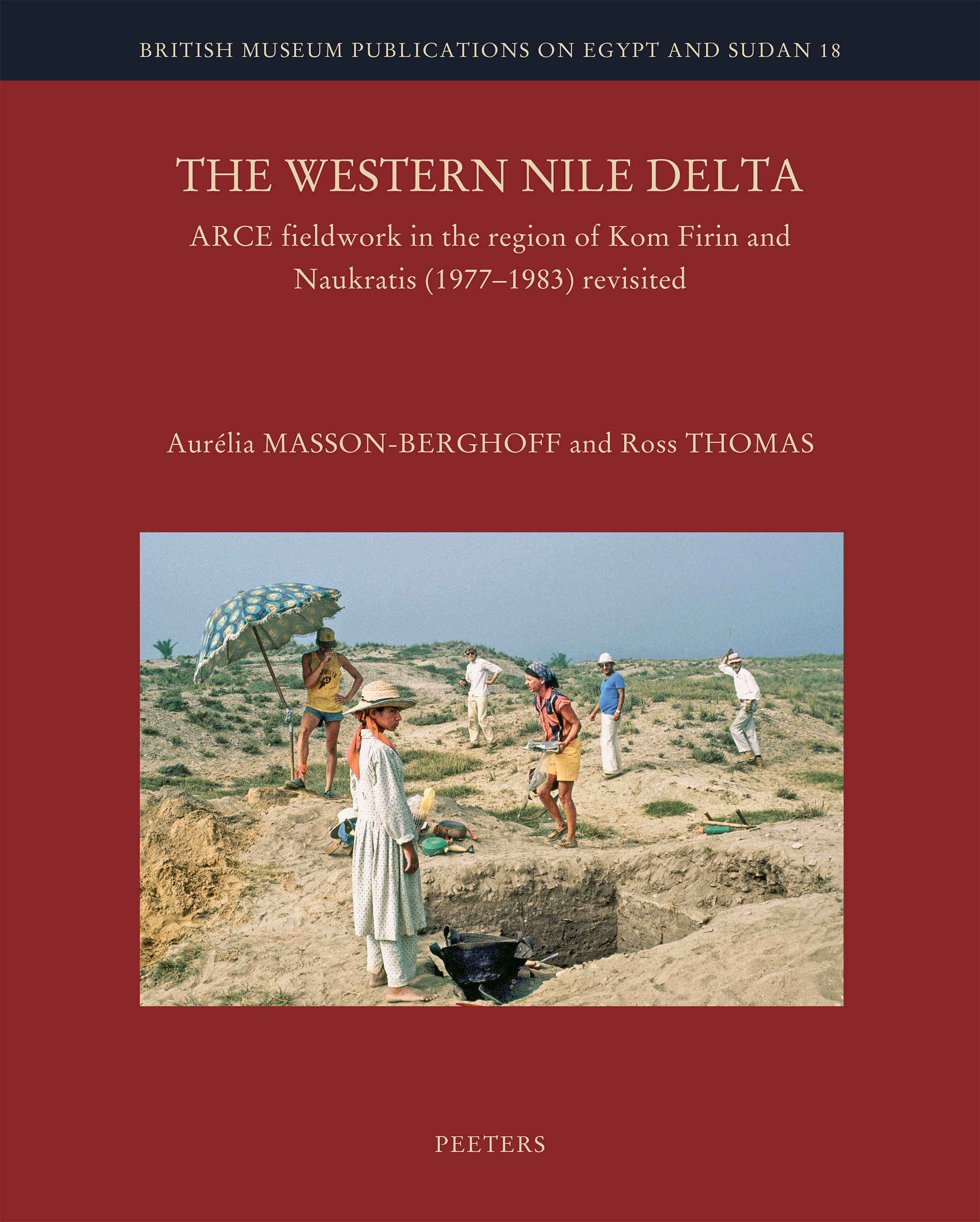 The Western Nile Delta
ARCE Fieldwork in the Region of Kom Firin and Naukratis (1977-1983) Revisited
 Contesting Labeled Identities
The Sociology of Gentilics in Biblical and Northwest Semitic Literature


 After Life in Roman Paganism. L’Égypte des astrologues. Les Mages hellénisés
Introductions historiographiques
Volume 7



 Die Ägyptenworte im Ezechielbuch
Eine literarhistorische und religionsgeschichtliche Analyse von Ez 29–32
 Diodor über den ersten Sklavenaufstand auf Sizilien
Ein philologischer und historischer Kommentar
Volume 67