
The Origins of State Organisations in Prehistoric Highland Fars, Southern Iran
Excavations at Tall-e Bakun
by Abbas Alizadeh

Tall-e Bakun A, near Persepolis in the Marv Dasht region of Fars, stands as one of the precursors to the complex societies of the fourth millennium BC early urban centres. This is the final report of the last season’s excavations at that site.
The late prehistoric Bakun A culture in Fars is a major source of information on the initial development of the evolutionary path which vertical mobile pastoralists of highland Iran may have taken to develop state organisations. Long before the appearance of administrative technology and physical segregation of administration, production, storage, and residential units in urban centers of the second half of the fourth millennium BC, Tall-e Bakun A, near Persepolis in the Marv Dasht region of Fars, stands as one of the precursors to the complex societies of the fourth millennium BC early urban centres. The present publication presents the final report of the last season’s excavations at Tall-e Bakun A. The archaeological materials from this season are combined with the results of other pertinent data from surveys and excavations in the Near East to provide a foundation upon which pre-state social evolution in late prehistoric highland Fars has been reconstructed and interpreted. Based on the analysis of the available archaeological data as well as historical and ethnographic sources, Alizadeh argues that the specialised manufacture and administrative aspects at Tall-e Bakun A indicate the existence of differential status at the site, where a few families or ranking individuals controlled the manufacture and flow of goods.
- By (author) Abbas Alizadeh
Other Titles in this Series
 Temple of Khonsu, Volume 3
The Graffiti on the Khonsu Temple Roof at Karnak: A Manifestat
Volume 123
 Tell Hamoukar, Volume 1. Urbanism and Cultural Landscapes in Northeastern Syria
The Tell Hamoukar Survey, 1999-2001
Volume 137

 The Amuq Valley Regional Projects, Volume 1
Surveys in the Plain of Antioch and Orontes Delta, Turkey, 1995-2002
Volume 131
 The Archive of Thotsutmis, Son of Panouphis
Early Ptolemaic Ostraca from Deir el Bahari (O. Edgerton)
Volume 146

 Reliefs and Inscriptions at Luxor Temple, Volume 1
The Festival Procession of Opet in the Colonnade Hall
Volume 112
 The Egyptian Book of the Dead
Documents in the Oriental Institute Museum at the University of Chicago
Volume 82
 Excavations in the Plain of Antioch III
Stratigraphy, Pottery, and Small Finds from Chatal Hoyuk in the Amuq Plain
Volume 143
 Archaeology of the Bronze Age, Hellenistic, and Roman Remains at an Ancient Town on the Euphrates River
Excavations at Tell Es-Sweyhat, Syria Volume 2
Volume 125


 Town and Country in Southeastern Anatolia, Volume II
The Stratigraphic Sequence at Kurban Hoyuk
Volume 110


 Old Babylonian Public Buildings in the Diyala Region. Part One
Excavations at Ishchali, Part Two: Khafajah Mounds B, C, and D.
Volume 98
 The Oriental Institute Hawara Papyri
Demotic and Greek Texts from an Egyptian Family Archive in the Fayum (Fourth to Third Century B.C.
Volume 113
 Kerkenes Special Studies 1
Sculpture and Inscriptions from the Monumental Entrance to the Palatial complex at Kerkenes, Turkey
Volume 135


 Town and Country in Southeastern Anatolia, Volume 1
Settlement and Land Use at Kurban Hoyuek and Other Sites in the Lower Karababa Basin
Volume 109
 Cuneiform Texts from the Ur III Period in the Oriental Institute, Volume 1
Drehem Administrative Documents from the Reign of Shulgi
Volume 115
 The Archaeology and Geography of Ancient Transcaucasian Societies, Volume I
The Foundations of Research and Regional Survey in the Tsaghkahovit Plain, Armenia
Volume 134

 Theban Desert Road Survey in the Egyptian Western Desert, Volume 1
Gebel Tjauti Rock Inscriptions 1-45 and Wadi el-Hol Rock Inscriptions 1-45
Volume 119
Similar Books


 Connecting the Dots: Counting, Writing, and the Beginnings of Civilization
The Secret Lives of Clay Tokens: A Memoir

 Exploring Gender Dynamics across the Ancient Near East
Collected Essays of Gender and Methodology in the Ancient Near East (GeMANE) 4 and 5
Volume 7


 Ḫattušaš utnē išḫameški
Hittite and Other Ancient Near Eastern Studies Presented to Piotr Taracha on the Occasion of His 65th Birthday

 New Research on Old Collections in Southwest Asian Archaeology
Proceedings of the Workshop Held at the British Museum, London, 31 July – 2 August, 2023
 Old Aramaic Inscriptions and their Contexts
An Epigraphic, Archaeological, and Historical Synthesis
Volume 63

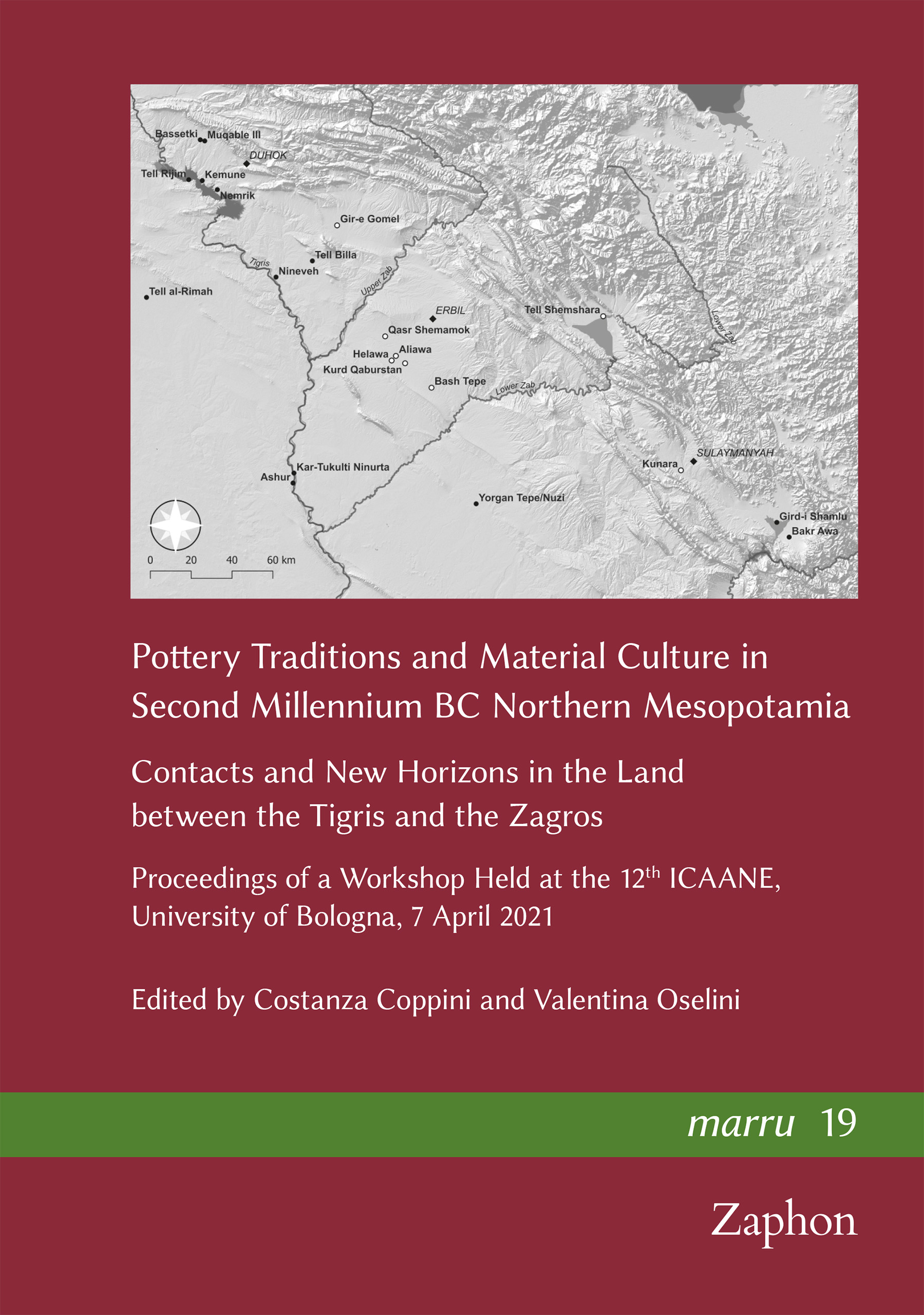 Pottery Traditions and Material Culture in Second Millennium BC Northern Mesopotamia
Contacts and New Horizons in the Land between the Tigris and the Zagros. Proceedings of a Workshop Held at the 12th ICAANE, University of Bologna, 7 April 2021
Volume 19
 Punning in Odd or Elegant Constructions in Jeremiah
The Convergence of Linguistics, Rhetoric, and Textuality in the Hebrew Text of Jeremiah
 Shame in the Worlds of the Hebrew Bible and Akkadian Texts
A Linguistic Study and Its Implications
Volume 33
 Telling Contexts
Archaeological and Textual Studies in Honor of Elizabeth Bloch-Smith and Mark S. Smith
 The Body
Lived, Cultured, Adorned: Essays on Dress and the Body in the Bible and Ancient Near East in Honor of Nili S. Fox
 The Discourse of Rites
Shaping and Reshaping the (Counter-)Priestly Rituals Conducted Outside the Tabernacle
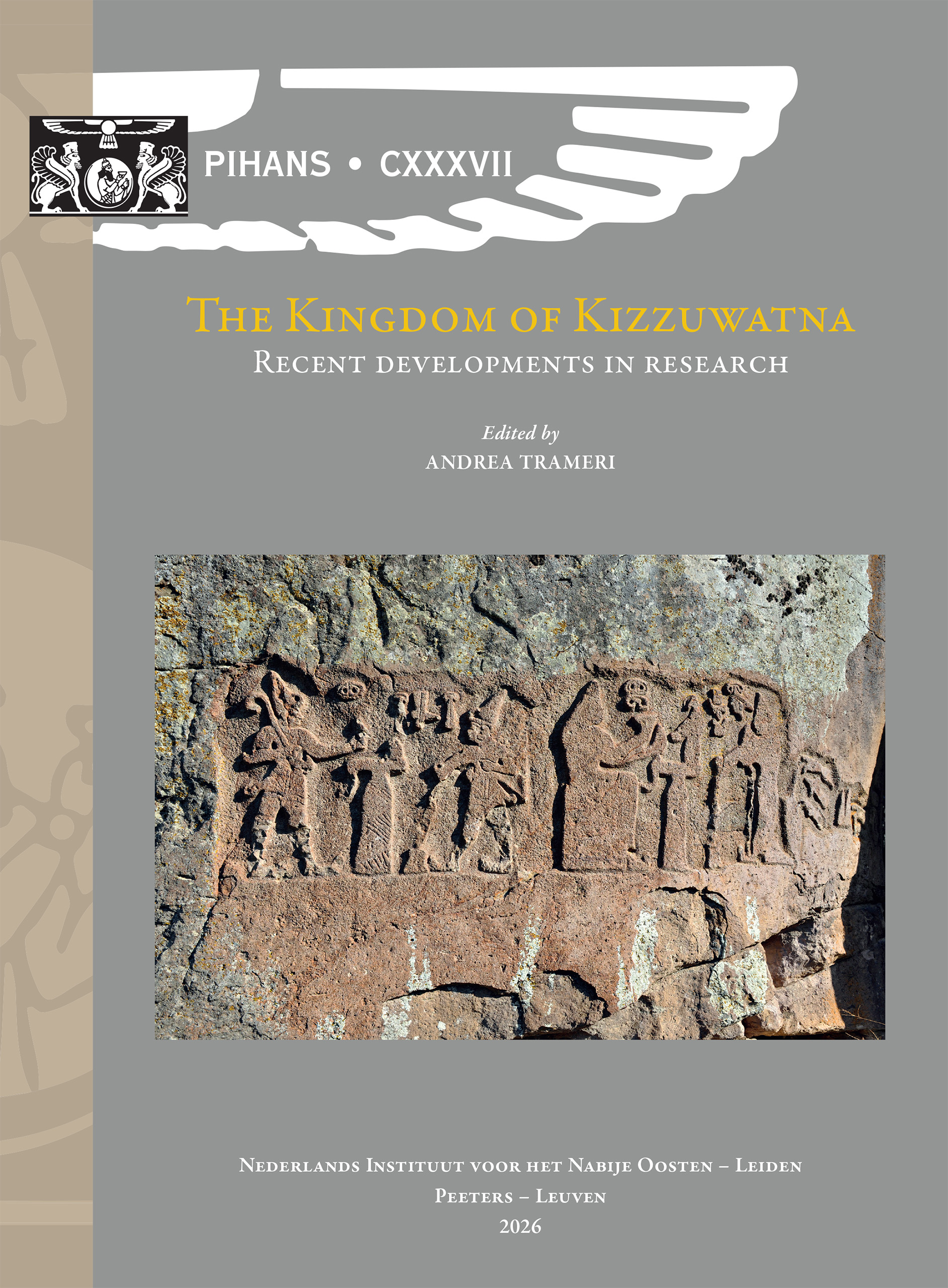 The Kingdom of Kizzuwatna: Recent Developments in Research
Proceedings of the Third NINO Postdoctoral Research Fellow Annual Conference, Leiden, 23rd-25th March 2023
Volume 137


 Die Entwicklung erdbebensicherer Bautechniken in der Frühen und Mittleren Eisenzeit in Ostanatolien
Volume 11
 Die JHWH-Religion und die Vorstellung göttlicher Gesetzgebung
Überschneidungen zwischen der Rechtsentwicklung und der Sphäre der Religion in der Geschichte des antiken Israel und Juda

 Kultur – Kontakt – Kultur
Beiträge anlässlich der 66. Rencontre Assyriologique Internationale in Frankfurt/Main und Mainz, 25.–29. Juli 2022
Volume 35
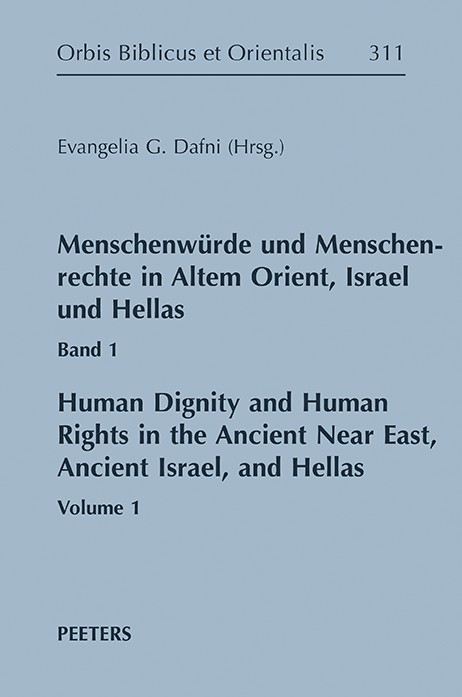 Menschenwürde und Menschenrechte im Altem Orient, Israel und Hellas. Band 1
Human Dignity and Human Rights in the Ancient Near East, Ancient Israel, and Hellas. Volume 1
Volume 311
 Ptolemaiou Procheiroi Kanones. Les «Tables Faciles» de Ptolemée. Volume 2a: Tables A3-A13
Édition critique, Transcription
 Sprachwissenschaftliche und kulturhistorische Reflexionen
Festschrift zu Ehren von Jörg Klinger
Volume 31

 Vom Mädchen zur Frau
Weihgaben als Indikatoren rituellen und kommunikativen Handelns von Frauen in griechischen Kulten
Volume 188
 Von der Symmachie zur Arché und zurück
Die Entwicklungsphasen des Ersten Attischen Seebundes (478/7–404 v. Chr.)
