
Tell Hamoukar, Volume 1. Urbanism and Cultural Landscapes in Northeastern Syria
The Tell Hamoukar Survey, 1999-2001
by Jason A. Ur

Tell Hamoukar is one of the largest Bronze Age sites in northern Mesopotamia. Presents the results of three seasons of field survey and remote-sensing analysis at the site and region. This area is one of the best-preserved ancient landscapes of movement in the world. Appendices describe the 60 sites, surface assemblages and ceramic typology.
Tell Hamoukar is one of the largest Bronze Age sites in northern Mesopotamia. The present volume presents the results of three seasons of field survey and remote-sensing analysis at the site and its region. These studies were undertaken to address questions of urban origins, land use and demographic trends through time. Site descriptions and settlement histories are presented for Hamoukar and 59 other sites in its immediate hinterland over the last 8,000 years. The project paid close attention to the “off-site” landscape between sites and considered aspects of agricultural practices, land tenure and patterns of movement. For each phase of occupation, the patterns of settlement and land use are contextualised within larger patterns of Mesopotamian history, with particular attention to the proto-urban fifth millennium BC, the Uruk Expansion of the fourth millennium BC, the height of urbanism in the late third millennium, the impact of the Assyrian empire in the early first millennium BC and the Abbasid landscape of the late first millennium AD. The volume also includes a description of the unparalleled landscape of tracks in the Upper Khabur basin of Hassake province, northeastern Syria. Through analysis of CORONA satellite photographs, over 6,000 kilometres of pre-modern trackways were identified and mapped, mostly dating to the late third millennium and early Islamic periods. This area of northern Mesopotamia is thus one of the best-preserved ancient landscapes of movement in the world. The volume’s appendices describe the 60 sites, their surface assemblages and the survey’s ceramic typology.
- By (author) Jason A. Ur
Other Titles in this Series


 Cuneiform Texts from the Ur III Period in the Oriental Institute, Volume 2
Drehem Administrative Documents from the Reign of Amar-Suena
Volume 121


 On the Margin of the Euphrates
Settlement and Land Use at Tell es-Sweyhat and in the Upper Tabqa Area, Syria
Volume 124

 Excavations at the prehistoric mound of Chogha Bonut, Khuzestan, Iran
Seasons 1976/77, 1977/78, and 1996
Volume 120
 Early Megiddo on the East Slope (The ‘Megiddo Stages’)
A Report on the Early Occupation of the East Slope of Megiddo. Result of the Oriental Institute's Excavations, 1925-1933
Volume 139


 Ancient Settlement Systems and Cultures in the Ram Hormuz Plain, Southwestern Iran
Excavations at Tall-e Geser and Regional Survey in the Ram Hormuz Area
Volume 140

 The Amuq Valley Regional Projects, Volume 1
Surveys in the Plain of Antioch and Orontes Delta, Turkey, 1995-2002
Volume 131
 The Temple of Khonsu. Volume II
Scenes and Inscriptions in the Court and the First Hypostyle Hall
Volume 103

 Temple of Khonsu, Volume 3
The Graffiti on the Khonsu Temple Roof at Karnak: A Manifestat
Volume 123
 The Egyptian Book of the Dead
Documents in the Oriental Institute Museum at the University of Chicago
Volume 82

 Archaeology of the Bronze Age, Hellenistic, and Roman Remains at an Ancient Town on the Euphrates River
Excavations at Tell Es-Sweyhat, Syria Volume 2
Volume 125
 The Archive of Thotsutmis, Son of Panouphis
Early Ptolemaic Ostraca from Deir el Bahari (O. Edgerton)
Volume 146

 Reliefs and Inscriptions at Luxor Temple, Volume 1
The Festival Procession of Opet in the Colonnade Hall
Volume 112

 Excavations in the Plain of Antioch III
Stratigraphy, Pottery, and Small Finds from Chatal Hoyuk in the Amuq Plain
Volume 143

Similar Books





 Boğazköy Tablets in the Museum of Anatolian Civilizations (Bo 9032–Bo 9097)
Anadolu Medeniyetleri Müzesinde Bulunan Boğazköy Tabletleri (Bo 9032–Bo 9097)
Volume 4
 Caesar’s Visions and Impact on the Roman Empire
Revisiting the Archaeological and Historical Record of the 40s BC
Volume 2

 Connecting the Dots: Counting, Writing, and the Beginnings of Civilization
The Secret Lives of Clay Tokens: A Memoir
 Construction Processes in Historical Western Societies (5th c. BC – 10th c. AD)
Case Studies on Techniques, Models, and Costs
 Curating the Prehistoric Past
Studies on West Asian Archaeology and Beyond in Honour of Yoshihiro Nishiaki


 Etruscan and Roman Hellenistic Anatomical ex votos
Reassessing Popular Religious Expressions in Central Italy
Volume 8

 Exploring Gender Dynamics across the Ancient Near East
Collected Essays of Gender and Methodology in the Ancient Near East (GeMANE) 4 and 5
Volume 7




 Ḫattušaš utnē išḫameški
Hittite and Other Ancient Near Eastern Studies Presented to Piotr Taracha on the Occasion of His 65th Birthday




 Invisible Labour in Antiquity
Visualizing Obscure Work in the Ancient Mediterannean and West Asia
Volume 1
 Kultur – Kontakt – Kultur
Beiträge anlässlich der 66. Rencontre Assyriologique Internationale in Frankfurt/Main und Mainz, 25.–29. Juli 2022
Volume 35
 Late Antique villae in the Balkans (3rd–7th c. AD): Current Research Questions and Perspectives
HAEMUS Companion to the Late Antique Balkans 1
Volume 4


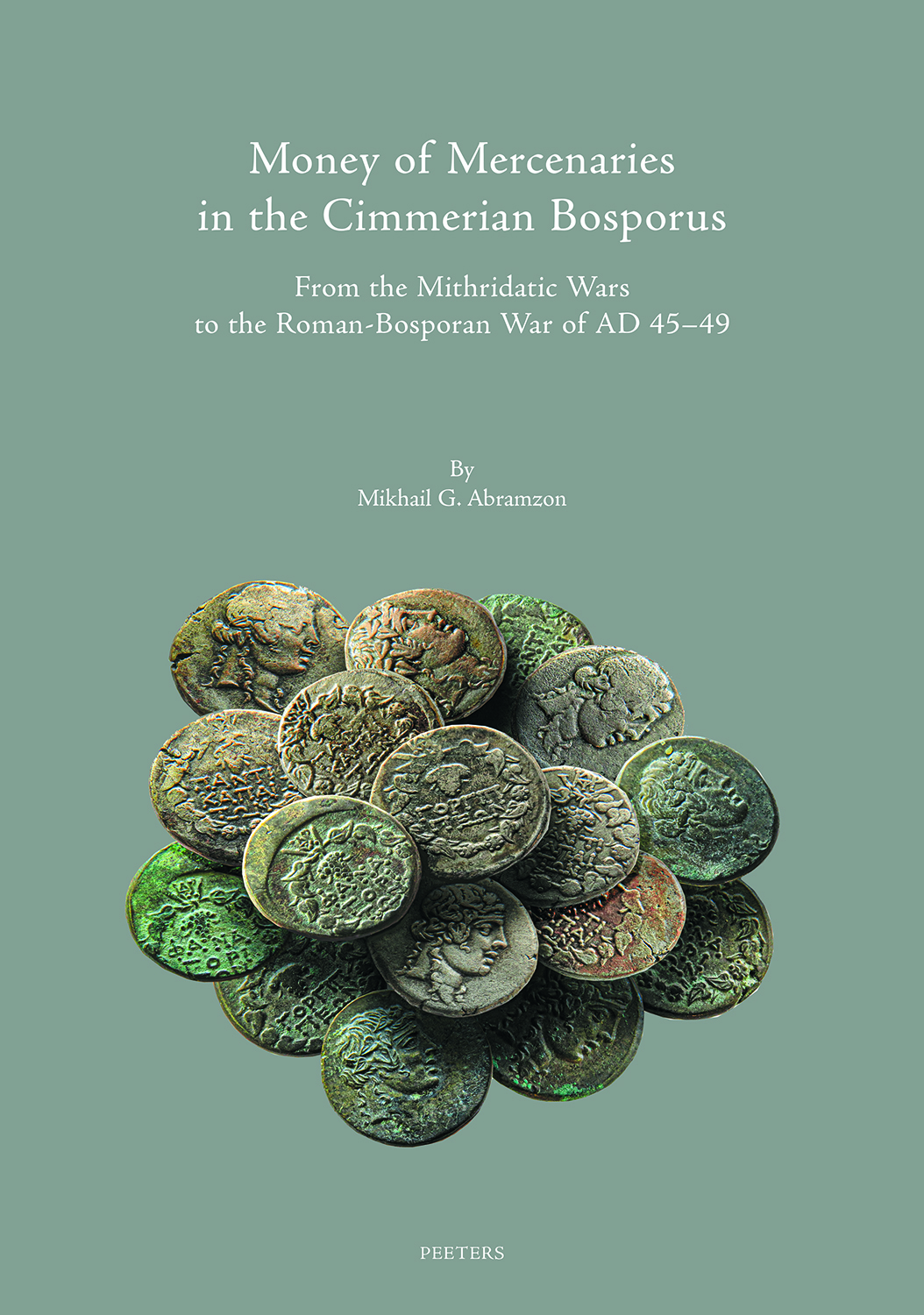 Money of Mercenaries in the Cimmerian Bosporus
From the Mithridatic Wars to the Roman-Bosporan War of AD 45-49
Volume 45
 New Research on Old Collections in Southwest Asian Archaeology
Proceedings of the Workshop Held at the British Museum, London, 31 July – 2 August, 2023
 Old Aramaic Inscriptions and their Contexts
An Epigraphic, Archaeological, and Historical Synthesis
Volume 63


 Politics, Peoples, and Polities in the Ancient Near East
Proceedings of the 69th Rencontre Assyriologique Internationale, Helsinki