
The Hittite Demonstratives
Studies in Deixis, Topics and Focus
by Petra Goedegebuure

Hardback (Published)
(September 2014)
ISBN: 9783447102285
6.65 x 9.49 inches
Price: $136.00
In stock
In order to mitigate the lack of context inherent to the study of dead languages, the author has developed a descriptive model that combines (a) cognitive approaches to reference, (b) a theory of information structure, and (c) typological studies on demonstratives. With the help of this model the author not only provides for the first time a thorough description of the long-known demonstratives ka- “this” and apa- “that”, but also identifies a third demonstrative, asi “that, yonder”. This identification has led to a reappraisal of the distal semantics of apa-: apa- does not mark remote objects at all but points at objects in the vicinity of the addressee. In short, the Hittite demonstratives are not distance- but person-based. As a third person pronoun, apa- also expresses emphasis. A detailed analysis within the framework of information structure shows, for example, that apa- in preverbal position marks a referent as the Contrastive Focus of its clause (in “the dog (not the cat) chased the horse”, dog is in Contrastive Focus). Non-contrastive focal apa-, on the other hand, always occurs in initial position. The addition of information structure to the grammatical description of Hittite thus provides a better understanding of the meaning effects of word order variation in this SOV language.
In order to mitigate the lack of context inherent to the study of dead languages, the author has developed a descriptive model that combines (a) cognitive approaches to reference, (b) a theory of information structure, and (c) typological studies on demonstratives. With the help of this model the author not only provides for the first time a thorough description of the long-known demonstratives ka- “this” and apa- “that”, but also identifies a third demonstrative, asi “that, yonder”. This identification has led to a reappraisal of the distal semantics of apa-: apa- does not mark remote objects at all but points at objects in the vicinity of the addressee. In short, the Hittite demonstratives are not distance- but person-based. As a third person pronoun, apa- also expresses emphasis. A detailed analysis within the framework of information structure shows, for example, that apa- in preverbal position marks a referent as the Contrastive Focus of its clause (in “the dog (not the cat) chased the horse”, dog is in Contrastive Focus). Non-contrastive focal apa-, on the other hand, always occurs in initial position. The addition of information structure to the grammatical description of Hittite thus provides a better understanding of the meaning effects of word order variation in this SOV language.
- By (author) Petra Goedegebuure
Other Titles in this Series
 At the Interface of Religion and Administration
The Hittite Cult Inventories: With a contribution by Adam Kryszen
Volume 68


 Functional Differentiation in Hittite Festival Texts
An Analysis of the Old Manuscripts of the KI.LAM Great Assembly
Volume 65
 Liturgie oder Literatur?
Die Kultrituale der Hethiter im transkulturellen Vergleich. Akten eines Werkstattgesprachs an der Akademie der Wissenschaften und der Literatur. Mainz, 2.-3. Dezember 2010
Volume 60

 Two Festivals Celebrated by a Hittite Prince (CTH 647.I and II-III)
New Light on Local Cults in North-Central Anatolia in the Second Millennium BC
Volume 61
 Schicksalsbestimmende Kommunikation
Sprachliche, gesellschaftliche und religiose Aspekte hethitischer Fluch-, Segens- und Eidesformeln
Volume 52
 The Tablets and Their Scribes
The Palaeography of Hittite Cuneiform and Writing Practices in Hittite Anatolia. Proceedings of the Second International HFR Symposium, Mainz, 2–4 May 2024
Volume 73


 Studies in Hittite Economic Administration
A New Edition of the Hittite Palace-Temple Administrative Corpus and Research on Allied Texts Found at Hattusa. Volume I: Background, Corpus Overview, Case Studies, Lexical Commentary, and Glossary
Volume 70


 Studies in Hittite Economic Administration
A New Edition of the Hittite Palace-Temple Administrative Corpus and Research on Allied Texts Found at Hattusa. Volume II: Text Editions and Philological Commentary
Volume 71
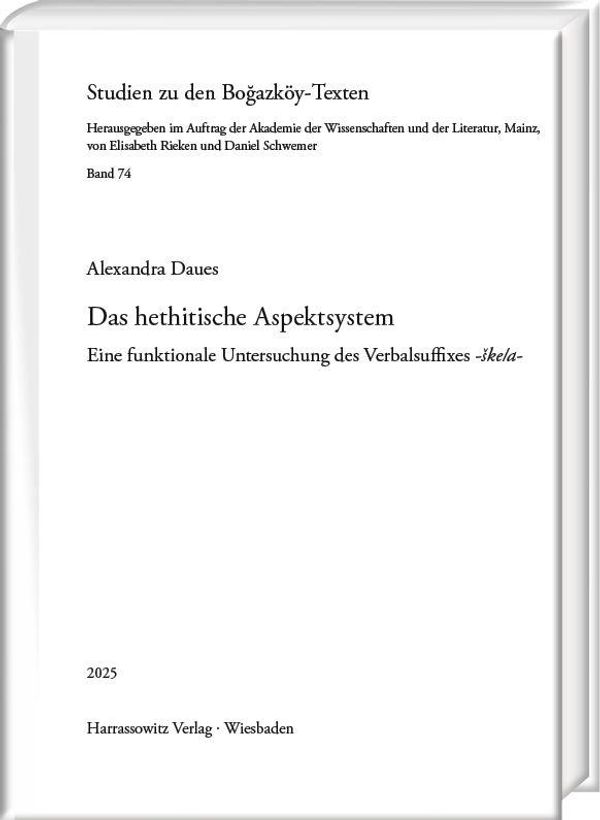


 Luwili
Hittite-Luwian Ritual Texts Attributed to Puriyanni, Kuwattalla and Silalluhi (CTH 758-763). Volume I: Edition and Commentary. Volume II: Discussion and Glossary
Volume 72

 Cult, Temple, Sacred Spaces
Cult Practices and Cult Spaces in Hittite Anatolia and Neighbouring Cultures. Proceedings of the First International HFR Symposium, Mainz, 3-5 June 2019
Volume 66

Similar Books





 Cahiers de lexicologie
Particules floues — Nouvelles études sur le français et l'espagnol
Volume 128
 Connecting the Dots: Counting, Writing, and the Beginnings of Civilization
The Secret Lives of Clay Tokens: A Memoir

 Curating the Prehistoric Past
Studies on West Asian Archaeology and Beyond in Honour of Yoshihiro Nishiaki
 Des mots aux actes
Traduction épistémique et littéraire. Nouvelles tendances en histoire et didactique
Volume 15


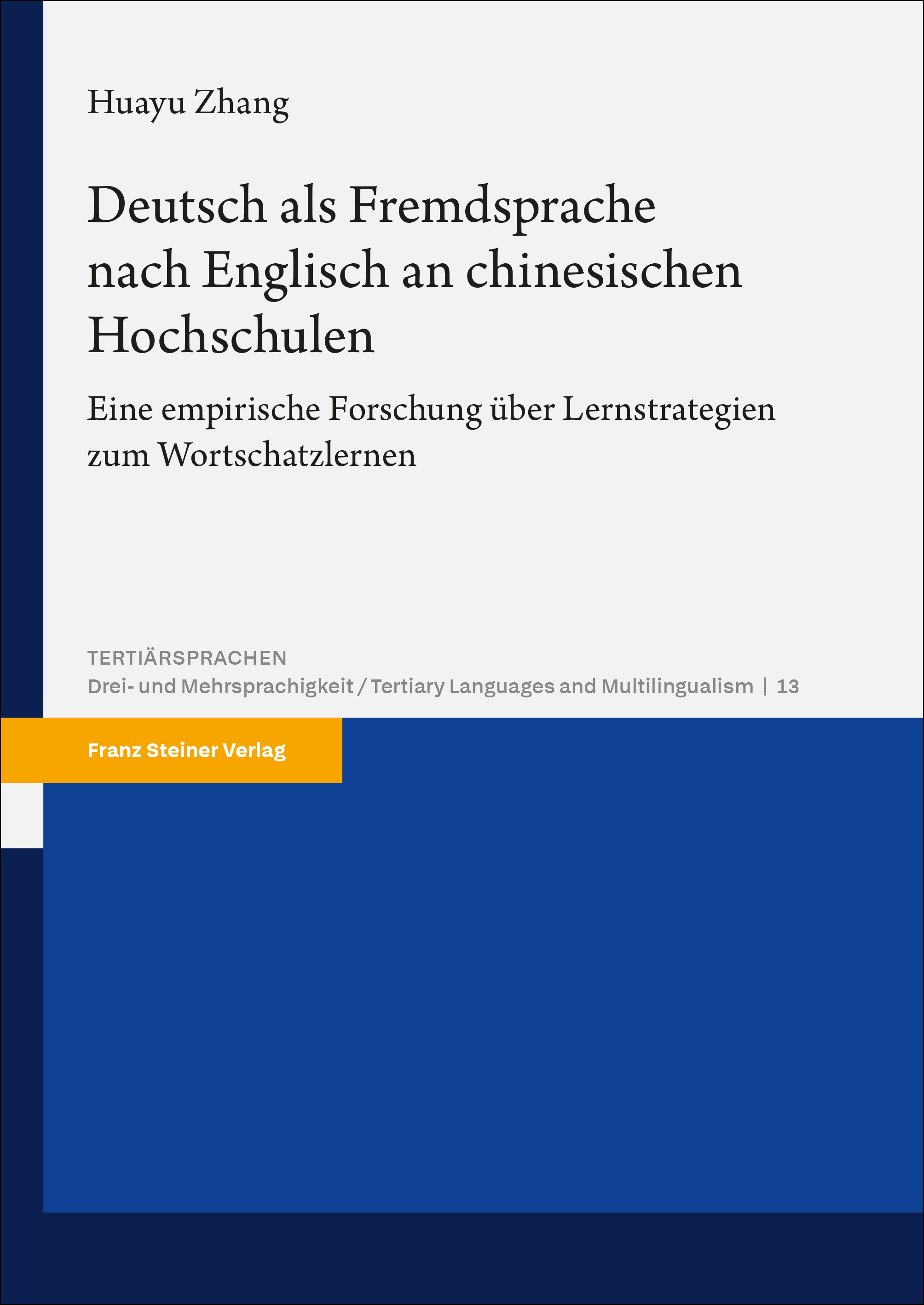 Deutsch als Fremdsprache nach Englisch an chinesischen Hochschulen
Eine empirische Forschung über Lernstrategien zum Wortschatzlernen


 Exploring Gender Dynamics across the Ancient Near East
Collected Essays of Gender and Methodology in the Ancient Near East (GeMANE) 4 and 5
Volume 7


 Ḫattušaš utnē išḫameški
Hittite and Other Ancient Near Eastern Studies Presented to Piotr Taracha on the Occasion of His 65th Birthday





 Kultur – Kontakt – Kultur
Beiträge anlässlich der 66. Rencontre Assyriologique Internationale in Frankfurt/Main und Mainz, 25.–29. Juli 2022
Volume 35

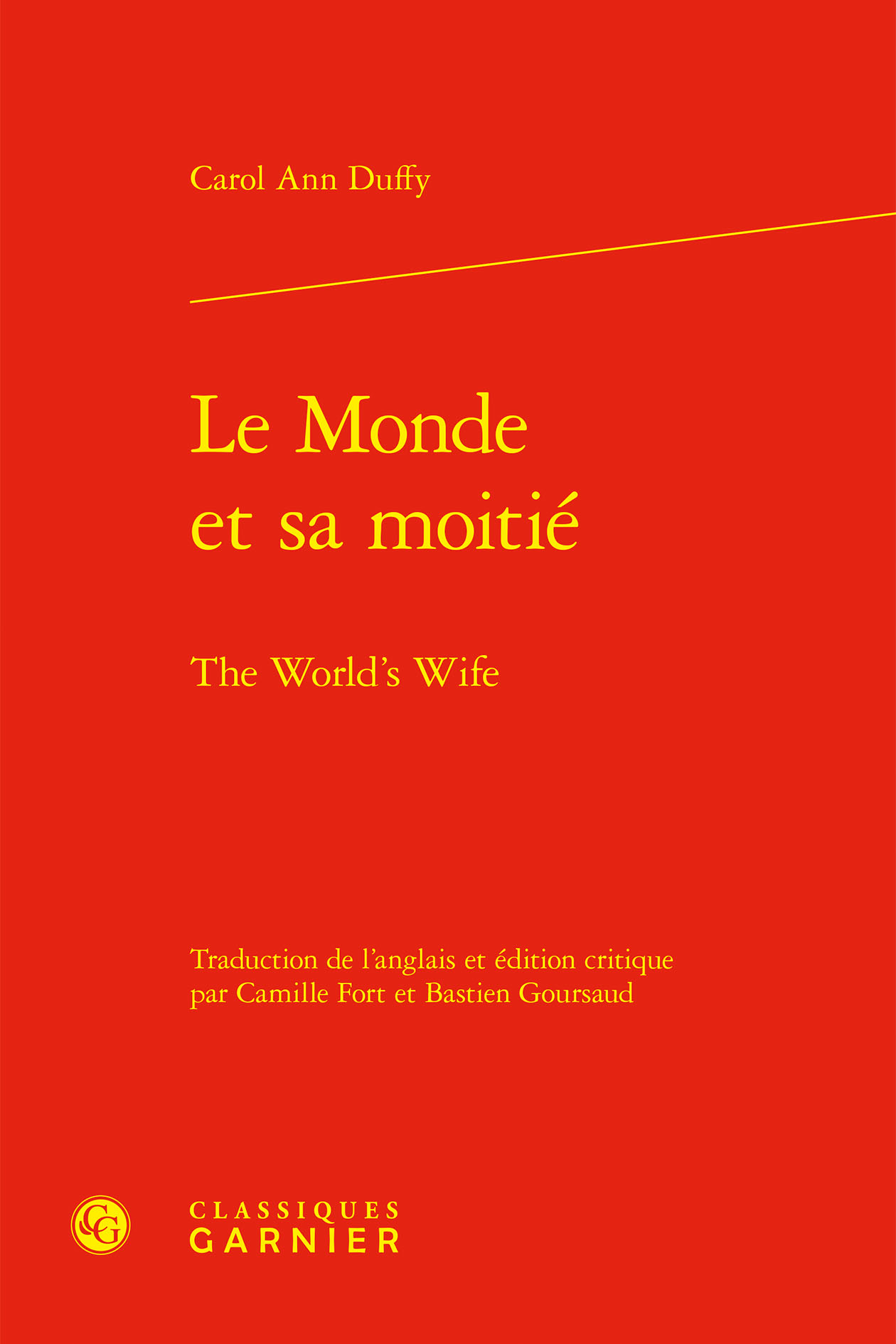



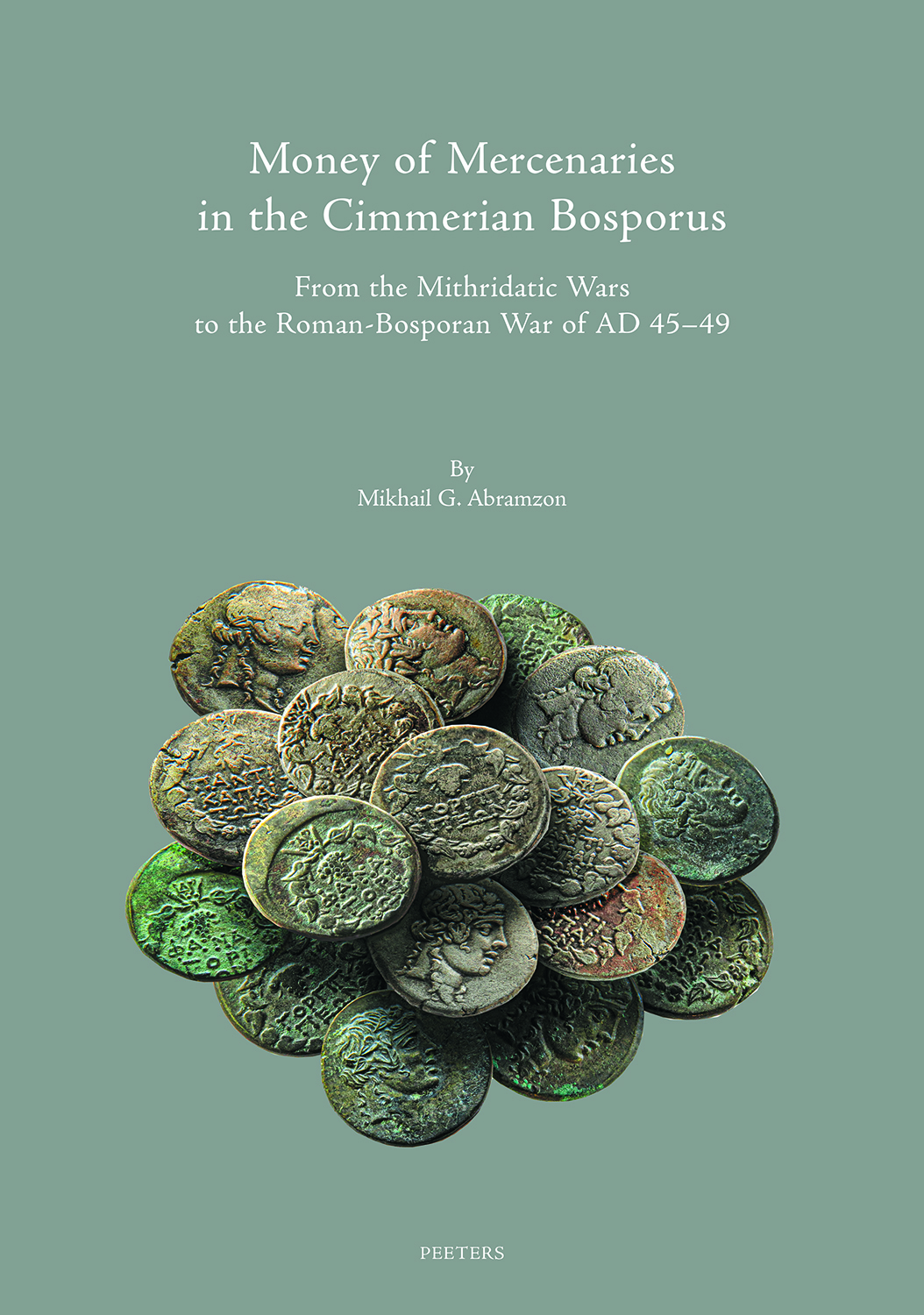 Money of Mercenaries in the Cimmerian Bosporus
From the Mithridatic Wars to the Roman-Bosporan War of AD 45-49
Volume 45


