
Hittite Diplomatics
Studies in Ancient Document Format and Record Management
by Willemijn J.I. Waal

In the Hittite capital ?attusa, some 25,000 tablets and, for the most part, fragments have been discovered in several locations. These tablets all formed part of the state archives of the Hittite Empire (ca. 1650-1180 BCE), and contained texts of various nature (religious, legal, historical, literary, administrative, etc.). Applying the research methods of diplomatics or Urkundenlehre, this study has taken the clay tablet per se as a starting point in order to gain a better understanding of these tablet collections. The first six chapters deal with the extrinsic elements of documentary form, consisting of a diachronic and synchronic analysis of the physical characteristics of the Hittite clay tablet, such as its size, shape and layout. This study makes clear that certain conventions regarding their physical appearance existed, and that they were partly dependent on the text type of the tablet and the time period in which it was written. In the seventh chapter, Hittite terminology for writing materials is discussed. Central to the eighth chapter is an intrinsic element of documentary form, the colophon. As it turns out, the distribution of Hittite colophons is very consistent: some text genres practically always have a colophon whereas it is absent in others. Within the colophons themselves, one can further detect chronological developments. Since no complete edition of the colophons is available, transliterations and translations of this corpus have been included in the appendices. The last chapter of the book aims to reconstruct the record management and organization of the Hittite tablet collections.
In the Hittite capital ?attusa, some 25,000 tablets and, for the most part, fragments have been discovered in several locations. These tablets all formed part of the state archives of the Hittite Empire (ca. 1650-1180 BCE), and contained texts of various nature (religious, legal, historical, literary, administrative, etc.). Applying the research methods of diplomatics or Urkundenlehre, this study has taken the clay tablet per se as a starting point in order to gain a better understanding of these tablet collections. The first six chapters deal with the extrinsic elements of documentary form, consisting of a diachronic and synchronic analysis of the physical characteristics of the Hittite clay tablet, such as its size, shape and layout. This study makes clear that certain conventions regarding their physical appearance existed, and that they were partly dependent on the text type of the tablet and the time period in which it was written. In the seventh chapter, Hittite terminology for writing materials is discussed. Central to the eighth chapter is an intrinsic element of documentary form, the colophon. As it turns out, the distribution of Hittite colophons is very consistent: some text genres practically always have a colophon whereas it is absent in others. Within the colophons themselves, one can further detect chronological developments. Since no complete edition of the colophons is available, transliterations and translations of this corpus have been included in the appendices. The last chapter of the book aims to reconstruct the record management and organization of the Hittite tablet collections.
- By (author) Willemijn JI Waal
Other Titles in this Series

 Liturgie oder Literatur?
Die Kultrituale der Hethiter im transkulturellen Vergleich. Akten eines Werkstattgesprachs an der Akademie der Wissenschaften und der Literatur. Mainz, 2.-3. Dezember 2010
Volume 60

 Functional Differentiation in Hittite Festival Texts
An Analysis of the Old Manuscripts of the KI.LAM Great Assembly
Volume 65
 Schicksalsbestimmende Kommunikation
Sprachliche, gesellschaftliche und religiose Aspekte hethitischer Fluch-, Segens- und Eidesformeln
Volume 52

 Two Festivals Celebrated by a Hittite Prince (CTH 647.I and II-III)
New Light on Local Cults in North-Central Anatolia in the Second Millennium BC
Volume 61

 The Tablets and Their Scribes
The Palaeography of Hittite Cuneiform and Writing Practices in Hittite Anatolia. Proceedings of the Second International HFR Symposium, Mainz, 2–4 May 2024
Volume 73


 Studies in Hittite Economic Administration
A New Edition of the Hittite Palace-Temple Administrative Corpus and Research on Allied Texts Found at Hattusa. Volume I: Background, Corpus Overview, Case Studies, Lexical Commentary, and Glossary
Volume 70


 Studies in Hittite Economic Administration
A New Edition of the Hittite Palace-Temple Administrative Corpus and Research on Allied Texts Found at Hattusa. Volume II: Text Editions and Philological Commentary
Volume 71


 Luwili
Hittite-Luwian Ritual Texts Attributed to Puriyanni, Kuwattalla and Silalluhi (CTH 758-763). Volume I: Edition and Commentary. Volume II: Discussion and Glossary
Volume 72

 Cult, Temple, Sacred Spaces
Cult Practices and Cult Spaces in Hittite Anatolia and Neighbouring Cultures. Proceedings of the First International HFR Symposium, Mainz, 3-5 June 2019
Volume 66

 At the Interface of Religion and Administration
The Hittite Cult Inventories: With a contribution by Adam Kryszen
Volume 68


Similar Books





 Connecting the Dots: Counting, Writing, and the Beginnings of Civilization
The Secret Lives of Clay Tokens: A Memoir

 Curating the Prehistoric Past
Studies on West Asian Archaeology and Beyond in Honour of Yoshihiro Nishiaki

 Exploring Gender Dynamics across the Ancient Near East
Collected Essays of Gender and Methodology in the Ancient Near East (GeMANE) 4 and 5
Volume 7


 Ḫattušaš utnē išḫameški
Hittite and Other Ancient Near Eastern Studies Presented to Piotr Taracha on the Occasion of His 65th Birthday




 Kultur – Kontakt – Kultur
Beiträge anlässlich der 66. Rencontre Assyriologique Internationale in Frankfurt/Main und Mainz, 25.–29. Juli 2022
Volume 35
 Money of Mercenaries in the Cimmerian Bosporus
From the Mithridatic Wars to the Roman-Bosporan War of AD 45-49
Volume 45

 New Research on Old Collections in Southwest Asian Archaeology
Proceedings of the Workshop Held at the British Museum, London, 31 July – 2 August, 2023
 Old Aramaic Inscriptions and their Contexts
An Epigraphic, Archaeological, and Historical Synthesis
Volume 63

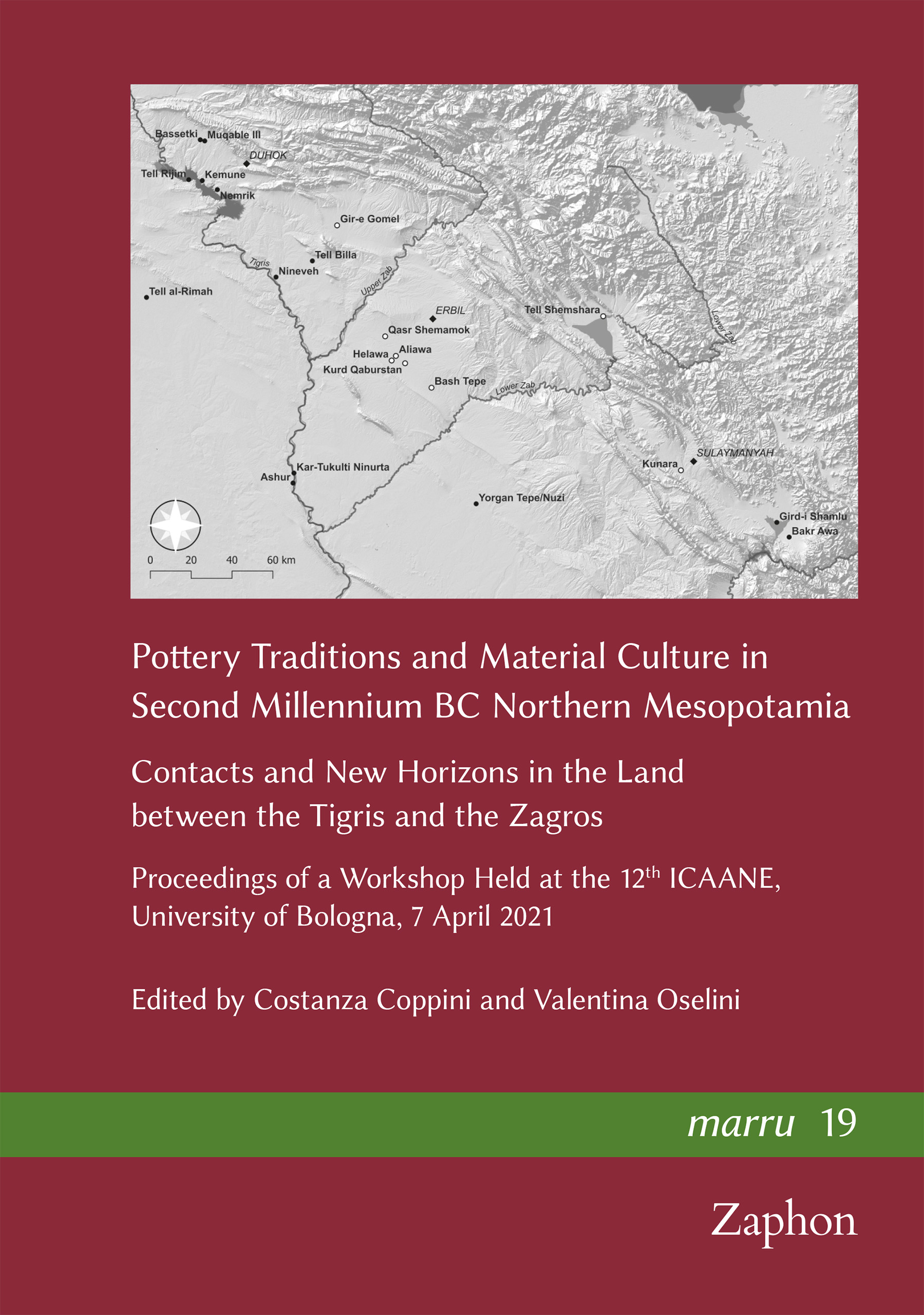 Pottery Traditions and Material Culture in Second Millennium BC Northern Mesopotamia
Contacts and New Horizons in the Land between the Tigris and the Zagros. Proceedings of a Workshop Held at the 12th ICAANE, University of Bologna, 7 April 2021
Volume 19
 Punning in Odd or Elegant Constructions in Jeremiah
The Convergence of Linguistics, Rhetoric, and Textuality in the Hebrew Text of Jeremiah

 Sertorius, the Exiles of the Sullan Regime and the Provinces of the Empire
Legitimacy, Morality and Imperial Discourse in the 70s BCE
 Shame in the Worlds of the Hebrew Bible and Akkadian Texts
A Linguistic Study and Its Implications
Volume 33

 Telling Contexts
Archaeological and Textual Studies in Honor of Elizabeth Bloch-Smith and Mark S. Smith
 The Body
Lived, Cultured, Adorned: Essays on Dress and the Body in the Bible and Ancient Near East in Honor of Nili S. Fox
 The Discourse of Rites
Shaping and Reshaping the (Counter-)Priestly Rituals Conducted Outside the Tabernacle
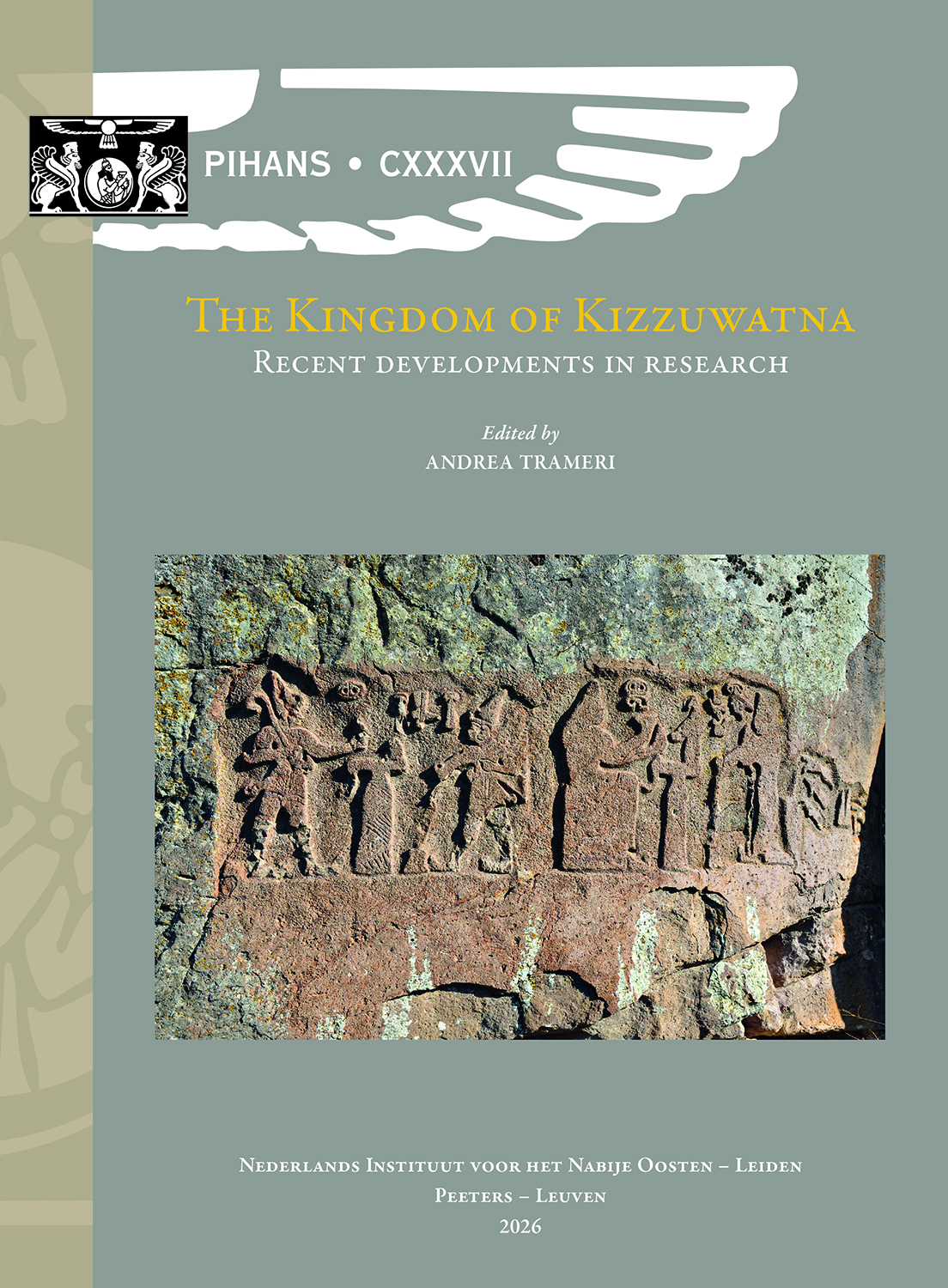 The Kingdom of Kizzuwatna: Recent Developments in Research
Proceedings of the Third NINO Postdoctoral Research Fellow Annual Conference, Leiden, 23rd-25th March 2023
Volume 137


 The Vandals and the Mediterranean / I Vandali e il Mediterraneo
Politics, Economy and Culture of a Barbarian Kingdom / Politica, economia e cultura di un regno barbarico