
Sprache, Stil und historischer Ort des zweiten Petrusbriefes
by Thomas J. Kraus

English summary: Along with the Epistle of Jude, the Second Epistle of Peter is the most neglected book in the New Testament. Up to now, the issue of authorship was the main topic under discussion, and not the language and style of 2 Peter, which had not previously been analyzed in detail. In this work, the author gives a comprehensive linguistic analysis of the language and style in 2 Peter. Thus he attempts to do away with previous generalizations made in this regard. He presents the forms of classical and koine Greek in inscriptions, documentary papyri, profane and religious classical and late classical texts as additional material to be compared to the writings of the New Testament, giving a gradual picture of a well-written and deliberately composed last will and testament in a letter with discernible apologetic features. German description: Zusammen mit dem Judasbrief gehort der zweite Petrusbrief zu den am meisten vernachlassigten Schriften der kanonisch gewordenen Texte des Neuen Testaments. Vielfach stehen einleitungswissenschaftliche Fragen, insbesondere in bezug auf die Verfasserschaft im Vordergrund der sparlichen Diskussion. Die Urteile uber seine vergleichsweise ungewohnliche Sprachgestalt fuhren ausserdem zu widerspruchlichen Extrempositionen, die zumeist nicht uber Allgemeinplatze und Pauschalurteile hinauskommen.Thomas J. Kraus erfasst das sprachliche Material des zweiten Petrusbriefes. Mit Hilfe eines weit gefassten Stilbegriffs ermoglicht er fundierte Beurteilungen der Stilistik und der Sprachverwendung dieser Schrift. Dabei dehnt er das relevante Vergleichsmaterial uber die kunstlichen Grenzen des Neuen Testaments hinaus aus. Zudem werden Inschriften, dokumentarische Papyri, profane wie religiose klassische und spatklassische Texte als Formen des damaligen Griechisch in den Fortgang der Charakterisierung des zweiten Petrusbriefes integriert. Die jeweiligen Vorabklarungen der entsprechenden grammatischen wie stilistischen Kategorien, die auf den fraglichen Textkorpus anzuwenden sind, legen die Ausgangspunkte fur Beobachtungen und Ergebnisse offen.So formt sich ein literarisches Profil des Petrusbriefes und seines Verfassers. Dieses Profil weist bemerkenswerte sprachliche Grundzuge auf und verbindet sich daruber hinaus mit der bewusst gestalteten Form – als Testament in Briefform mit apologetischer Ausrichtung – zu einem einheitlichen Ganzen.
- By (author) Thomas J Kraus
Other Titles in this Series


 Literature or Liturgy?
Early Christian Hymns and Prayers in their Literary and Liturgical Context in Antiquity
Volume 363
 The Tongues of Angels
The Concept of Angelic Languages in Classical Jewish and Christian Texts
Volume 287


 Die Theologie der Liebe Gottes in den johanneischen Schriften
Zur Semantik der Liebe und zum Motivkreis des Dualismus
Volume 197


 Communal Participation in the Spirit
The Corinthian Correspondence in Light of Early Jewish Mysticism in the Dead Sea Scrolls
Volume 575

 Portraits of Paul’s Performance in the Book of Acts
Luke's Apologetic Strategy in the Depiction of Paul as Messenger of God
Volume 556
 The Doubt of the Apostles and the Resurrection Faith of the Early Church
The Post-Resurrection Appearance Stories of the Gospels in Ancient Reception and Modern Debate
Volume 495
 Semantik und Ethik des Wortfeldes ‘Ergon’ im Johannesevangelium
Kontexte und Normen neutestamentlicher Ethik / Contexts and Norms of New Testament Ethics, Band VIII
Volume 431
 Der Hohepunkt des Hebraerbriefs
Hebraer 12,18-29 und seine Bedeutung fur die Struktur und die Theologie des Hebraerbriefs
Volume 463


 Framing Social Criticism in the Jesus Movement
The Ideological Project in the Sayings Gospel Q
Volume 374
 Annihilation or Renewal?
The Meaning and Function of New Creation in the Book of Revelation
Volume 307
 Das paulinische Eikon-Konzept
Semantische Analysen zur Sapientia Salomonis, zu Philo und den Paulusbriefen
Volume 250
 Paul’s Territoriality and Mission Strategy
Searching for the Geographical Awareness Paradigm Behind Romans
Volume 266
 Knowledge and Religious Authority in the Pseudo-Clementines
Situating the 'Recognitions' in Fourth Century Syria
Volume 213
 Eschatos in Jewish, Hellenistic, and Early Christian Texts
A Diachronic Analysis (3rd cent. BCE – 1st cent. CE)
 Der verborgene Vater im Matthausevangelium
Ein Beitrag zum Gottesbild und zur Gebetstheologie von Mt 6,1-6.16-18
Volume 617
 Intercession of Jesus in Hebrews
The Background and Nature of Jesus' Heavenly Intercession in the Epistle to the Hebrews
Volume 585


 Participation, Justification, and Conversion
Eastern Orthodox Interpretation of Paul and the Debate between Old and New Perspectives on Paul
Volume 442
 Temporal Dimensions of the Apocalypse
Ancient Christian Reception and Contemporary Hermeneutical Reflections
Similar Books


 Athanasius of Alexandria, Epistula ad episcopos Aegypti et Libyae
Old Slavonic Version and English Translation
Volume 261


 Cyril of Alexandria’s Christological Exegesis
Explorations of Partitive Exegesis in the Dialogues on the Trinity
Volume 70


 Epiphanies of the Divine in the Septuagint and the New Testament
Fifth International Symposium of the Corpus Judaeo-Hellenisticum Novi Testamenti (CJHNT), 14-17 May 2015, Nottingham

 Extracanonical Traditions and the Holy Land
Texts, Rituals, and Material Culture in Late Antique Palestine
 From Joseph to Jesus
The Joseph Narrative as a Compositional Template from Old Greek Esther to the Gospel of Luke
Volume 125


 Paradise Lost in Transmission
The Return to Eden in the Apocalypse of Peter within Its Ethiopic and Early Christian Contexts



 Punning in Odd or Elegant Constructions in Jeremiah
The Convergence of Linguistics, Rhetoric, and Textuality in the Hebrew Text of Jeremiah

 Shame in the Worlds of the Hebrew Bible and Akkadian Texts
A Linguistic Study and Its Implications
Volume 33

 Tabernacle, Table, Ark, and Text
Richard of Saint Victor on the Interpretation of Scripture
Volume 67
 The Anglo-Norman Bible’s Books of Kings, a Critical Edition
(BL Royal 1 C III, fols 234r-274v)
Volume 37
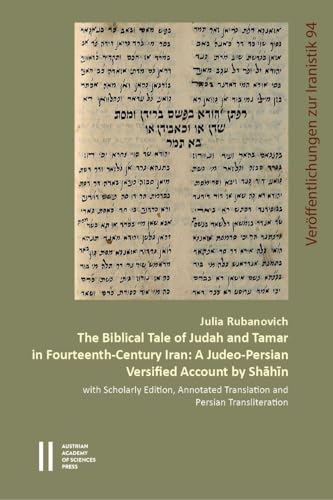 The Biblical Tale of Judah and Tamar in Fourteenth-Century Iran
A Judeo-Persian Versified Account by Shāhīn with Scholarly Edition, Annotated Translation and Persian Transliteration
Volume 94, 951
 The Body
Lived, Cultured, Adorned: Essays on Dress and the Body in the Bible and Ancient Near East in Honor of Nili S. Fox

 The Compositional History of the Book of Kings
An Analysis of the Evaluative Frameworks in 1 Kings 14–2 Kings 25
 The Discourse of Rites
Shaping and Reshaping the (Counter-)Priestly Rituals Conducted Outside the Tabernacle


