
Sigillata und Lampen aus den Töpfereien von Henchir el Guellal bei Djilma
Zur römischen Feinkeramikproduktion in Zentraltunesien vom 3. bis 5. Jahrhundert
By (author) Michael Mackensen

Hardback (Published)
(December 2025)
ISBN: 9783752009095
8.31 x 11.69 inches
Price: $103.50
In stock
Sigillata wurde in mehreren Produktionszentren für römisches Tafelgeschirr in Tunesien hergestellt. Eine dieser Töpfereien befand sich in Henchir el Guellal bei Djilma (Zentraltunesien), wo seit dem frühen 3. Jahrhundert bis ca. 430/450 qualitativ hochwertige glatte, appliken- und stempelverzierte Sigillata sowie typologisch vielgestaltige Lampen gefertigt wurden. Dabei war insbesondere die Sigillata im gesamten Mittelmeerraum weit verbreitet. Im vorliegenden Band werden beide Gattungen anhand von Survey- und Ausgrabungsmaterial bearbeitet und chemisch untersucht, das Lampenrepertoire durch Bestände in Museen und Sammlungen ergänzt und mit dem Repertoire des nahe gelegenen Töpfereizentrums Sidi Marzouk Tounsi verglichen.
The Roman production centre for African red slip ware (= ARS) and lamps at Henchir el Guellal near Djilma is located approx. 130 km southwest of Hadrumetum/Sousse in the interior of central Tunisia. It was one of the major rural pottery centres, producing not only for the regional market but also for sea-based long-distance trade, with its products distributed in most of the Mediterranean. The previously little-known range of products is assessed on the basis of finds from two surveys (1984/85, 1991). There have been no excavations in the area of the mid Imperial/late Antique ARS and lamp potteries. The present investigation therefore focuses on the typochronological and archaeometric analysis of the available fine wares. With the help of a chemical reference group specific to Djilma and additional pXRF measurements, ARS vessels with appliqué decoration or stamped decoration and lamps from other findspots or without a recorded findspot could be reassigned to the production range of Djilma. The aim was to reconstruct as far as possible the repertoire of forms of the ARS vessels and lamps produced from around AD 220/230 onwards. While the plain standard forms of ARS tableware from the 3rd to early 5th century, decorated with pottery-specific stamp-types from the middle of the 4th century onwards, were produced at Djilma, such forms are missing from the middle of the 5th century onwards. This applies accordingly to stamp-types with Christograms and cross monograms, which became increasingly popular from 430/440 onwards, a phenomenon that has been observed in other ARS potteries in northern and central Tunisia. <br/>A new, differentiated typology (HGD I A–VII A5) has been developed for ARS lamps, replacing the previous classifications. Noteworthy is the adoption of figurative appliqués from the pottery centre of Sidi Marzouk Tounsi, 40 km away, which were incorporated as decorative motifs on the discus of lamps made at Djilma. However, discus decorative motifs bearing Christian symbols were not used there in the second quarter of the 5th century, and a dominant lamp type (Atlante X A1a) from the pottery centre of Sidi Marzouk Tounsi was not imitated. It is possible that, due to a lack of innovation in ARS pottery, i.e. new shapes and stamped decorations, as well as in lamps, Djilma was no longer able to meet the demand for high-quality fine wares in the province of Byzacena, or in neighbouring provinces and beyond. It is uncertain whether the political changes of the 430s and the stabilising Vandal rule with the capture of Carthage (AD 439) and the entire province of Africa Proconsularis had a direct impact on large handicraft workshops such as pottery production centres. It is noteworthy that in Byzacena, following the peace treaty concluded between the Vandal king Geiserich and the Roman emperor Valentinian III in AD 442, the pottery centre of Sidi Marzouk Tounsi continued to function, whereas ARS and lamp production in Djilma must have come to an end around AD 430/440 or the middle of the 5th century.
Michael Mackensen (*1949) studied Archaeology of the Roman Provinces, Prehistory and Ancient History at Munich, Freiburg and Oxford from 1969 until 1977. After his MA (1974), PhD (1977) and a travel scholarship granted by the German Archaeological Institute/DAI (1977/78) he participated in excavations of the DAI at Carthage (Tunisia) and Resafa (Syria). From 1982 to 1994 he was research assistant at the Bavarian Academy of Sciences conducting excavations in Bavaria (e. g. Nersingen, Kellmünz) and a survey project at El Mahrine (Tunisia). In 1991 he submitted his habilitation thesis and then became Professor for Archaeology of the Roman Provinces at the Ludwig-Maximilians University of Munich in 1994. He carried out various field projects in Bavaria (2001–2007 Burghöfe), Tunisia (1998/99 Chemtou), Egypt (2001/02 Deir el-Bakhît; 2005–2017 Nag al-Hagar) and Libya (2009/10 Gheriat el-Garbia, LMUexcellent-Project limes Tripolitanus). In 1989 he was allocated with the Kurt-Bittel-Preis für Süddeutsche Altertumskunde, in 2010 with the Preis für gute Lehre des Freistaats Bayern and in 2013 with the LMU Lehrinnovationspreis. In March 2015 he was retired..<br/><br/><a target=”_blank” href=”https://www.vfp-archaeologie.uni-muenchen.de/personen/ir/mackensen/index.html”>https://www.vfp-archaeologie.uni-muenchen.de/personen/ir/mackensen/index.html</a>
- By (author) Michael Mackensen
Other Titles in this Series
 Das severische Vexillationskastell Myd(—) / Gheriat el-Garbia am limes Tripolitanus (Libyen)
I Forschungsgeschichte, Vermessung, Prospektionen und Funde 2009-2010

 Death and Burial in the Near East from Roman to Islamic Times
Research in Syria, Lebanon, Jordan and Egypt

 Spätantikes Kleidungszubehör aus Nordafrika I
Trägerkreis, Mobilität und Ethnos im Spiegel der Funde der spätesten römischen Kaiserzeit und der vandalischen Zeit

 Der mittelalterliche Burgstall Turenberc/Druisheim
Archäologische Untersuchungen 2001 bis 2007 am römischen Militärplatz Submuntorium/Burghöfe an der oberen Donau

 Italische und nordafrikanische Lampen des 1. bis 5. Jahrhunderts
Römische Lampen der Sammlung K. Wilhelm

 Relief- und stempelverzierte nordafrikanische Sigillata des späten 2. bis 6. Jahrhunderts
Römisches Tafelgeschirr der Sammlung K. Wilhelm
 Italische Terra Sigillata aus Iuvavum/Salzburg
Untersuchungen zur Siedlungs- und Handelsgeschichte des augusteischen vicus und des municipium Claudium Iuvavum
 Der römische Militärplatz Submuntorium/Burghöfe an der oberen Donau
Archäologische Untersuchungen im spätrömischen Kastell und Vicus 2001 bis 2007
Similar Books
 A Collaborative Tapestry in Honour of Shirley Ann Brown / Une fresque brodée en l’honneur de Shirley Ann Brown
The Bayeux Tapestry Seen by her Colleagues and Friends / La Tapisserie de Bayeux vue par ses collègues et amis





 Archaeological Excavations at Irmis Rka: An Investigation of a Multi-Layered Settlement in Southwest Georgia
Results from the 2020 Season: Early Bronze Age to Medieval Occupations


 Balthasar Caymox of Nuremberg
Early Modern German Print Publishers: Popular Prints of the Seventeenth Century


 Catuvellaunia and Rome: Economic and Political Relations during the Final Decades Pre-conquest
The Role of Grain from Southeastern Britain and Its Potential for Maintenance of the Roman Military along the Frontier on the Rhine
 Colour Concept “Secoli bui” a colori
Codici cromatici e architetture dipinte nell’età tardoantica e medievale


 Crossing Disciplines in the Study of Archaeology and Prehistoric Art: Insights from the Sahara and Mediterranean Africa
Proceedings of the XX UISPP World Congress (5–9 September 2023, Timișoara, Romania) Volume / Session 18
 Crossing Sacred Landscapes
Contacts and Continuities in the Desert Cults and Beliefs of Ancient Northern Arabia and the Arid Southern Levant
 Cuneiform Artefacts from Archaeological Contexts: New Research on Ancient Iraq
Proceedings of a Conference Held at the Bavarian Academy of Sciences and Humanities, July 4–5, 2024
Volume 2


 ENTANGLED AFRICA
Intra-African Relations Between Rain Forest and Mediterranean from Around 4,000 BCE to 1,500 CE



 Exploring Prehistoric Pottery in Japan
A Study of Organic Inclusions, Adhering Materials, and Impressions of Woven Items


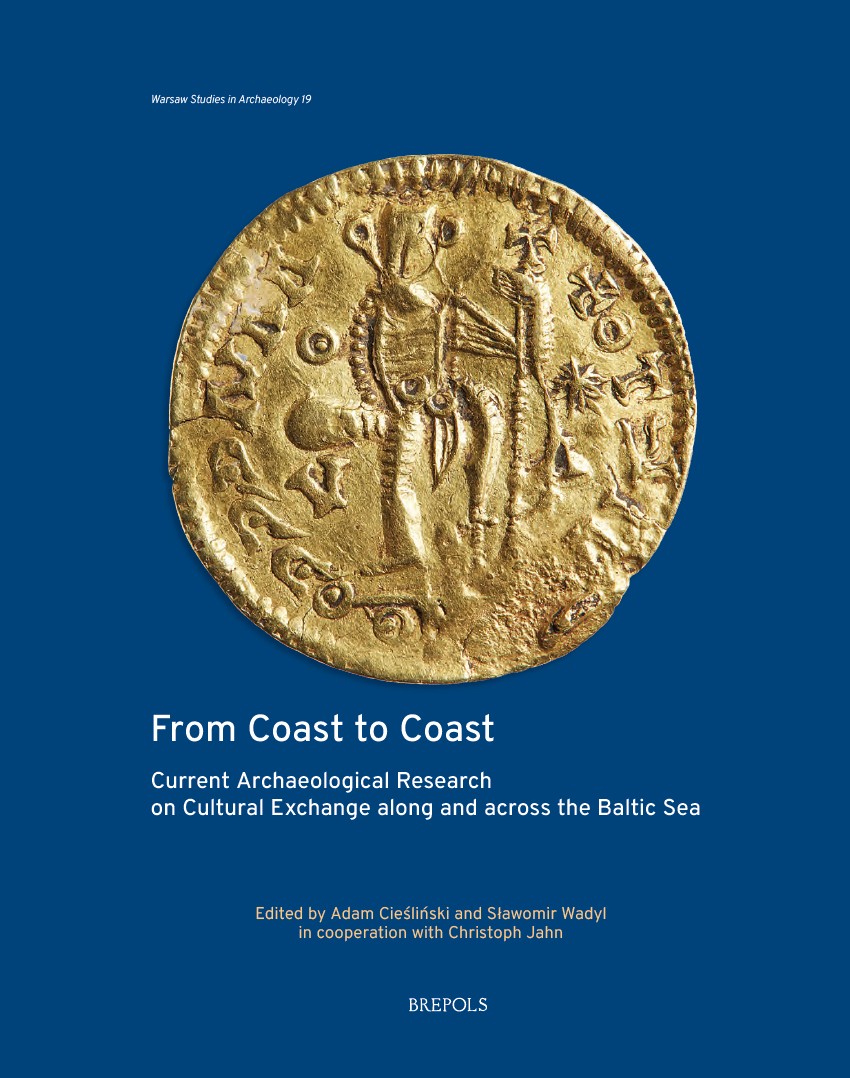 From Coast to Coast
Current Archaeological Research on Cultural Exchange along and across the Baltic Sea
Volume 19
 Frontiers of the Roman Empire: The Frontier of the Roman Province of Raetia
Grenzen des Römischen Reiches: Die Grenze der Römischen Provinz Raetien
 Gold, Silver and Glass: Power Networks, Cultural Identities, Technology Transfers and Agency across the Old World (7th Century BC – 1st Century AD)
Proceedings of a Conference Held at the British Museum, 16–18 June 2023
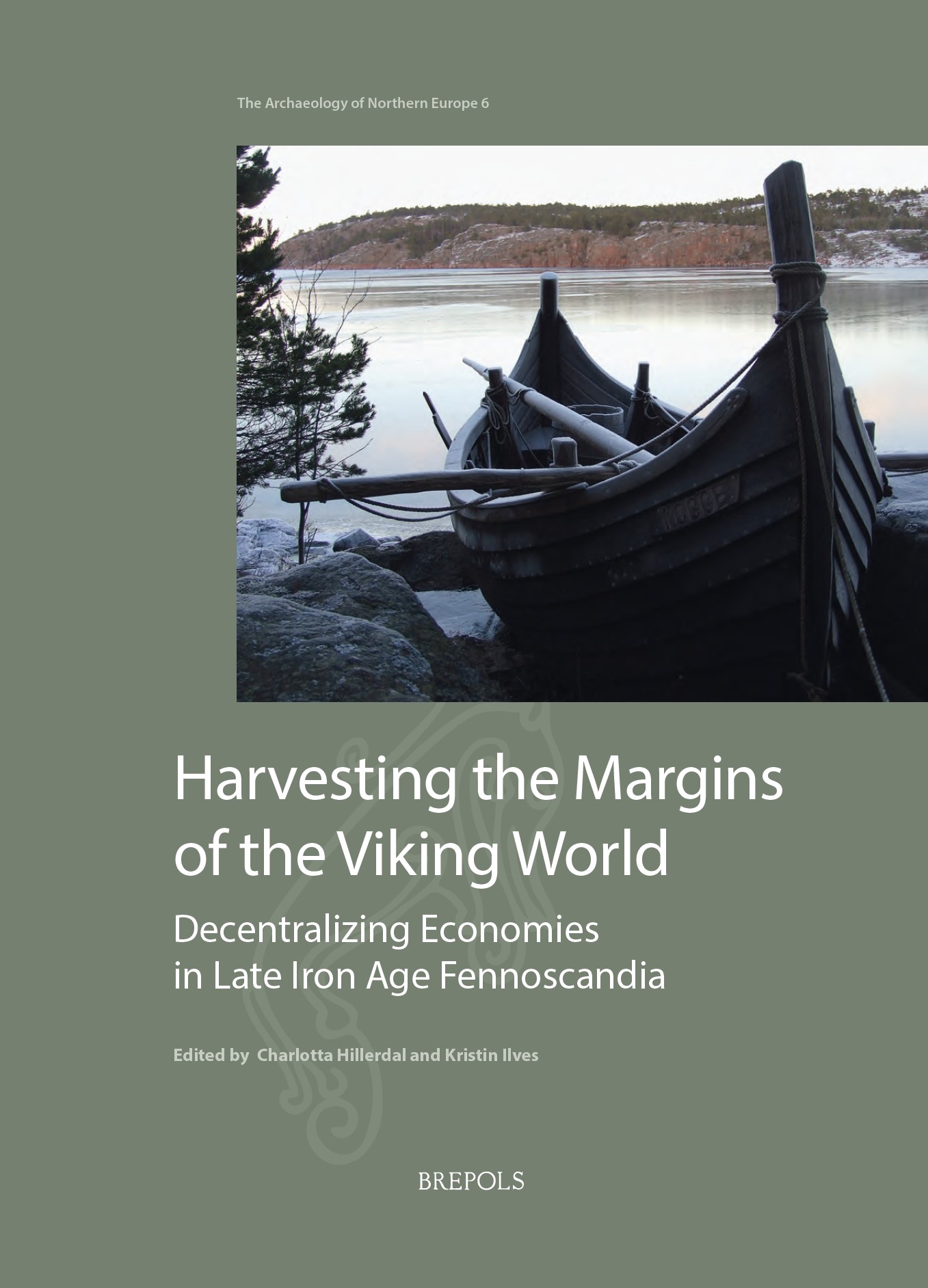 Harvesting the Margins of the Viking World
Decentralizing Economies in Late Iron Age Fennoscandia
Volume 6


 Images of Anonymous Women
A Semiotic Approach to Image-Text Relations in Interpretation of Ancient Near Eastern Art and the Hebrew Bible
Volume 310
