
Building Death: Readings on French and Iberian Prehistoric Hypogea
Edited by Marie-Elise Porqueddu Edited by Nuria Castañeda Edited by Rosa Barroso Bermejo Edited by Primitiva Bueno Ramírez

Paperback (Published)
(August 2026)
ISBN: 9781805832898
6.85 x 9.69 inches
Price: $49.00
In stock
Exploring prehistoric hypogea across France, Iberia and the western Mediterranean, this volume examines their chronology, architecture and spatial distribution alongside funerary practices and grave goods, combining studies of individual necropolises with regional syntheses and broader perspectives.
Building Death analyses the role of hypogea within the diversity of funerary constructions employed in the Western Mediterranean since the Neolithic. Their underground nature, entirely or partially carved out rock, and their architecture, sometimes hybrid, elevates them to the status of complex tombs exhibiting a wide variety of forms and functions.
The book derives from an international conference held on 23 November 2023 at the University of Alcalá (UAH), in Alcalá de Henares (Madrid, Spain), which brought together French, Portuguese, and Spanish specialists on the subject. It offers a novel overview of the rich assemblage of hypogea in Southwestern Europe. Papers address specific studies of necropolises, regional syntheses, and broader perspectives applied to the entire Mediterranean. The range of topics covers spatial distribution, chronology, construction typologies, funerary practices and grave goods, and even the contribution that can be made by analyses of other underground features such as flint mines.
Contributors
Introduction – Marie-Elise Porqueddu, Nuria Castañeda, Rosa Barroso Bermejo, Primitiva Bueno Ramírez
The Hypogean Phenomenon in Alentejo, South Portugal (4th and 3rd Millennia BC). A Summary – António Carlos Valera
The Necropolis of Valle de las Higueras, Huecas (Toledo).Cave 3 as a Case-Study for the Characterisation of the Use of Bell Beaker Hypogea in inland Iberia – Rosa Barroso Bermejo, Primitiva Bueno Ramírez, Rodrigo de Balbín-Behrmann
Displaying power: burial structures in Humanejos cemetery (Parla, Madrid) – Rafael Garrido-Pena, Raúl Flores Fernández, Ana Mercedes Herrero-Corral, Rodrigo Paulos-Bravo
Magdalena I: Funerary aspects in the Henares River lower valley (Madrid) during Late Prehistory – César Heras Martínez, Miriam Cubas Morera, Sergio Heras Bastida
What’s the relationship between hypogea and dolmens in the south of France? The example of the Fontvieille site in Provence – Xavier Margarit
Final Neolithic ornaments and rock-cut tombs in south-eastern France – Laurine Viel
Neolithic hypogea in the south-west of the Marne (France) – Rémi Martineau
Prehistoric rock-cut tombs in the western Mediterranean: a global approach to local phenomena – Marie-Elise Porqueddu
Flint Mining Know-How in the South European Neolithic – Nuria Castañeda
Marie-Élise Porqueddu is a Doctor in Prehistory whose research focuses on the know-how and techniques involved in processing rocks. With a particular interest in rock-cut tombs, she is developing a technical approach to the chaîne opératoire involved in carving out and building these structures. She was a member of the Casa de Velázquez (École des hautes études hispaniques et ibériques) between 2022 and 2024.
Nuria Castañeda is a Doctor in Prehistory, Archaeology, and Heritage. Her research focuses on prehistoric childhood. She specialises in identifying knowledge transmission between generations by studying technical errors and skill levels in lithic production. She is currently a researcher under the Research Talent Attraction programme in the Department of Prehistory and Archaeology at the Universidad Autónoma de Madrid.
Rosa Barroso Bermejo is a Lecturer in Prehistory in the History and Philosophy Department at the University of Alcalá, Spain. Her archaeological research focuses on the study of the funerary prehistory of inland Iberia during the fourth and second millennia BC with a special interest on the transition from the Chalcolithic to the Bronze Age.
Primitiva Bueno Ramírez is Professor of Prehistory in the History and Philosophy Department at the University of Alcalá, Spain. She is an archaeologist specialising in Late Prehistory, with a long-standing research focus on Megalithism and Megalithic Art. The initial documentation of hypogean structures in the interior of the Iberian Peninsula, Valle de las Higueras, was achieved through her work.
- Edited by Marie-Elise Porqueddu
- Edited by Nuria Castañeda
- Edited by Rosa Barroso Bermejo
- Edited by Primitiva Bueno Ramírez
Similar Books


 Archaeological Excavations at Irmis Rka: An Investigation of a Multi-Layered Settlement in Southwest Georgia
Results from the 2020 Season: Early Bronze Age to Medieval Occupations


 Catuvellaunia and Rome: Economic and Political Relations during the Final Decades Pre-conquest
The Role of Grain from Southeastern Britain and Its Potential for Maintenance of the Roman Military along the Frontier on the Rhine
 Colour Concept “Secoli bui” a colori
Codici cromatici e architetture dipinte nell’età tardoantica e medievale

 Crossing Disciplines in the Study of Archaeology and Prehistoric Art: Insights from the Sahara and Mediterranean Africa
Proceedings of the XX UISPP World Congress (5–9 September 2023, Timișoara, Romania) Volume / Session 18
 Crossing Sacred Landscapes
Contacts and Continuities in the Desert Cults and Beliefs of Ancient Northern Arabia and the Arid Southern Levant
 Cuneiform Artefacts from Archaeological Contexts: New Research on Ancient Iraq
Proceedings of a Conference Held at the Bavarian Academy of Sciences and Humanities, July 4–5, 2024
Volume 2

 ENTANGLED AFRICA
Intra-African Relations Between Rain Forest and Mediterranean from Around 4,000 BCE to 1,500 CE


 Exploring Prehistoric Pottery in Japan
A Study of Organic Inclusions, Adhering Materials, and Impressions of Woven Items

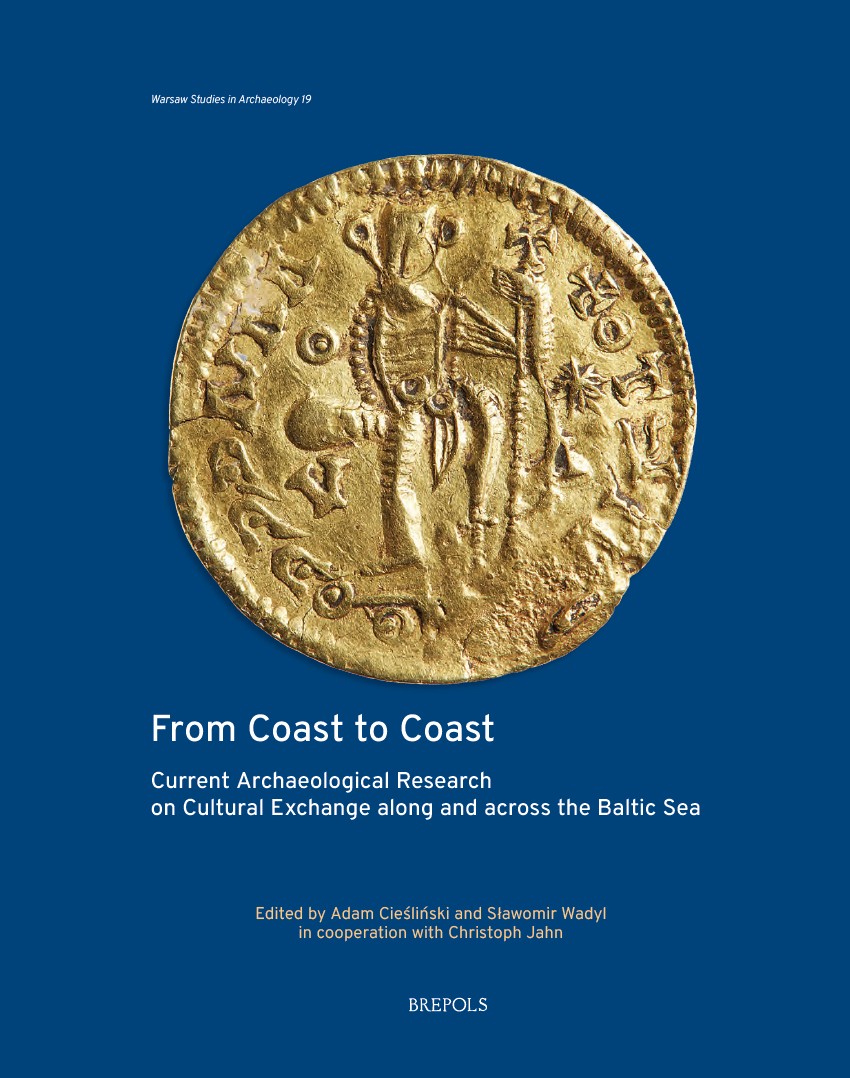 From Coast to Coast
Current Archaeological Research on Cultural Exchange along and across the Baltic Sea
Volume 19
 Frontiers of the Roman Empire: The Frontier of the Roman Province of Raetia
Grenzen des Römischen Reiches: Die Grenze der Römischen Provinz Raetien
 Gold, Silver and Glass: Power Networks, Cultural Identities, Technology Transfers and Agency across the Old World (7th Century BC – 1st Century AD)
Proceedings of a Conference Held at the British Museum, 16–18 June 2023
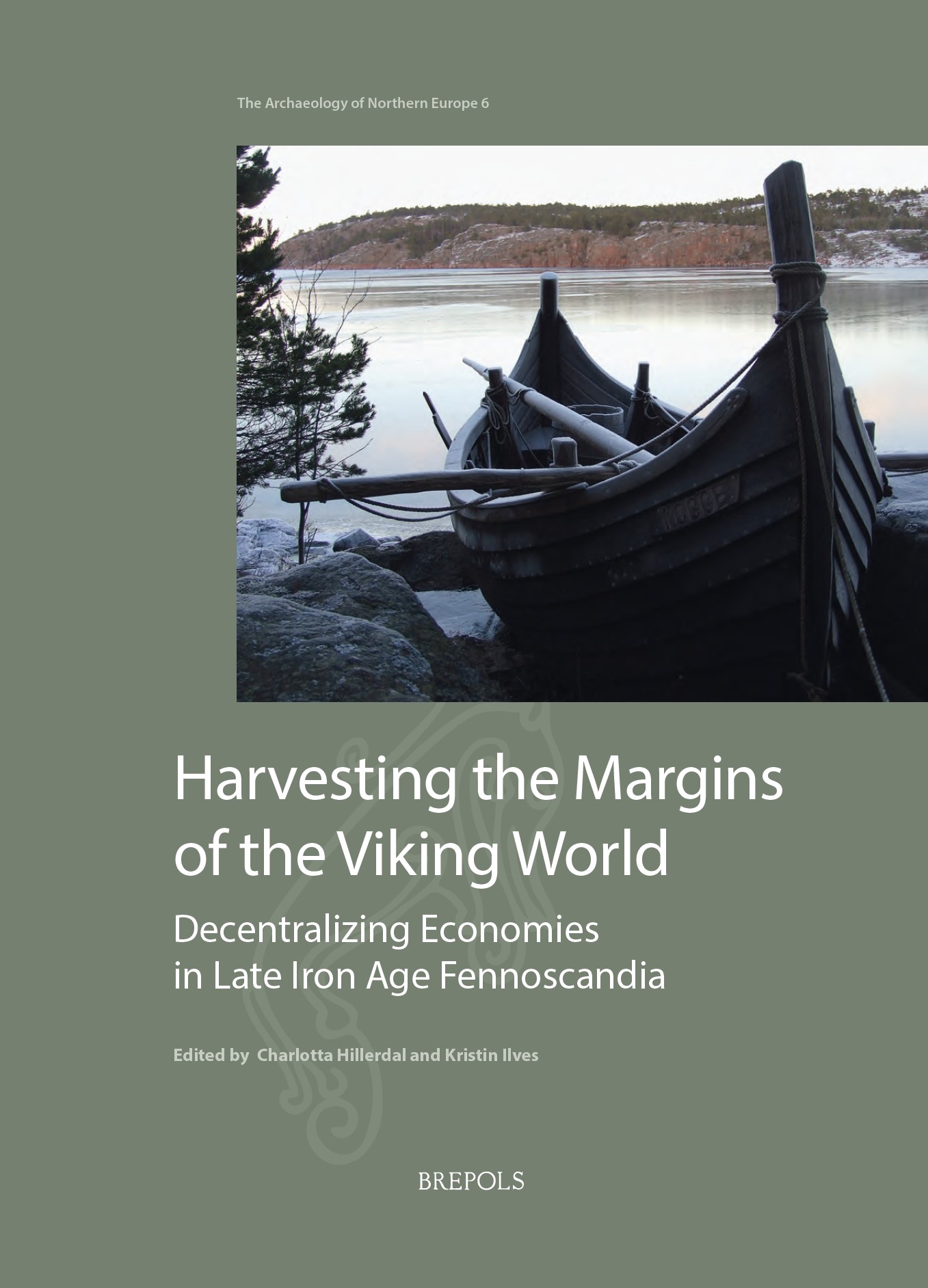 Harvesting the Margins of the Viking World
Decentralizing Economies in Late Iron Age Fennoscandia
Volume 6
 Images of Anonymous Women
A Semiotic Approach to Image-Text Relations in Interpretation of Ancient Near Eastern Art and the Hebrew Bible
Volume 310

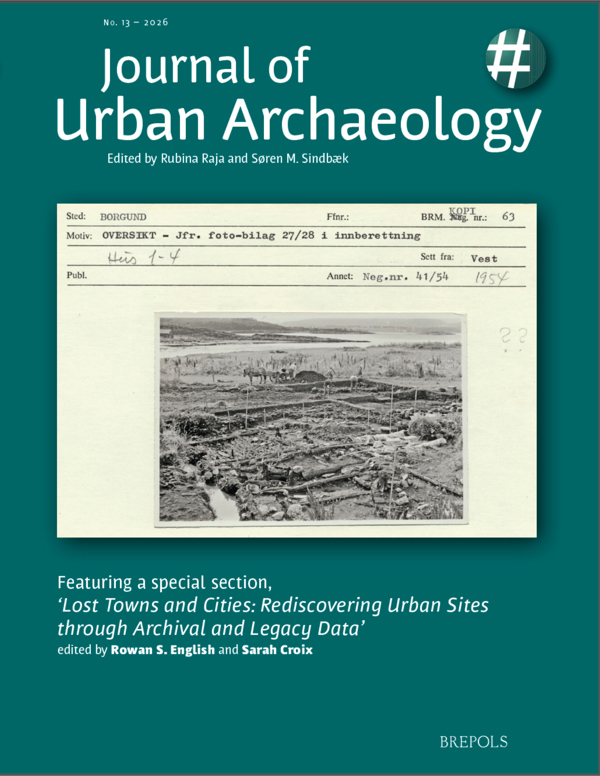 Journal of Urban Archaeology 13 (2026)
Featuring a special section, ‘Lost Towns and Cities: Rediscovering Urban Sites through Archival and Legacy Data’


 Making and Meaning in the Bronze and Iron Ages
Chronology, Landscapes and Societies across Europe. Proceedings from the METALAGES2024 Colloquium (Florence, 23 October 2024)

 Medieval Yeghegis, Armenia
History, Archaeology, Society. Local Multiplicities and Global Connections of a Rural Centre on the Silk Road(s)


 Mobility and Archaeogenetics in Central Asia
People – Goods – Ideas. 3rd International Conference on Central Asian Archaeology in Bern, 11th–13th January 2024
Volume 24


 Offa’s Dyke Journal: Volume 7 for 2025
A Journal for Linear Monuments, Frontiers and Borderlands Research

