
Crossing Sacred Landscapes
Contacts and Continuities in the Desert Cults and Beliefs of Ancient Northern Arabia and the Arid Southern Levant
Edited by Juan Manuel Tebes Edited by Michael C.A. Macdonald

Hardback (Published)
(October 2026)
ISBN: 9781805833260
8.07 x 11.46 inches
Price: $92.00
On back order
This volume examines the sacred landscapes, cults and mortuary traditions of northern Arabia and the southern Levant from the Neolithic to the Early Islamic period. Drawing on archaeology, history, epigraphy and rock art studies, it explores religious continuity and change across different landscapes, cultures and eras.
Crossing different landscapes and periods has been a major feature of the desert cults and beliefs of the Middle East, from prehistory to modern times. This book aims to study the sacred landscapes of northern Arabia and the southern arid margins of the Levant in ancient times throughout the longue durée, adopting an interdisciplinary approach at the intersection between archaeology, history, epigraphy, rock art research, and digital humanities. Deriving from a seminar held at the University of Oxford in December 2023, the volume presents case-studies with synchronic and diachronic analyses of the cultic and mortuary traditions of modern southern Jordan/Israel and northern Saudi Arabia, from the Neolithic to the Early Islamic period. In particular, it explores the cultural continuity of cultic and ritual manifestations throughout large geographical spaces and cutting across different landscapes and periods. Crossings were synchronic, with religious traditions, oral narratives, cultic material culture, and funerary architecture crossing diverse geographical landscapes and socio-cultural entities of different complexity. Crossings were also diachronic, with certain features of the material culture and architecture crossing through different temporal periods.
List of Figures and Tables
Contributors
Preface
Introduction. Across different times and landscapes: Cults and afterlife beliefs in Northern Arabia and the arid Southern Levant in the longue-durée – Juan Manuel Tebes and Michael C.A. Macdonald
Chapter 1. Borders in the desert: The archaeology and epigraphy of the arid Southern Levant and North-West Arabia and their context, from the nineteenth century to the present
The Archaeology and Iconography of Cult and Death
Chapter 2. The immediacy of scarcity: Towards an understanding of the indigenous geonuminosity of Arabia’s landscapes – Hans Georg K. Gebel
Chapter 3. No rest for the dead: An active afterlife in the Neolithic – Bill Finlayson
Chapter 4. Continuities, convergences, truncations, and other trends in Negev cult over the long term: An archaeological perspective – Steven A. Rosen
Chapter 5. A remote sensing perspective on funerary and cultic monuments in the arid regions of Northern Arabia – Michael Fradley
Chapter 6. A reassessment of the ‘local shrine’ and the Hathor sanctuary, Timna (Site 200), Southern Negev – Gaël Carriou
Chapter 7. The rock art of the Negev, Israel: Discussing private and public space – Davida Eisenberg-Degen and George H. Nash
Chapter 8. Speech of tree: The tradition of sacred trees in the Southern Levant and Northern Arabia as archetypal symbolism – Elizabeth S. Bloem Viljoenii
The Epigraphic and Textual Evidence for Cults and Beliefs
Chapter 9. Scented smoke over Dadan: Revisiting Julius Euting’s Stone No. 36 – Regine Hunziker-Rodewald, Thierry Grégor and Andrei Aioanei
Chapter 10. Up on the mountain, down in the valley: New clues to the spatial and social organization of religion at ancient Dadan, and to the political-economic context of the late Lihyanite period – Fokelien Kootstra-Ford, Josselin Pinot and Jérôme Rohmer
Chapter 11. Le dieu Kahl à Qaryat al-Faʾw et à Ḥimà: nordarabique ou sudarabique? – Christian Julien Robin and Mashʿal ʿAbd Allāh Āl Qurād. With a contribution of Jérôme Norris
Chapter 12. Nabataean royal portraits in the area of the Qaṣr al-Bint temple at Petra – Laïla Nehmé and François Renel
Chapter 13. Ethical waṣiyyas on the Eve of Islam – Ilkka Lindstedt
Chapter 14. Sacred locales in the Qur’an – Nicolai Sinai
Juan Manuel Tebes is Professor at the Catholic University of Argentina, the current Director of its Center of Studies of Ancient Near Eastern History, and Researcher at the National Research Council of Argentina. He is co-editor of the Ancient Near East Monographs series (SBL Press) and former Editor-in-Chief of the scholarly journal Antiguo Oriente. Tebes has participated in archaeological expeditions in Jordan, Israel, and Turkey, and has also been research fellow at many institutions.
Michael C.A. Macdonald is a Fellow of the British Academy, holds a D.Litt from the University of Chicago, and is an Honorary Fellow of Wolfson College, Oxford. For the last 50 years he has studied the languages, scripts, rock-art and cultures of ancient Arabia and its neighbours, ancient nomads, and ancient literacy. He has led numerous expeditions to record inscriptions in the deserts of Syria, Jordan and Saudi Arabia, and led the creation of the Online Corpus of the Inscriptions of Ancient North Arabia (OCIANA).
- Edited by Juan Manuel Tebes
- Edited by Michael C.A. Macdonald
Similar Books


 Archaeological Excavations at Irmis Rka: An Investigation of a Multi-Layered Settlement in Southwest Georgia
Results from the 2020 Season: Early Bronze Age to Medieval Occupations


 Catuvellaunia and Rome: Economic and Political Relations during the Final Decades Pre-conquest
The Role of Grain from Southeastern Britain and Its Potential for Maintenance of the Roman Military along the Frontier on the Rhine
 Colour Concept “Secoli bui” a colori
Codici cromatici e architetture dipinte nell’età tardoantica e medievale

 Crossing Disciplines in the Study of Archaeology and Prehistoric Art: Insights from the Sahara and Mediterranean Africa
Proceedings of the XX UISPP World Congress (5–9 September 2023, Timișoara, Romania) Volume / Session 18
 Cuneiform Artefacts from Archaeological Contexts: New Research on Ancient Iraq
Proceedings of a Conference Held at the Bavarian Academy of Sciences and Humanities, July 4–5, 2024
Volume 2

 ENTANGLED AFRICA
Intra-African Relations Between Rain Forest and Mediterranean from Around 4,000 BCE to 1,500 CE


 Exploring Prehistoric Pottery in Japan
A Study of Organic Inclusions, Adhering Materials, and Impressions of Woven Items

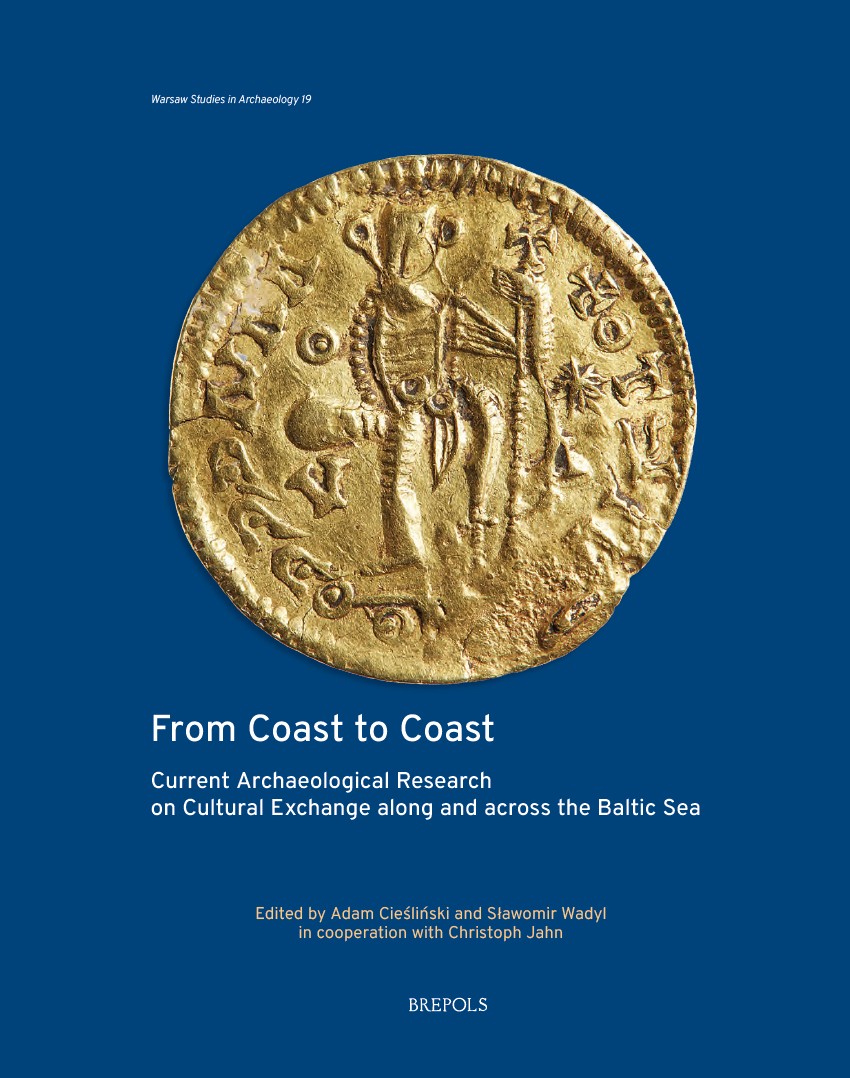 From Coast to Coast
Current Archaeological Research on Cultural Exchange along and across the Baltic Sea
Volume 19
 Frontiers of the Roman Empire: The Frontier of the Roman Province of Raetia
Grenzen des Römischen Reiches: Die Grenze der Römischen Provinz Raetien
 Gold, Silver and Glass: Power Networks, Cultural Identities, Technology Transfers and Agency across the Old World (7th Century BC – 1st Century AD)
Proceedings of a Conference Held at the British Museum, 16–18 June 2023
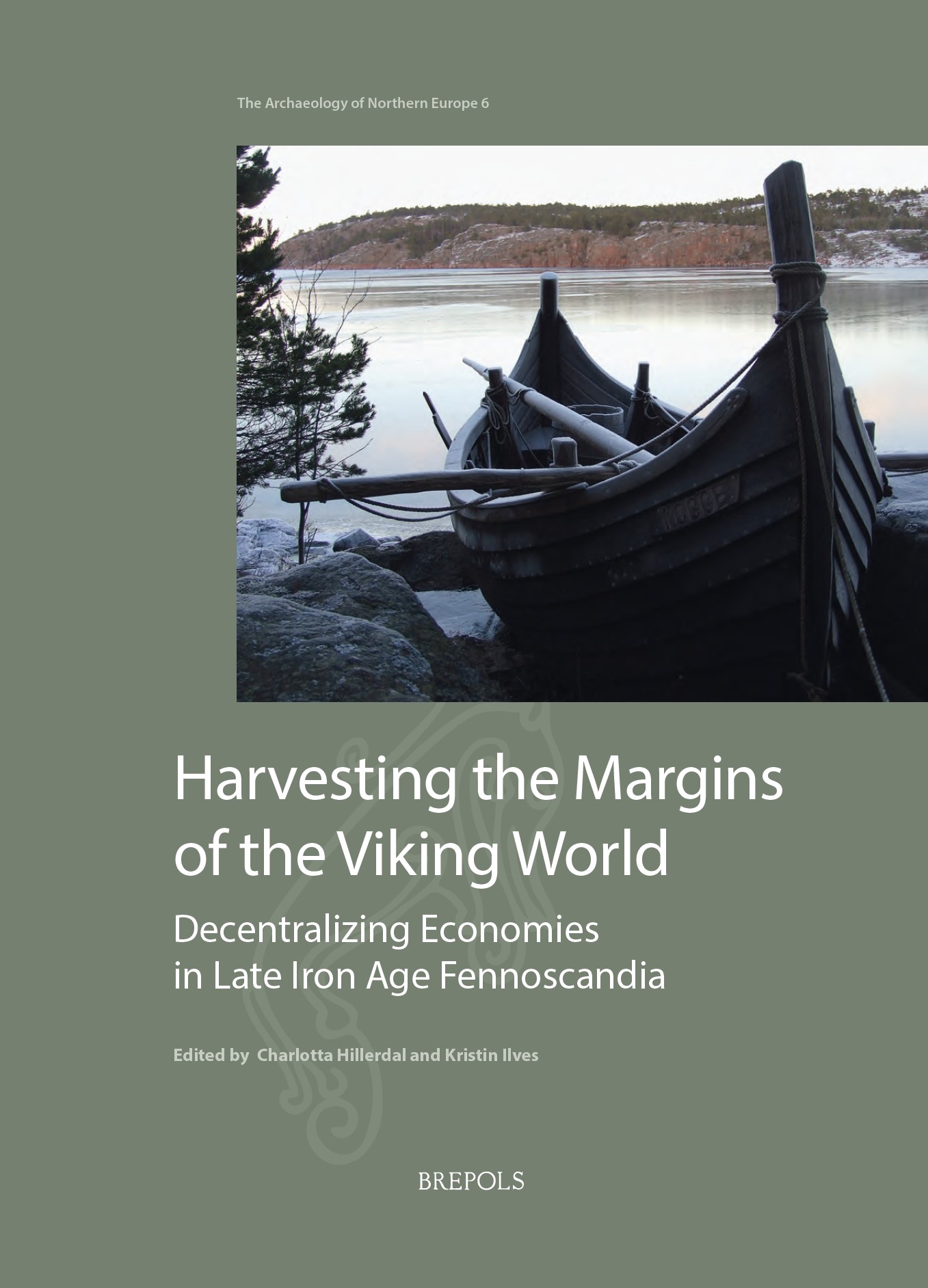 Harvesting the Margins of the Viking World
Decentralizing Economies in Late Iron Age Fennoscandia
Volume 6
 Images of Anonymous Women
A Semiotic Approach to Image-Text Relations in Interpretation of Ancient Near Eastern Art and the Hebrew Bible
Volume 310

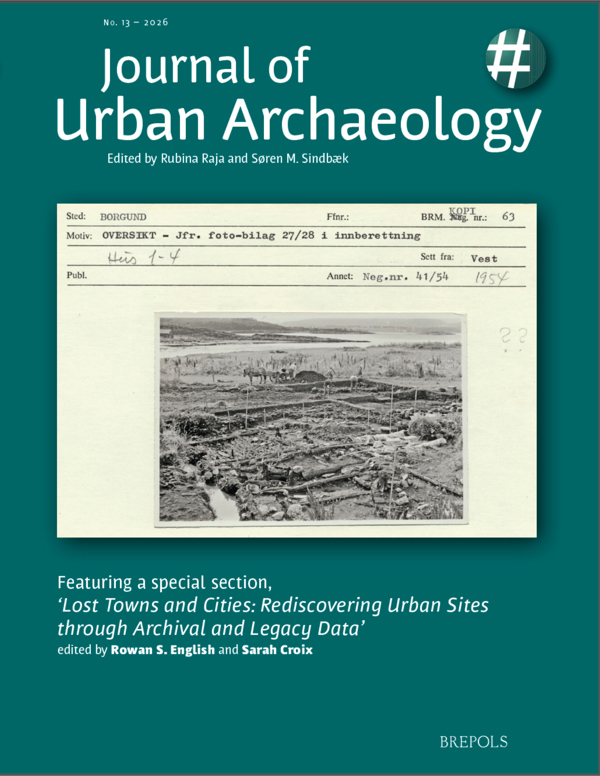 Journal of Urban Archaeology 13 (2026)
Featuring a special section, ‘Lost Towns and Cities: Rediscovering Urban Sites through Archival and Legacy Data’


 Making and Meaning in the Bronze and Iron Ages
Chronology, Landscapes and Societies across Europe. Proceedings from the METALAGES2024 Colloquium (Florence, 23 October 2024)

 Medieval Yeghegis, Armenia
History, Archaeology, Society. Local Multiplicities and Global Connections of a Rural Centre on the Silk Road(s)
 Mobility and Archaeogenetics in Central Asia
People – Goods – Ideas. 3rd International Conference on Central Asian Archaeology in Bern, 11th–13th January 2024
Volume 24


 Offa’s Dyke Journal: Volume 7 for 2025
A Journal for Linear Monuments, Frontiers and Borderlands Research


 Prehistoric, Ancient and Medieval Medicine
New Perspectives and Challenges for the Twenty-First Century