Scarabs, Scaraboids, Seals and Seal Impressions from Medinet Habu
by Emily Teeter and Terry G. Wilfong

Hardback (Published)
(August 2003)
ISBN: 9781885923226
8.86 x 11.65 inches
Price: $95.00
In stock
Medinet Habu in western Thebes (modern Luxor, Egypt) is dominated by the great mortuary temples of King Ramesses III, and Kings Aye and Horemheb. Catalogue of 349 objects from approx. 1470 BC to the eighth century AD. Each is described and illustrated. These scarabs and scaraboids are one of the largest groups excavated from any site in Egypt.
Medinet Habu in western Thebes (modern Luxor, Egypt) is dominated by the great mortuary temples of King Ramesses III (ca. 1182 BC), and Kings Aye and Horemheb (ca. 1324-1293 BC). It served as the seat of the regional government in the Late New Kingdom, and an important Coptic Christian community grew up within its great fortification walls. For nearly 1,500 years Medinet Habu played a central role in Egyptian religion, life, and politics. In 1924, the Oriental Institute of the University of Chicago began the documentation of Medinet Habu, but the last facet of the documentation – the publication of thousands of objects excavated at the site – was interrupted by World War II. This book, the first of a projected multiple volume series, marks the resurrection of the project to publish the small finds. It includes a catalogue of 349 scarabs, scaraboids (including lentoids, cowroids, and buttons), heart scarabs and their Sons of Horus amulets, heart amulets, seals, and seal impressions on bullae, vessel stoppers, amphora handles, mudbricks, and funerary cones that date from approximately 1470 BC to the eighth century AD. Each object is described and illustrated and, whenever possible, placed in its original archaeological context. These scarabs and scaraboids comprise one of the largest groups of such material excavated from any site in Egypt.
- By (author) Emily Teeter
- By (author) Terry G. Wilfong
Other Titles in this Series

 Reliefs and Inscriptions at Luxor Temple, Volume 2
The Facade, Portals, Upper Register Scenes, Columns, Marginalia, and Statuary in the Colonnade Hall
Volume 116
 Medinet Habu IX
The Eighteenth Dynasty Temple, Part 1: The Inner Sanctuaries, with Translations of Texts, Commentary and Glossary
Volume 136
 Excavations in the Plain of Antioch. Volume II
The Structural Remains of the Later Phases: Chatal Hueyuek, Tell Al-Judaidah, and Tell Tayinat
Volume 95
 Theban Desert Road Survey in the Egyptian Western Desert, Volume 1
Gebel Tjauti Rock Inscriptions 1-45 and Wadi el-Hol Rock Inscriptions 1-45
Volume 119


 Cuneiform Texts from the Ur III Period in the Oriental Institute, Volume 2
Drehem Administrative Documents from the Reign of Amar-Suena
Volume 121


 Excavations at the prehistoric mound of Chogha Bonut, Khuzestan, Iran
Seasons 1976/77, 1977/78, and 1996
Volume 120
 Early Megiddo on the East Slope (The ‘Megiddo Stages’)
A Report on the Early Occupation of the East Slope of Megiddo. Result of the Oriental Institute's Excavations, 1925-1933
Volume 139

 On the Margin of the Euphrates
Settlement and Land Use at Tell es-Sweyhat and in the Upper Tabqa Area, Syria
Volume 124


 Ancient Settlement Systems and Cultures in the Ram Hormuz Plain, Southwestern Iran
Excavations at Tall-e Geser and Regional Survey in the Ram Hormuz Area
Volume 140


 The Temple of Khonsu. Volume II
Scenes and Inscriptions in the Court and the First Hypostyle Hall
Volume 103
 Temple of Khonsu, Volume 3
The Graffiti on the Khonsu Temple Roof at Karnak: A Manifestat
Volume 123
 Tell Hamoukar, Volume 1. Urbanism and Cultural Landscapes in Northeastern Syria
The Tell Hamoukar Survey, 1999-2001
Volume 137

 The Amuq Valley Regional Projects, Volume 1
Surveys in the Plain of Antioch and Orontes Delta, Turkey, 1995-2002
Volume 131
 The Archive of Thotsutmis, Son of Panouphis
Early Ptolemaic Ostraca from Deir el Bahari (O. Edgerton)
Volume 146

Similar Books
 Archaeological Discoveries at the Temple of Ramesses II in Abydos
Vol. 2: Old Kingdom Wall, Papyri, Ostraca, and Leather Remains
 Cities through Time
Glimpses into Urbanity and Community in Mediaeval to Modern West Asia and Egypt
Volume 1


 Cuneiform Artefacts from Archaeological Contexts: New Research on Ancient Iraq
Proceedings of a Conference Held at the Bavarian Academy of Sciences and Humanities, July 4–5, 2024
Volume 2
 Drunk the Potion, No Whit Charmed
The Doctrine of Pure and Perfect Souls from Iamblichus to Damascius

 Epiphanies of the Divine in the Septuagint and the New Testament
Fifth International Symposium of the Corpus Judaeo-Hellenisticum Novi Testamenti (CJHNT), 14-17 May 2015, Nottingham


 Global Gulf
Geo-Economic, Geo-Political, and Geo-Technological Transformation in Saudi Arabia, the United Arab Emirates, and Qatar

 Ismail Hakki Bursevi’s translation of and commentary on Fusus al-Hikam By Muhyiddin Ibn ‘Arabi
Volumes 1-4
 Language and Power in the Roman Empire and Early India
Hierarchy, Ambiguity, and the Art of Reading the Signs in Cosmopolitan Cultures
 Late Antique villae in the Balkans (3rd–7th c. AD): Current Research Questions and Perspectives
HAEMUS Companion to the Late Antique Balkans 1
Volume 4

 Monastic Manuscripts from the Eastern Mediterranean (Sinai, Jerusalem, Antioch)
Production, Use, and Contexts

 Nurturing the Elite
Representations of Drinking, Eating, and Religious Vessels in Palmyrene Funerary Iconography
Volume 13


 Qatar’s Societal Security
Towards the Inclusive National Concept of ‘Baladna’ Identity, Migration and External Threats Since 2017


 The Biblical Tale of Judah and Tamar in Fourteenth-Century Iran
A Judeo-Persian Versified Account by Shāhīn with Scholarly Edition, Annotated Translation and Persian Transliteration
Volume 94, 951
 The Compositional History of the Book of Kings
An Analysis of the Evaluative Frameworks in 1 Kings 14–2 Kings 25
 The Discourse of Rites
Shaping and Reshaping the (Counter-)Priestly Rituals Conducted Outside the Tabernacle

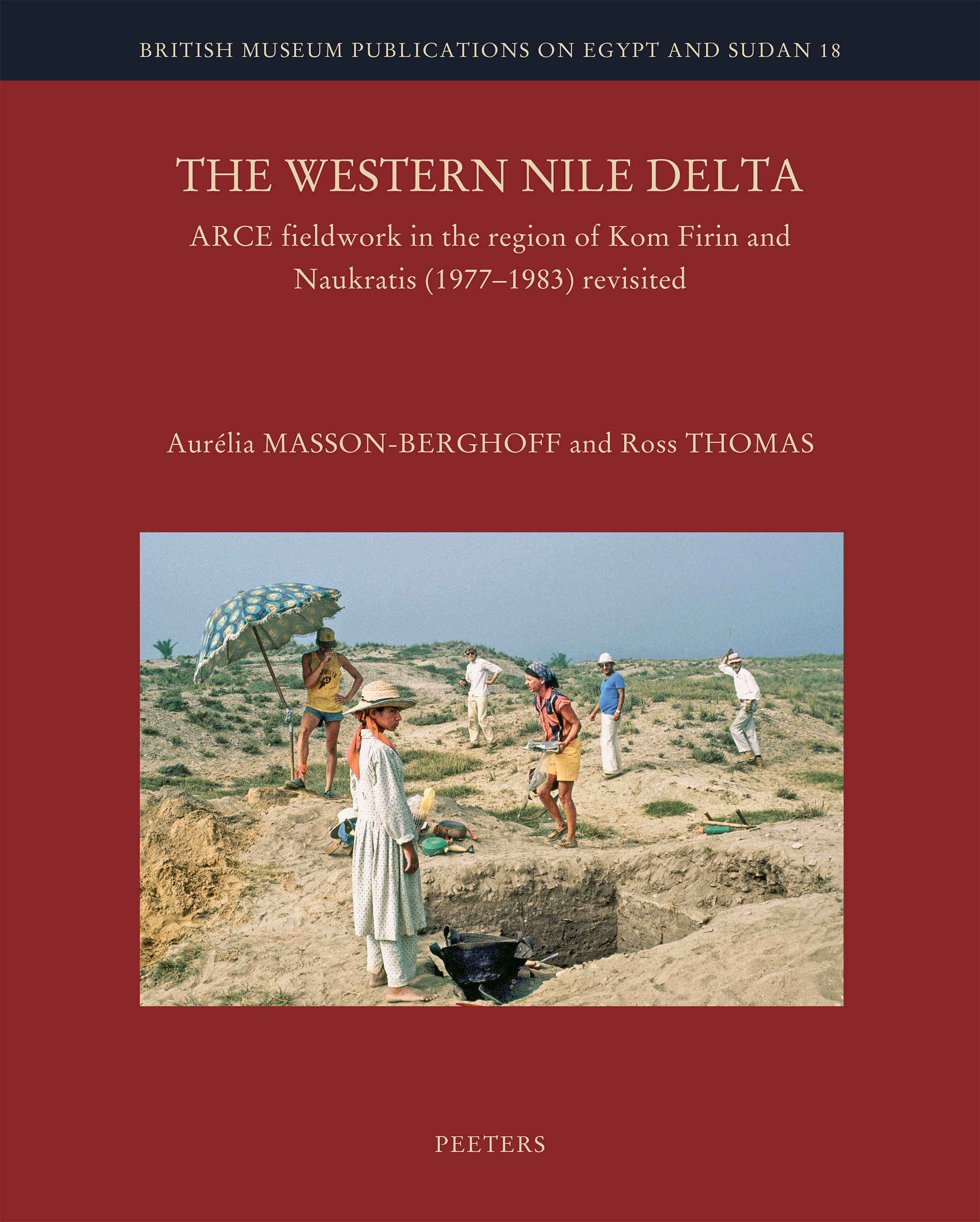 The Western Nile Delta
ARCE Fieldwork in the Region of Kom Firin and Naukratis (1977-1983) Revisited