
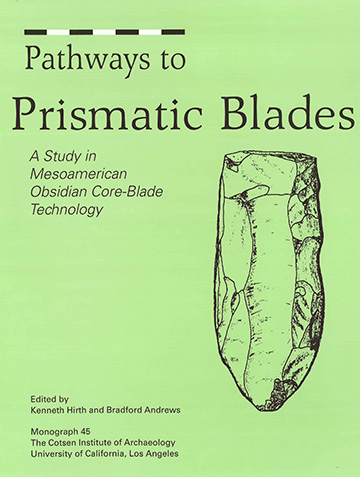
Pathways to Prismatic Blades
A Study in Mesoamerican Obsidian Core-Blade Technology
edited by Kenneth Hirth and Bradford Andrews
Paperback (Published)
(December 2002)
ISBN: 9780917956997
8.46 x 10.94 inches
Price: $9.95
In stock
This volume explores the social and economic processes involved in the manufacture of obsidian prismatic blades, one of the sharpest cutting instruments ever produced in the prehistoric world. Focusing on ancient Mesoamerica, contributors examine the variation in the way the blades were manufactured and the causes behind their variation.
Kenneth Hirth is professor of anthropology at The Pennsylvania State University. Bradford Andrews is a research associate in anthropology at The Pennsylvania State University.
- Edited by Bradford Andrews
- Edited by Kenneth Hirth
Other Titles in this Series

 Roman Foodprints at Berenike
Archaeobotanical Evidence of Subsistence and Trade in the Eastern Desert of Egypt
Volume 55


 Ceramics of Postclassic Cholula, Mexico
Typology and Seriation of Pottery from the UA-1 Domestic Compound
Volume 43
 Settlement and Subsistence in Early Formative Soconusco
El Varal and the Problem of Inter-Site Assemblage Variation
Volume 65


 Ceramic Production and Circulation in the Greater Southwest
Source Determination by INAA and Complementary Mineralogical Investigations
Volume 44





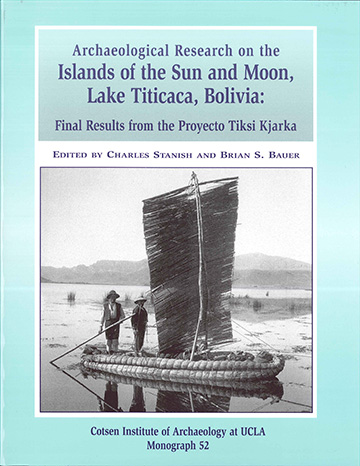 Archaeological Research on the Islands of the Sun and Moon, Lake Titicaca, Bolivia
Final Results from the Proyecto Tiksi Kjarka
Volume 52


Similar Books


 Adolescente de Jalpan
Primer estudio iconográfico y esbozo de interpretación iconológica sobre una escultura huasteca en la Sierra Gorda del Noreste de México


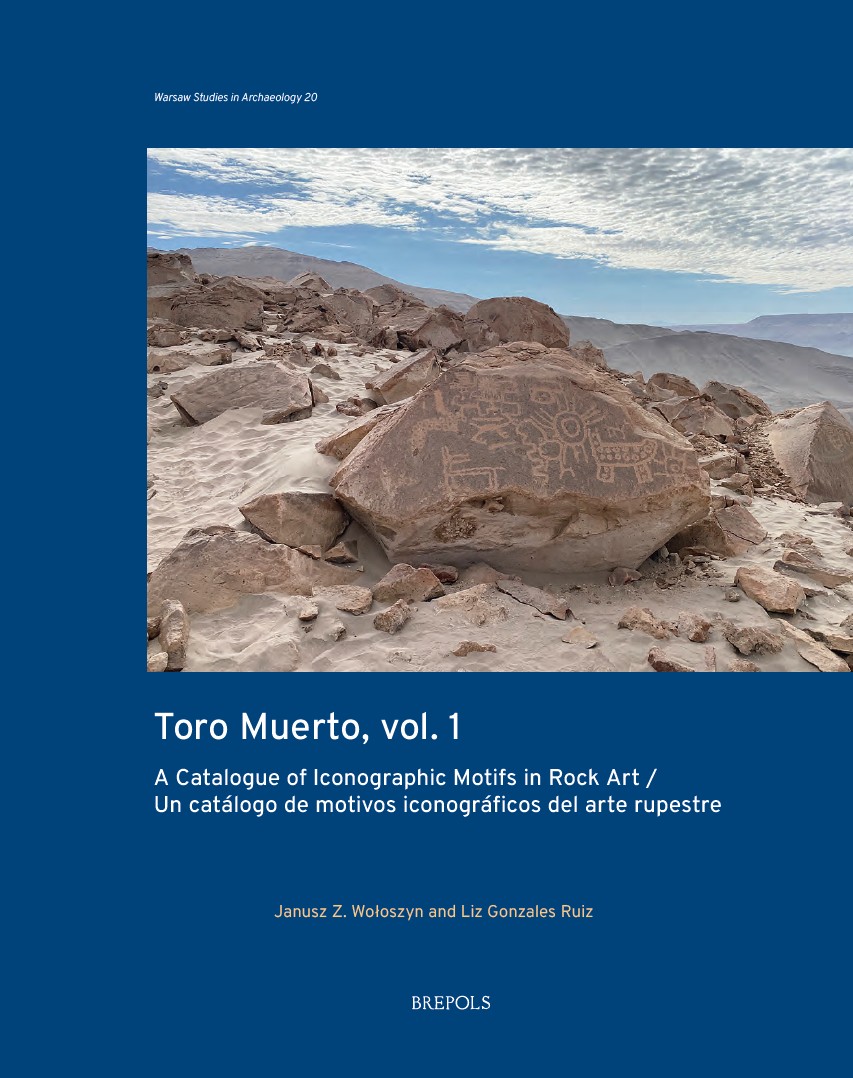 Toro Muerto, vol. I
A Catalogue of Iconographic Motifs in Rock Art / Un catálogo de motivos iconográficos del arte rupestre
Volume 20


 Obsidian Across the Americas
Compositional Studies Conducted in the Elemental Analysis Facility at the Field Museum of Natural History


 La fábrica del prestigio en Mesoamérica
Interacciones y alteridad en el Altiplano central durante el período epiclásico (600-900 d.C.)


 El renacer de los Reyes
Imagen, contexto y significado del friso de Balamku, Campeche, Mexico
Volume 56

 El Palacio: Historiography and new perspectives on a pre-Tarascan city of northern Michoacán, Mexico


 Essai bibliographique sur l’archéologie francophone de la Mésoamérique
Bibliographical essay upon the French-speaking contributions to Mesoamerican archaeology; Ensayo bibliográfico sobre la arqueología francófona de Mesoamérica

 Sea Shells in the Mountains and Llamas on the Coast
The Economy of the Paracas Culture (800 to 200 BC) in Southern Peru
Volume 16
 Wari Women from Huarmey
Bioarchaeological Interpretation of Human Remains from the Wari Elite Mausoleum at Castillo de Huarmey, Peru
 Paisajes en un sector de la Quebrada de Humahuaca durante la Etapa Agroalfarera
Arqueología de Tumbaya (Jujuy, Argentina)
 Peintures et gravures rupestres des Amériques: Empreintes culturelles et territoriales
Proceedings of the XVIII UISPP World Congress (4-9 June 2018, Paris, France) Volume 2, Session XXV-3


