
Roman Baths and Agency
Proceedings of the International Conference held at the Academia Belgica, Rome, 18-20 October 2023
Edited by K. Beaufay Edited by S. Maréchal

This volume is the fruit of the international conference <i>Roman Baths and Agency. The Human Factor in Designing, Building, Using, Experiencing, and Maintaining Bath Buildings in the Roman Territories</i>, organised by the editors at the Academia Belgica in Rome on 18-20 October 2023.<br/>
Through its 26 contributions, it endeavours to restore the human element within the bath building. Few buildings were so central to Roman society as the bath building, which was frequented almost daily by the vast majority of the population, in all corners of the Roman world. More than with architecture, it is with society this volume is concerned, as it attempts to look at the individual and collective choices made, and the actions performed, by the inhabitants of the Roman territories in relation to baths.<br/>
The volume is organised around six themes. A first section, entitled ‘Architects, builders, contractors and commissioners’, looks at the individuals responsible for the final appearance of the bath building, through their input in terms of design, funding, and workmanship. The second section, ‘Technology and management of resources’, focuses on the people heating the baths, on the technological devices they operated, and on modern models for calculating the energy output of their work. The third part, ‘Adoption of bathing practices’, looks at two areas of the Roman world and considers what (and who) it took to initiate Roman bathing practices in places that had limited similar traditions. The fourth section, entitled ‘Users and usages’, focuses on the identity of the bathers, on the ways they could circulate in the baths and interact with each other, and on the activities they could perform inside them. The fifth section, ‘Senses and perceptions’, tries to reconstruct the feelings and emotions of the bathing experience, for different types of bathers. For that purpose, it uses evidence from ancient literature and epigrams, and considers the role of natural lighting too. The last section, ‘Small finds in Roman baths’, uses a different type of material evidence, namely strigils, small art items, and coins, to look at the lived experience of bathing.<br/>
The conference concluded on a more contemporary note that also unites baths and humans: the creation of the BATH Network, an international research network of scholars specialising in ancient baths and bathing habits. Spearheaded by the editors, it aims at sharing resources on ancient baths and providing a platform to promote collaboration between researchers in the field. It can be found at https://ancientbaths.com/.
This volume is the fruit of the international conference <i>Roman Baths and Agency. The Human Factor in Designing, Building, Using, Experiencing, and Maintaining Bath Buildings in the Roman Territories</i>, organised by the editors at the Academia Belgica in Rome on 18-20 October 2023.<br/>
Through its 26 contributions, it endeavours to restore the human element within the bath building. Few buildings were so central to Roman society as the bath building, which was frequented almost daily by the vast majority of the population, in all corners of the Roman world. More than with architecture, it is with society this volume is concerned, as it attempts to look at the individual and collective choices made, and the actions performed, by the inhabitants of the Roman territories in relation to baths.<br/>
The volume is organised around six themes. A first section, entitled ‘Architects, builders, contractors and commissioners’, looks at the individuals responsible for the final appearance of the bath building, through their input in terms of design, funding, and workmanship. The second section, ‘Technology and management of resources’, focuses on the people heating the baths, on the technological devices they operated, and on modern models for calculating the energy output of their work. The third part, ‘Adoption of bathing practices’, looks at two areas of the Roman world and considers what (and who) it took to initiate Roman bathing practices in places that had limited similar traditions. The fourth section, entitled ‘Users and usages’, focuses on the identity of the bathers, on the ways they could circulate in the baths and interact with each other, and on the activities they could perform inside them. The fifth section, ‘Senses and perceptions’, tries to reconstruct the feelings and emotions of the bathing experience, for different types of bathers. For that purpose, it uses evidence from ancient literature and epigrams, and considers the role of natural lighting too. The last section, ‘Small finds in Roman baths’, uses a different type of material evidence, namely strigils, small art items, and coins, to look at the lived experience of bathing.<br/>
The conference concluded on a more contemporary note that also unites baths and humans: the creation of the BATH Network, an international research network of scholars specialising in ancient baths and bathing habits. Spearheaded by the editors, it aims at sharing resources on ancient baths and providing a platform to promote collaboration between researchers in the field. It can be found at https://ancientbaths.com/.
- Edited by K. Beaufay
- Edited by S. Maréchal
Other Titles in this Series
 From the Mountains to the Sea
The Roman Colonisation and Urbanisation of Central Adriatic Italy
Volume 30
 SPA. Sanitas Per Aquam
Tagungsband des Internationalen Frontinus-Symposiums zur Technik und Kulturgeschichte der antiken Thermen. Aachen, 18.-22. Marz 2009
Volume 21
 Political Geographies of the Bronze Age Aegean
Proceedings of the Joint Workshop by the Belgian School at Athens (EBSA) and the Netherlands Institute at Athens (NIA), May 28 to 31, 2019
Volume 43

 Context and Meaning
Proceedings of the Twelfth International Conference of the Association Internationale pour la peinture Murale Antique, Athens, September 16-20, 2013
Volume 31
 Shapes and Images
Studies on Attick Black Figure and Related Topics in Honour of Herman A.G. Brijder
Volume 14
 Ostie, fenêtres sur cour
Le 'Caseggiato delle Taberne Finestrate': reconstruire cinq siècles de vie ostienne
Volume 44
 De Aquaeductu atque Aqua Urbium Lyciae Pamphyliae Pisidiae / The Legacy of Sextus Julius Frontinus
Tagungsband des internationalen Frontinus-Symposiums. Antalya, 31. Oktober - 9. November 2014
Volume 27
 Wasserwesen zur Zeit des Frontinus. Bauwerke – Technik – Kultur
Tagungsband des internationalen Frontinus-Symposiums Trier, 25. - 29. Mai 2016
Volume 32


 Cultural Messages in the Graeco-Roman World
'Acta of the BABESCH 80th Anniversary Workshop Radboud University Nijmegen, September 8th 2006'
Volume 15
 Tracing Technology
Forty Years of Archaeological Research at Satricum, Rome 25-28 October 2017
Volume 42

 Material Aspects of Etruscan Religion
Proceedings of the International Colloquium Leiden, May 29 and 30, 2008
Volume 16
 Fragile Biography
The Life Cycle of Ceramics and Refuse Disposal Patterns in Late Antique and Early Medieval Palestine
Volume 35

 Centralization, Early Urbanization and Colonization in First Millennium BC Greece and Italy. Part 1
Italy
Volume 9


 Early Italian Sigillata
The Chronological Framework and Trade Patterns. Proceedings of the First International ROCT-Congress, Leuven, May 7 and 8, 1999
Volume 10

 Understanding Standardization and Variation in Mediterranean Ceramics
Mid 2nd to Late 1st Millennium BC
Volume 25
 Agalmata. Studien zur griechisch-archaischen Bronzekunst
Die Aufsatze zur griechisch-archaischen Bronzekunst von Conrad M. Stibbe wurden zu seinem achtzigsten Geburtstag, am 7. September 2005 gesammelt und besorgt von Barbara Heldring, Paola Pelagatti, Maria Pipili, Herbert Post und De Steures
Volume 11

 From Pots to People
A Ceramic Approach to the Archaeological Interpretation of Ploughsoil Assemblages in Late Roman Cyprus
Volume 17
 Cura Aquarum in Ephesus. Volumes I and II
Proceedings of the Twelfth International Congress on the History of Water Management and Hydraulic Engineering in the Mediterranean Region, Ephesus/Selcuk, Turkey, October 2-10,2004
Volume 12

Similar Books


 Colour Concept “Secoli bui” a colori
Codici cromatici e architetture dipinte nell’età tardoantica e medievale
 Crossing Disciplines in the Study of Archaeology and Prehistoric Art: Insights from the Sahara and Mediterranean Africa
Proceedings of the XX UISPP World Congress (5–9 September 2023, Timișoara, Romania) Volume / Session 18
 Crossing Sacred Landscapes
Contacts and Continuities in the Desert Cults and Beliefs of Ancient Northern Arabia and the Arid Southern Levant
 Cuneiform Artefacts from Archaeological Contexts: New Research on Ancient Iraq
Proceedings of a Conference Held at the Bavarian Academy of Sciences and Humanities, July 4–5, 2024
Volume 2


 Exploring Prehistoric Pottery in Japan
A Study of Organic Inclusions, Adhering Materials, and Impressions of Woven Items
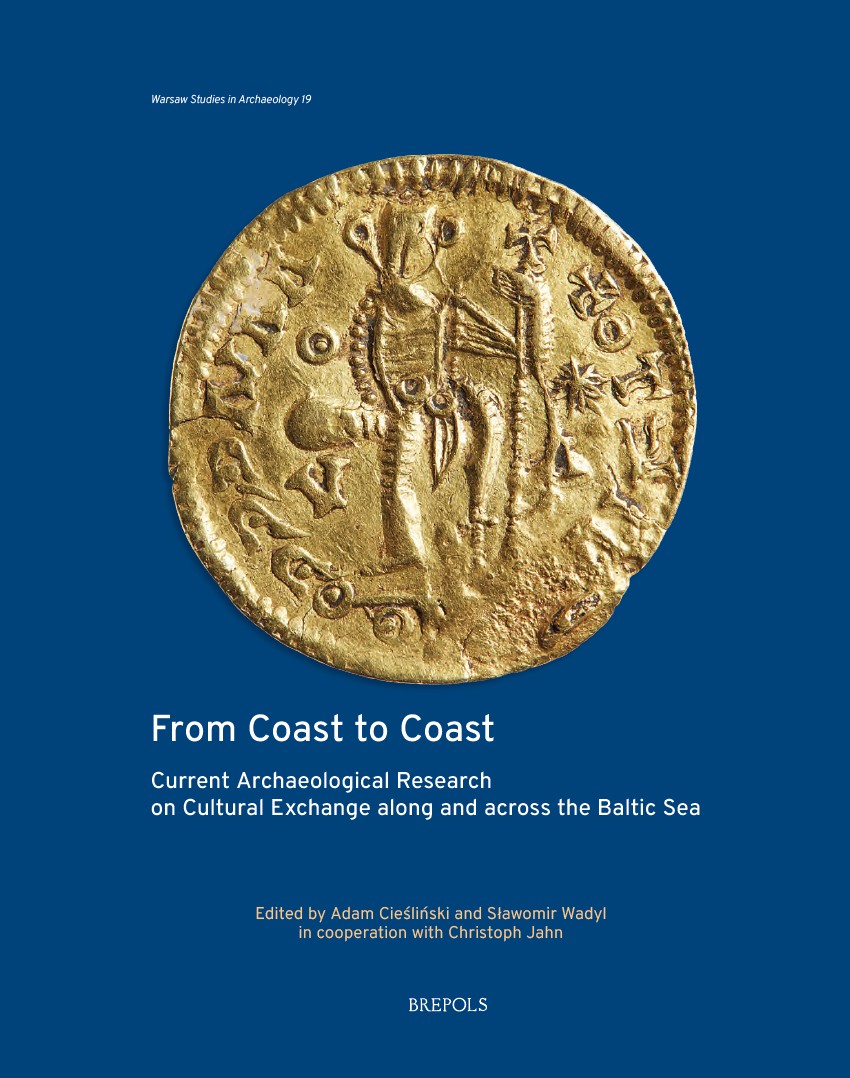 From Coast to Coast
Current Archaeological Research on Cultural Exchange along and across the Baltic Sea
Volume 19
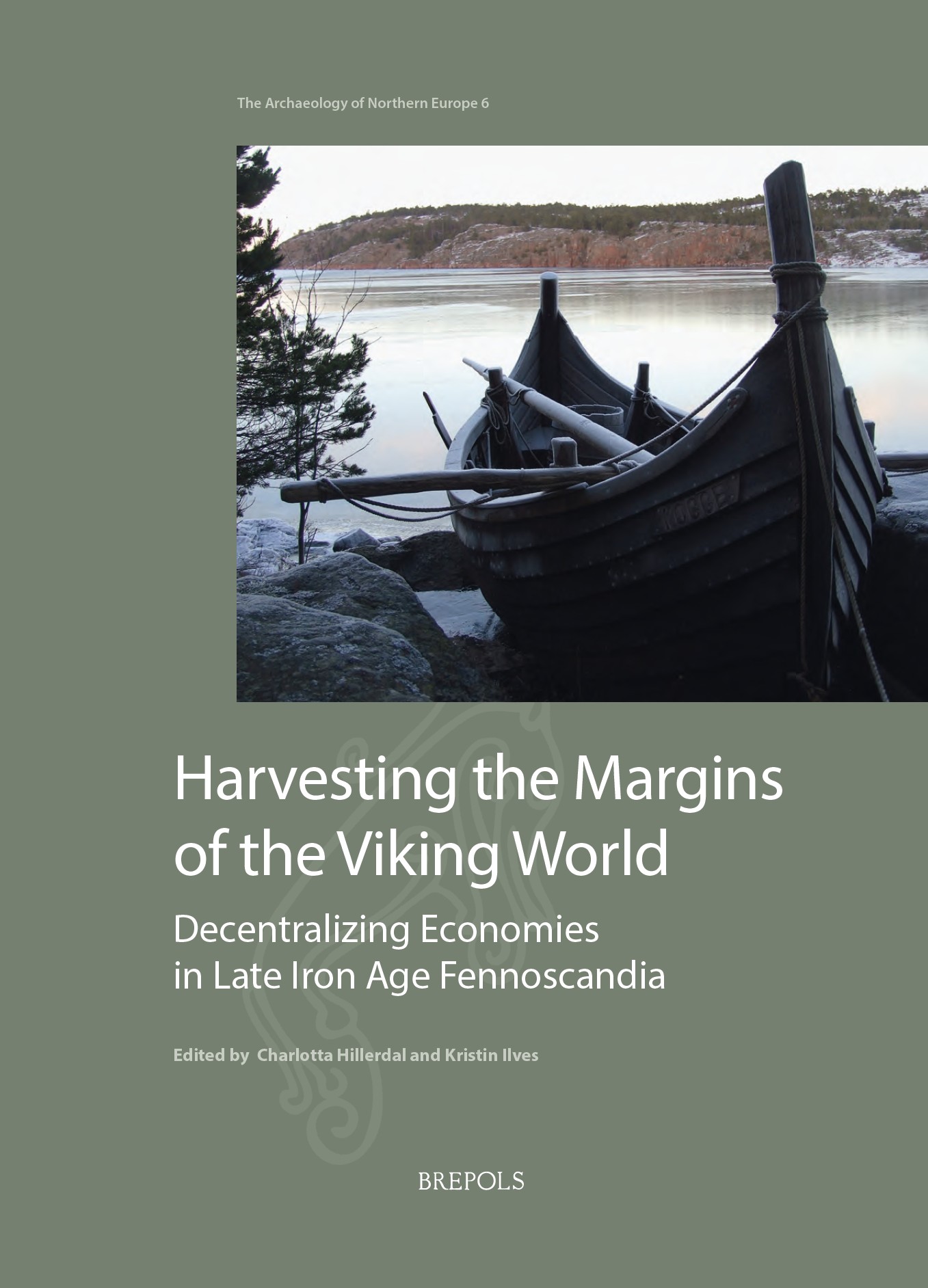 Harvesting the Margins of the Viking World
Decentralizing Economies in Late Iron Age Fennoscandia
Volume 6


 Linguistic and Cultural Dynamics in a Frontier Society
New Perspectives on Northeastern Bavaria and Western Bohemia in the Early Middle Ages
Volume 9

 Making and Meaning in the Bronze and Iron Ages
Chronology, Landscapes and Societies across Europe. Proceedings from the METALAGES2024 Colloquium (Florence, 23 October 2024)
 Medieval Yeghegis, Armenia
History, Archaeology, Society. Local Multiplicities and Global Connections of a Rural Centre on the Silk Road(s)


 Promoting the Profession
Papers in Honour of Peter Hinton Director of the Chartered Institute for Archaeologists 1997-2025


 The Kingdom of Makuria and its Civilization
A Renewed Insight through New Archaeological Discoveries


 Economic Trends in China During the Age of Confucius (1000–250 BC)
The Archaeological Evidence
Volume 10

 The Temple of Ištar-of-Akkad in Babylon from the Neo-Assyrian until the Persian Period
The Archival Texts
Volume 33
 Unsilencing the Archives
New Approaches to the History of Archaeological Labor in the Mandate Period Middle East
Volume 80
 Ägäische Wandmalereien aus dem Tuthmosidenpalast von Tell el-Dab’a II
Architektursimulationen aus Palast G und ihre Wahrnehmung im ägyptischen Kontext
