
Restoration, Conservation and Enhancement of Archaeological Sites and Monuments in Greece in the Framework of the 2030 Agenda for Sustainable Development goals
Annual Meeting of the Archaeological Institute of America, Chicago, IL, January 4-7, 2024
Edited by Andreas G. Vlachopoulos Edited by Anastasía Gkadólou

Paperback (Published)
(December 2024)
ISBN: 9789603866992
Price: $80.00
On back order
The preservation, protection and enhancement of the cultural heritage supports the protection of the environment and the development of the society in an economic and ethical scale. A basic issue of the world’s sustainability in general is the safeguard of the tangible and intangible cultural characteristics of a society. The nexus between culture and development was studied in particular during the UNESCO Decade of Culture and Development (1988-1997), resulting in the WCCD Report “Our Creative Diversity” (WCCD, 1995). The Helsinki Declaration of 1996 on the political dimension of Cultural Heritage conservation recognized cultural heritage as an economic factor for local development. A landmark event in this process has been the integration of culture in the 2030 Agenda for Sustainable Development adopted in 2015 (Agenda 2030, Target 11.4) .
For the fulfillment of the above a proper management plan is a prerequisite with the main task to propose the measures the application of which will contribute to the preservation of the tangible and intangible characteristics and values of each archaeological site and monument. Cultural heritage management is about striking a balance between developing the tourism industry, generating revenue while still conserving the physical integrity of sites, promoting and celebrating their educational, historic and cultural values. The main limit of cultural management of an archaeological site is the effects of time on monuments.
Various actions, presented in this book, such as scientific documentation, conservation and consolidation works, are being conducted on a regular basis to prevent future degradation, always in accordance with approved research mainly organized and managed by the Ephorates of Antiquities, the regional services of the Hellenic Ministry of Culture and Sports, under the auspices of the General Directorate of Antiquities and Cultural Heritage. Interventions, some of which are preventative (shelters), and others which aim to preserve the monuments’ integrity (restoration and consolidation projects, maintenance-conservation work, etc.), are a prerequisite for the consolidation of the state of preservation of the monuments and of course a prerequisite in order archaeological sites to become open to the public.
- Edited by Andreas G. Vlachopoulos
- Edited by Anastasía Gkadólou
Similar Books

 Caesar’s Visions and Impact on the Roman Empire
Revisiting the Archaeological and Historical Record of the 40s BC
Volume 2


 Etruscan and Roman Hellenistic Anatomical ex votos
Reassessing Popular Religious Expressions in Central Italy
Volume 8


 Invisible Labour in Antiquity
Visualizing Obscure Work in the Ancient Mediterannean and West Asia
Volume 1
 Late Antique villae in the Balkans (3rd–7th c. AD): Current Research Questions and Perspectives
HAEMUS Companion to the Late Antique Balkans 1
Volume 4


 Portraying the Individual in the Roman East
Local–Imperial Entanglements in Sculpture, Mosaics, and Paintings (First–Fourth Centuries AD)
Volume 18

 Small Worlds and Relational Agencies: Local Societies in Early Medieval Iberia
Pequeños mundos y Agencias relacionales: Sociedades locales altomedievales en la Península Ibérica

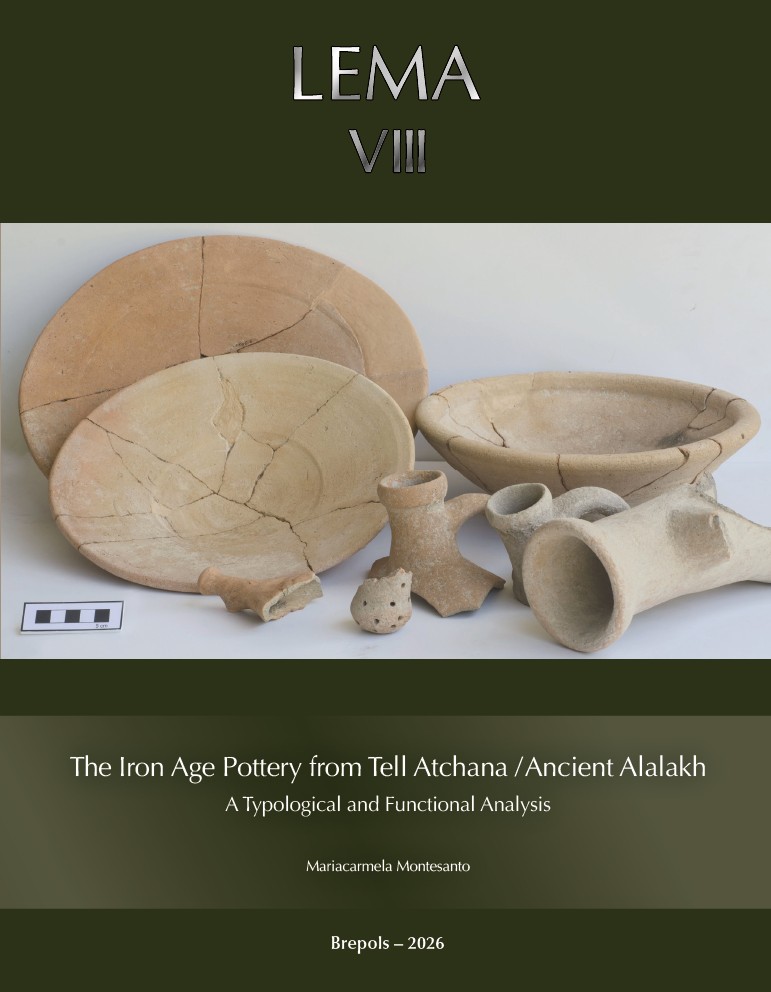 The Iron Age Pottery from Tell Atchana / Ancient Alalakh
A Typological and Functional Analysis
Volume 8

 Writing in the Church of the Nativity in Bethlehem
Inscription and Graffiti in a Multilingual and Multigraphic Perspective
Volume 45


 Atlante tematico di topografia antica 36-2026
Urbanistica e monumenti, porti, Roma. Ricerche sui monti Aurunci
Volume 36
 Cerámica común romana y ciclo haliéutico
Análisis de los contextos de las cetariae de Iulia Traducta

 Nuove scoperte e progressi nelle metodologie di rilievo e analisi dell’arte rupestre post-paleolitica in Italia
New discoveries and progress in the tracing and analysis methodologies of the post-Paleolithic rock art in Italy


 A Dramatic Event in Late Roman Florence
The Anomalous Burial Site Discovered beneath the Uffizi Gallery

 Alexander the Great and the Campaign of Gaugamela
New Research on Topography and Chronology. IAMNI 1 (Italian Archaeological Mission to Northern Iraq)
Volume 53


 Ceramic Finds in Context (Roman to Early Islamic Times)
Final Publications from the Danish-German Jerash Northwest Quarter Project VII
Volume 13