Archaeology of Public Estates
Origins of Economic Growth in a Mediterranean Region (9-11th Century)
By (author) Giovanna Bianchi

Paperback (Published)
(May 2025)
ISBN: 9781805830429
7.99 x 10.87 inches
Price: $92.00
In stock
This study examines public estates in Tuscany’s Maremma region from the 9th to 11th centuries, identifying material markers of royal properties. It explores the role of public lands, local aristocracies, landscape transformations, production, exchange, and rural economic growth before the 12th century.
Archaeology of Public Estates draws on the results of research conducted in the last few years in Tuscany’s Maremma region as part of an ERC-Advanced project, nEU-Med, at the same time as reinterpreting previous findings from the last few decades, with the aim of identifying the material ‘markers’ of royal properties, and understanding how they took shape and were managed between the 9th and 11th centuries. The theme, public lands and property, which has been of special interest in recent years to historians of documentary sources, and which here is viewed through the lens of material findings. The results of research seen from a new perspective help to identify a possible key for interpreting historical institutions and agents in this part of the Mediterranean, one capable of generating answers that are bound up with larger issues: the role of the public hand (the publicum) in relation to local aristocracies and communities; transformations in the anthropic and natural landscape; the specific features of production and exchange; the timeframe and process of castle formation; and the economic growth of rural areas prior to the great leap forward in the 12th century.
Foreword - Richard Hodges
Introduction
Chapter I - The Pecora river valley and the royal court of Valli
Chronological history of research in a plain
The Vetricella site and the plain between the 8th and first half of the 10th century
Changes between the second half of the 10th and first half of the 11th century
Loss of function and abandonment
Reconstructing the geographical and economic organization of a royal estate
To sum up
Chapter II - The Cornia valley and the royal court of Cornino
History of an apparently invisible royal court
The possible organization of the court, and its subsequent break-up
Other public properties: Gualdo del Re and inland areas
To sum up
Chapter III - The Grosseto Area
The formation of the new landscapes (7th-9th century)
Between the 10th and 11th centuries
Public lands in new (possible) historical scenarios
To sum up
Chapter IV - The religious centres in the hinterland
The royal court and the monastery of San Salvatore al Monte Amiata
The royal court and the monastery of S. Antimo in the Starcia valley
The Canonical Church of S. Niccolò, Montieri
To sum up
Chapter V - A world apart? The mining areas
Rocchette Pannocchieschi
Cugnano
Montieri
Rocca San Silvestro
The island of Elba
To sum up
Chapter VI - Reconstructing the complexity of the case study: clues to a puzzle
The actors involved
Landscapes
Production and circuits of exchange
The timing and rate of change
Chapter VII – Comparisons
Tuscany
The Po Valley area
Chapter VIII - The origins of economic growth
Preamble
An initial acceleration (9th to mid-10th century)
The beginning of the rise (second half of the 10th-first half of the 11th century)
What economic system
The slowdown before a new rise (second half of the 11th-12th century)
Bibliography
- By (author) Giovanna Bianchi
Other Titles in this Series
 Small Worlds and Relational Agencies: Local Societies in Early Medieval Iberia
Pequeños mundos y Agencias relacionales: Sociedades locales altomedievales en la Península Ibérica


 Arqueología de las sociedades locales en la Alta Edad Media
San Julián de Aistra y las residencias de las élites rurales

Similar Books
 A Collaborative Tapestry in Honour of Shirley Ann Brown / Une fresque brodée en l’honneur de Shirley Ann Brown
The Bayeux Tapestry Seen by her Colleagues and Friends / La Tapisserie de Bayeux vue par ses collègues et amis

 Behind the Scenes of Medieval Roofs
An Overview of the Roofing Systems of Italian Churches
Volume 90

 Caesar’s Visions and Impact on the Roman Empire
Revisiting the Archaeological and Historical Record of the 40s BC
Volume 2






 Etruscan and Roman Hellenistic Anatomical ex votos
Reassessing Popular Religious Expressions in Central Italy
Volume 8



 Innovation and Medieval Communities
The Circulation of Ideas and Practices in and out of the Town (1200-1500)
Volume 63
 Invisible Labour in Antiquity
Visualizing Obscure Work in the Ancient Mediterannean and West Asia
Volume 1
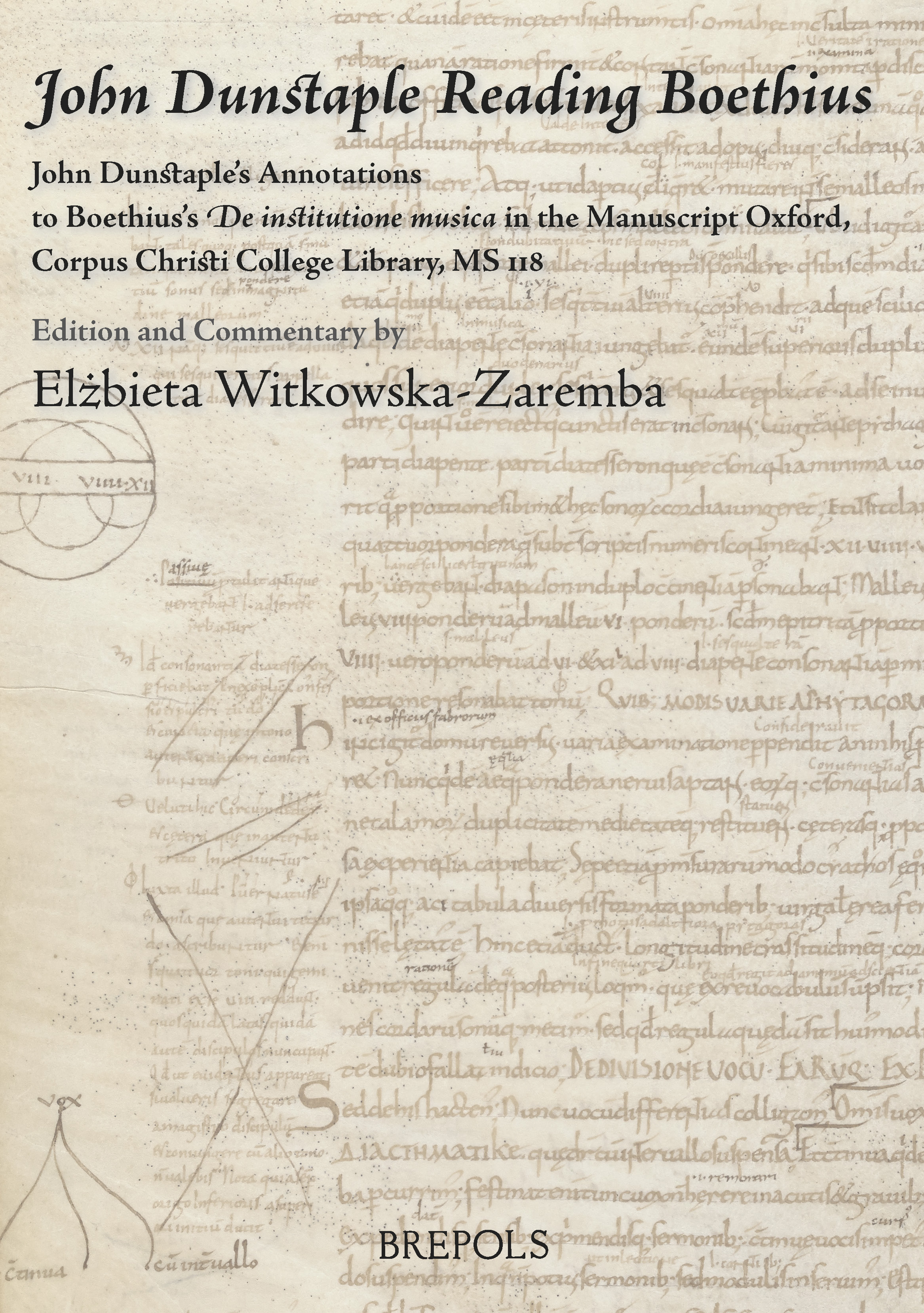 John Dunstaple Reading Boethius
John Dunstaple’s Annotations to Boethius’s “De institutione musica” in the Manuscript Oxford, Corpus Christi College Library, MS 118
 Late Antique villae in the Balkans (3rd–7th c. AD): Current Research Questions and Perspectives
HAEMUS Companion to the Late Antique Balkans 1
Volume 4
 Linguistic and Cultural Dynamics in a Frontier Society
New Perspectives on Northeastern Bavaria and Western Bohemia in the Early Middle Ages
Volume 9
 Medieval Debates on Foreknowledge: Future Contingents, Prophecy, and Divination
Acts of the XXVII Annual Colloquium of the SIEPM, Trento 12-15 September 2023
Volume 31
 Medieval Yeghegis, Armenia
History, Archaeology, Society. Local Multiplicities and Global Connections of a Rural Centre on the Silk Road(s)