Pompeian Households
An Analysis of the Material Culture
by Penelope M. Allison

Paperback (Published)
(October 2004)
ISBN: 9780917956966
8.46 x 10.94 inches
Price: $45.00
In stock
Studies of Pompeian material culture have traditionally been dominated by art-historical approaches, but recently there has been a renewed and burgeoning interest in Pompeian houses for studies of Roman domestic behavior. This book is concerned with contextualized Pompeian household artifacts and their role in deepening our understanding of household behavior at Pompeii. It consists of a study of the contents of thirty so-called atrium houses in Pompeii to investigate the spatial distribution of household activities, both within each architectural room type and across the house. It also uses this material to investigate the state of occupancy of these houses at the time of the eruption of Mt Vesuvius in AD 79. It thus examines artifact assemblages within their spatial and decorative contexts for a more material cultural approach to these remains and for the information which they provide on living conditions in Pompeii during the last decades. In this it takes a critical perspective the textual nomenclature which is traditionally applied to Pompeian room types.
- By (author) Penelope M. Allison
"Penelope Allison's study of artefact assemblages in thirty of the larger houses from Pompeii is a welcome addition to published work available to students of this ancient city. ... Her book has updated and made available a reconstructed data-set that is unique and needs to be better known by those studying Roman Houses and Domestic Space." Ray Laurence, Journal of Roman Studies 95 (2005):317-318 "...a must read for everyone dealing with artefacts in a Roman residential context. It perfectly demonstrates the possibilities and impossibilities of artefact analysis in a prime site of Roman archaeology, making it a useful example of research elsewhere." Stephan T.A.M. Mols, Bryn Mawr Classical Review 2005.07.29 "This is a very interesting and important book. It is valuable for all archaeologists because it explains in good detail how complex the site of Pompeii is and because it demonstrates the kinds of information that we can derive from detailed analysis of rooms and their contents. For anyone concerned with Roman urban society, it presents a wealth of information about houses, rooms, and material culture of the latter half of the first century AD...This book is a welcome addition to the scholarly literature about Pompeii, and it has much to teach any archaeologist or historian concerned with understanding past domestic material culture and behavior." Peter S. Wells, Professor of Anthropology, University of Minnesota, Society for Archaeological Sciences Bulletin 2005 (28:3): 13-14
—
Other Titles in this Series

 Ceramics of Postclassic Cholula, Mexico
Typology and Seriation of Pottery from the UA-1 Domestic Compound
Volume 43


 Ceramic Production and Circulation in the Greater Southwest
Source Determination by INAA and Complementary Mineralogical Investigations
Volume 44
 Settlement and Subsistence in Early Formative Soconusco
El Varal and the Problem of Inter-Site Assemblage Variation
Volume 65


 Archaeological Research on the Islands of the Sun and Moon, Lake Titicaca, Bolivia
Final Results from the Proyecto Tiksi Kjarka
Volume 52


Similar Books

 Caesar’s Visions and Impact on the Roman Empire
Revisiting the Archaeological and Historical Record of the 40s BC
Volume 2



 Drunk the Potion, No Whit Charmed
The Doctrine of Pure and Perfect Souls from Iamblichus to Damascius

 Epiphanies of the Divine in the Septuagint and the New Testament
Fifth International Symposium of the Corpus Judaeo-Hellenisticum Novi Testamenti (CJHNT), 14-17 May 2015, Nottingham


 Etruscan and Roman Hellenistic Anatomical ex votos
Reassessing Popular Religious Expressions in Central Italy
Volume 8



 Invisible Labour in Antiquity
Visualizing Obscure Work in the Ancient Mediterannean and West Asia
Volume 1
 Language and Power in the Roman Empire and Early India
Hierarchy, Ambiguity, and the Art of Reading the Signs in Cosmopolitan Cultures
 Late Antique villae in the Balkans (3rd–7th c. AD): Current Research Questions and Perspectives
HAEMUS Companion to the Late Antique Balkans 1
Volume 4

 Nurturing the Elite
Representations of Drinking, Eating, and Religious Vessels in Palmyrene Funerary Iconography
Volume 13


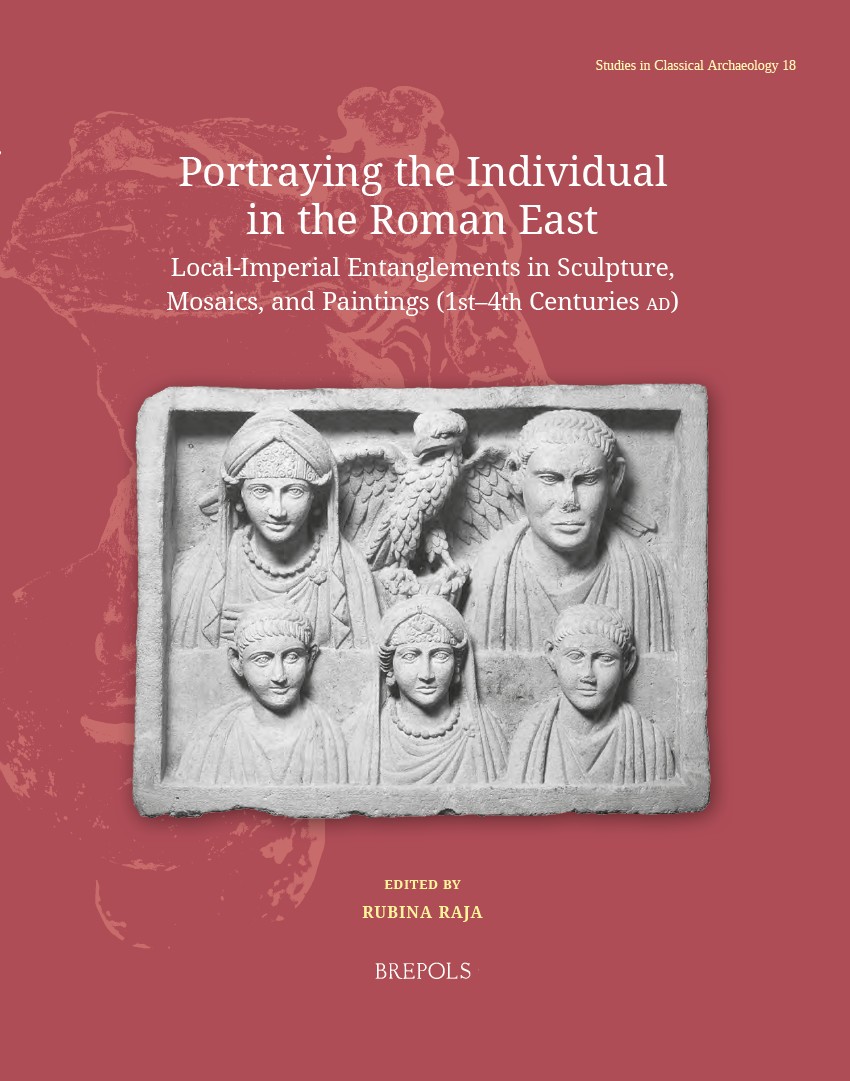 Portraying the Individual in the Roman East
Local–Imperial Entanglements in Sculpture, Mosaics, and Paintings (First–Fourth Centuries AD)
Volume 18

 Small Worlds and Relational Agencies: Local Societies in Early Medieval Iberia
Pequeños mundos y Agencias relacionales: Sociedades locales altomedievales en la Península Ibérica
 The Compositional History of the Book of Kings
An Analysis of the Evaluative Frameworks in 1 Kings 14–2 Kings 25

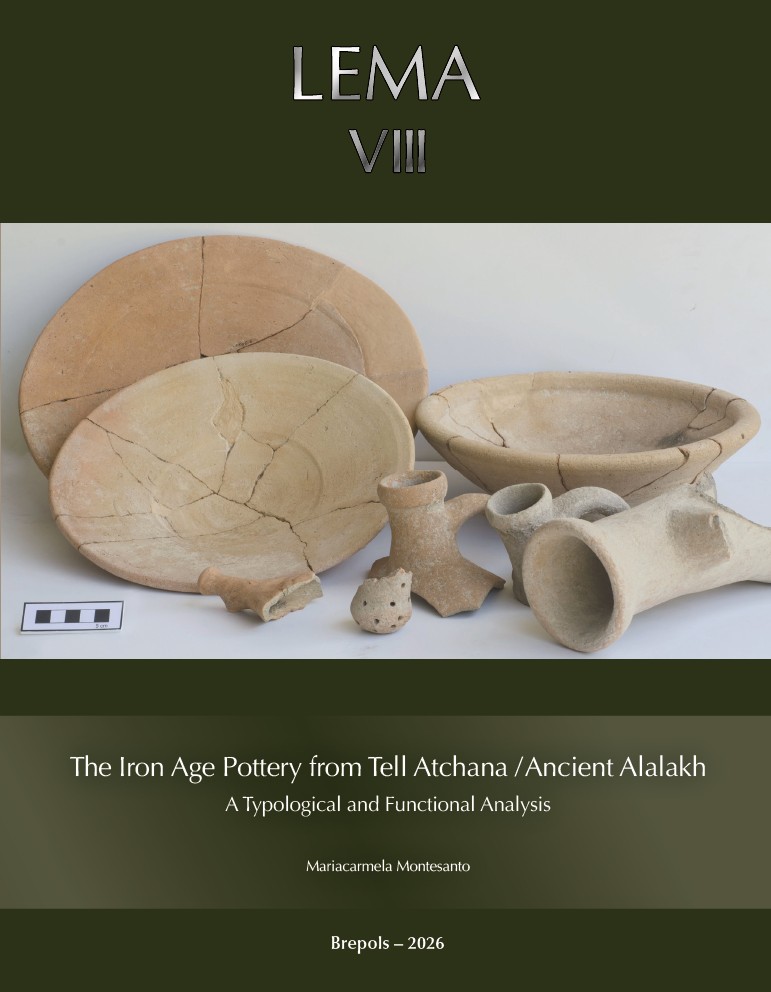 The Iron Age Pottery from Tell Atchana / Ancient Alalakh
A Typological and Functional Analysis
Volume 8

 Writing in the Church of the Nativity in Bethlehem
Inscription and Graffiti in a Multilingual and Multigraphic Perspective
Volume 45
 Contesting Labeled Identities
The Sociology of Gentilics in Biblical and Northwest Semitic Literature