
Offenbarung in Zeichen und Wort
Untersuchungen zur Vorgeschichte von Joh 6,1-25a und seine Rezeption in der Brotrede
by Michael Labahn

English summary: M. Labahn examines the feeding of the five thousand and Jesus’ walking on the sea in John 6. Both discourses are contained in one of the central chapters of the Fourth Gospel, in which Jesus calls himself the bread of life, and both have challenged Christians and exegetes of all times. Above all it is the miraculous feeding of the five thousand with its various models of interpretation ranging from the sacramental to the rationalizing-ethical that has received attention. How is this narrative chronology to be seen? How does it prepare for Jesus calling himself the bread of life, and how did the Johannine version of this story, which is also present in the Synoptics, originate? Against the background of the present-day discussion on exegesis, Michael Labahn gives new answers to these questions. German description: Joh 6 stellt einen Hohepunkt und die Zusammenfassung der Theologie des vierten Evangeliums dar. Michael Labahn widmet sich den beiden einleitenden Wundergeschichten, der Speisung der 5000 und dem Seewandel Jesu. Er untersucht die Rolle dieses erzahlerischen Abschnitts als Einleitung der Brotrede und stellt fest, dass die Wundersequenz als eine Art Praludium der Brotrede verstanden werden kann. Mit Hilfe religionsgeschichtlicher Parallelen beleuchtet er diese Eingangssequenz, in der Jesus in der Vollmacht Gottes wirkt und mit der er die Welt vor die Alternative von Glaube oder Unglaube stellt. Aufgrund der subtilen Verklammerung von Speisung und Brotrede kann man in der Brotrede eine Inszenierung des Brotwunders als johanneisches Zeichen sehen. Die Brotrede entfaltet als ein kommunikativer Akt das Speisungswunder so, wie es jemand sehen sollte, der die Speisung als Zeichen des Gottessohnes gesehen und verstanden hat. Der Erzahler greift auf eine Erzahlung seiner Gemeindetradition zuruck, die Michael Labahn auf der Grundlage einer Analyse der narrativen Struktur ermittelt. Die Wurzel dieser Erzahlung kann letztlich bis zum synoptischen Erzahltext zuruckverfolgt werden, der seinerseits durch den Osterglauben und die Erinnerung an die Speisegemeinschaften Jesu mit sozialen und religiosen Aussenseitern gepragt ist. Als Erklarung der Verbindung der erzahlerischen Differenzen wird das Phanomen der sekundaren Oralitat herangezogen. So lasst sich eine Geschichte sukzessiver Nacherzahlungen der Erzahlfolge von Speisung und Seewandel erkennen.
- By (author) Michael Labahn
Other Titles in this Series
 Second Corinthians and Paul’s Gospel of Human Mortality
How Paul's Experience of Death Authorizes His Apostolic Authority in Corinth
Volume 430

 Der Heilige Geist bei Lukas
Theologisches Profil, Grund und Intention der lukanischen Pneumatologie
Volume 389
 The Ransom Logion in Mark and Matthew
Its Reception and Its Significance for the Study of the Gospels
Volume 327


 2 Corinthians – a Letter about Reconciliation
A Psychagogical, Epistolographical and Rhetorical Analysis
Volume 239
 Die Starken und die Schwachen in Korinth und in Rom
Zu Herkunft und Funktion der Antithese in 1Kor 8,1-11,1 und in Rom 14,1-15,13
Volume 200
 Cosmic Christology in Paul and the Pauline School
Colossians and Ephesians in the Context of Graeco-Roman Cosmology, with a New Synopsis of the Greek Texts
Volume 171

 L’accueil de l’autre dans sa diversite
La strategie de mediation de Paul a l'egard des faibles et des forts a Rome (Romains 14,1-15,13)
Volume 572


 Peter’s Halakhic Nightmare
The 'animal' vision of Acts 10:9-16 in Jewish and Graeco-Roman Perspective
Volume 432
 Narratologie und biblische Exegese
Eine integrative Methode der Erzählanalyse und ihr Ertrag am Beispiel von Matthäus 28
Volume 285
 Figuren als Handlungsmodelle
Simon Petrus, die samaritische Frau, Judas und Thomas als Zugänge zu einer narrativen Ethik des Johannesevangeliums. Kontexte und Normen neutestamentlicher Ethik / Contexts and Norms of New Testament Ethics. Band VI
 What was Mark for Matthew?
An Examination of Matthew's Relationship and Attitude to his Primary Source
Volume 344
 Christ as the Telos of Life
Moral Philosophy, Athletic Imagery, and the Aim of Philippians
Volume 371


 Allegory Transformed
The Appropriation of Philonic Hermeneutics in the Letter to the Hebrews
Volume 269


 Peacemaking through Blood in Colossians
An Analysis of the Imagery in Its Graeco-Roman and Jewish Context
Volume 615
 Lukan Joy and the Life of Discipleship
A Narrative Analysis of the Conditions That Lead to Joy According to Luke
Volume 583


Similar Books


 Athanasius of Alexandria, Epistula ad episcopos Aegypti et Libyae
Old Slavonic Version and English Translation
Volume 261


 Cyril of Alexandria’s Christological Exegesis
Explorations of Partitive Exegesis in the Dialogues on the Trinity
Volume 70


 Epiphanies of the Divine in the Septuagint and the New Testament
Fifth International Symposium of the Corpus Judaeo-Hellenisticum Novi Testamenti (CJHNT), 14-17 May 2015, Nottingham

 Extracanonical Traditions and the Holy Land
Texts, Rituals, and Material Culture in Late Antique Palestine
 From Joseph to Jesus
The Joseph Narrative as a Compositional Template from Old Greek Esther to the Gospel of Luke
Volume 125


 Paradise Lost in Transmission
The Return to Eden in the Apocalypse of Peter within Its Ethiopic and Early Christian Contexts



 Punning in Odd or Elegant Constructions in Jeremiah
The Convergence of Linguistics, Rhetoric, and Textuality in the Hebrew Text of Jeremiah

 Shame in the Worlds of the Hebrew Bible and Akkadian Texts
A Linguistic Study and Its Implications
Volume 33

 Tabernacle, Table, Ark, and Text
Richard of Saint Victor on the Interpretation of Scripture
Volume 67
 The Anglo-Norman Bible’s Books of Kings, a Critical Edition
(BL Royal 1 C III, fols 234r-274v)
Volume 37
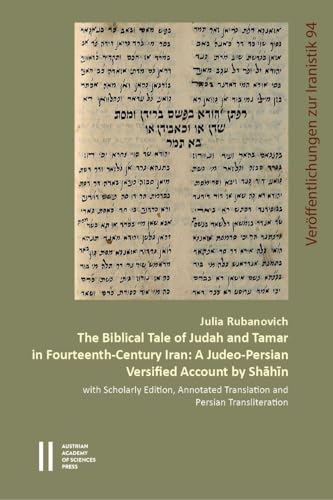 The Biblical Tale of Judah and Tamar in Fourteenth-Century Iran
A Judeo-Persian Versified Account by Shāhīn with Scholarly Edition, Annotated Translation and Persian Transliteration
Volume 94, 951
 The Body
Lived, Cultured, Adorned: Essays on Dress and the Body in the Bible and Ancient Near East in Honor of Nili S. Fox

 The Compositional History of the Book of Kings
An Analysis of the Evaluative Frameworks in 1 Kings 14–2 Kings 25
 The Discourse of Rites
Shaping and Reshaping the (Counter-)Priestly Rituals Conducted Outside the Tabernacle


