
Maximus the Confessor, Ambigua to Thomas and Second Letter to Thomas
by J. Lollar
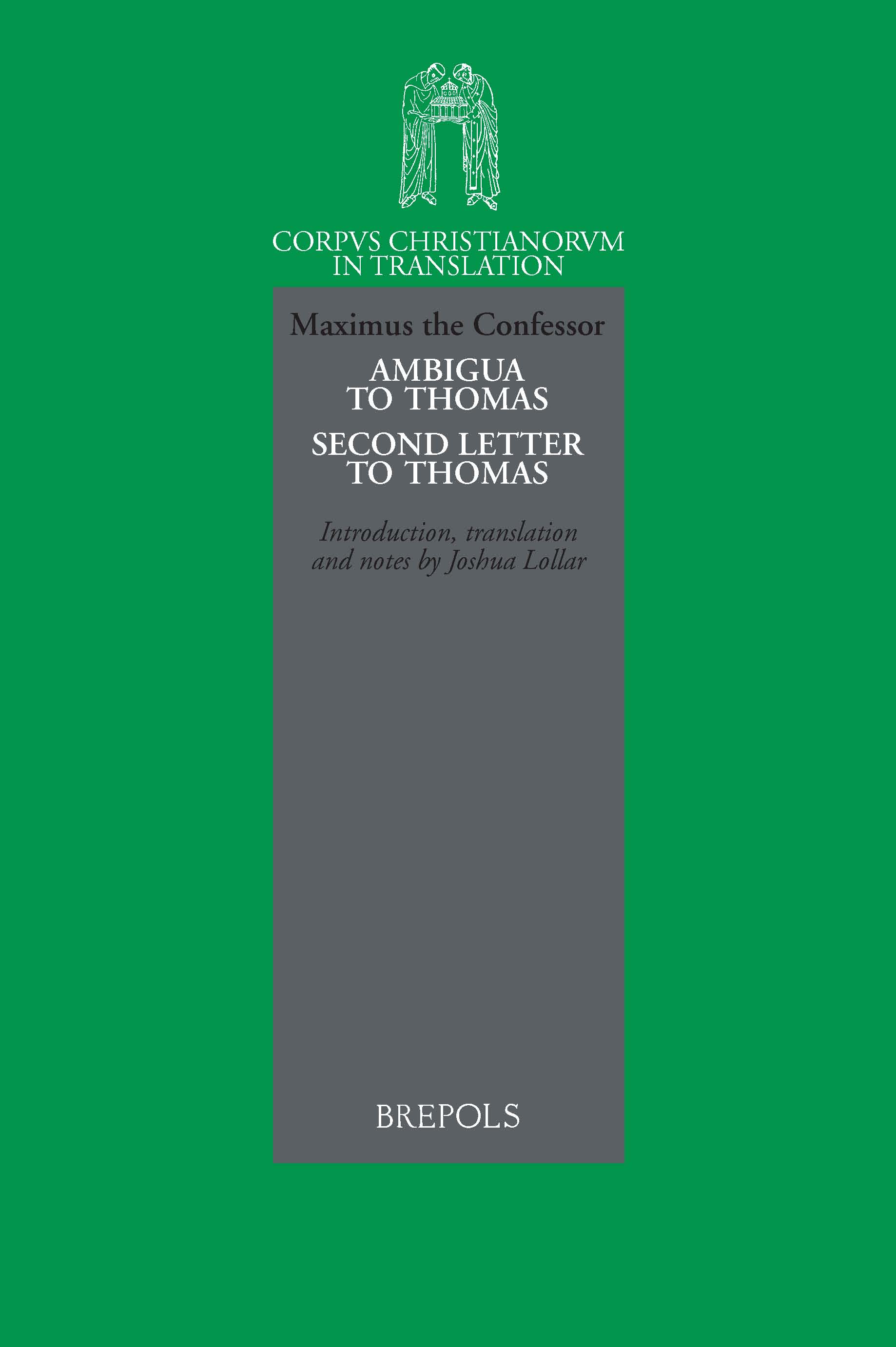
Maximus the Confessor, a monk and theologian of the seventh century, was a transmitter and creative interpreter of the dogmatic and ascetical traditions of the Greek-speaking Church, and an innovative mind in his own right. An important figure on the theological landscape of his day, he became deeply involved in the post-Chalcedonian Christological controversies concerning the natures, activities (energies), and wills in Christ, eventually suffering at the hands of the imperial authorities for his rejection of certain imperial dogmatic decrees, which in his view denied the principle of the salvation of the cosmos: the perfect communion of divinity and humanity as preserved in their own proper natures in the one Christ. He died in exile on the Black Sea coast, soon after his trial in Constantinople, in 662. The Ambigua to Thomas are a collection of chapters devoted to the exposition of passages from Gregory Nazianzen and Ps. Denys the Areopagite. Maximus uses the texts as a means of expounding the meaning of the perfect union of divinity and humanity in the one Christ, arriving ultimately at an interpretation of the phrase from Denys, which affirmed that Christ conducted his life among us according to a certain new theandric activity. The source text of this volume appeared in Corpus Christianorum Series Graeca as Maximus Confessor – Ambigua ad Thomam una cum epistula secunda ad eundem (CCSG 48). References to the corresponding pages of the Corpus Christianorum edition are provided in the margins of this translation.
Maximus the Confessor, a monk and theologian of the seventh century, was a transmitter and creative interpreter of the dogmatic and ascetical traditions of the Greek-speaking Church, and an innovative mind in his own right. An important figure on the theological landscape of his day, he became deeply involved in the post-Chalcedonian Christological controversies concerning the natures, activities (energies), and wills in Christ, eventually suffering at the hands of the imperial authorities for his rejection of certain imperial dogmatic decrees, which in his view denied the principle of the salvation of the cosmos: the perfect communion of divinity and humanity as preserved in their own proper natures in the one Christ. He died in exile on the Black Sea coast, soon after his trial in Constantinople, in 662. The Ambigua to Thomas are a collection of chapters devoted to the exposition of passages from Gregory Nazianzen and Ps. Denys the Areopagite. Maximus uses the texts as a means of expounding the meaning of the perfect union of divinity and humanity in the one Christ, arriving ultimately at an interpretation of the phrase from Denys, which affirmed that Christ conducted his life among us according to a certain new theandric activity. The source text of this volume appeared in Corpus Christianorum Series Graeca as Maximus Confessor – Ambigua ad Thomam una cum epistula secunda ad eundem (CCSG 48). References to the corresponding pages of the Corpus Christianorum edition are provided in the margins of this translation.
- By (author) J. Lollar
Other Titles in this Series

 The Life of Count Charles of Flanders, The Life of Lord John, Bishop of Therouanne and Related Works
Volume 3

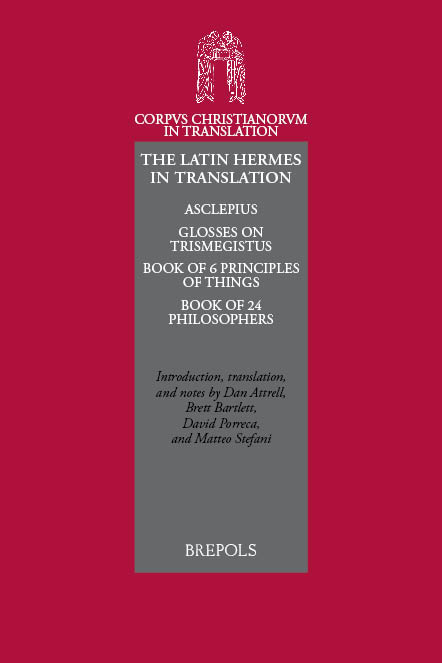 The Latin Hermes in Translation
Asclepius, Glosses on Trismegistus, Book of Six Principles of Things, Book of 24 Philosophers
Volume 50










 La caduta di Acri 1291
Raccolta delle imprese legate allo sterminio di Acri - Taddeo di Napoli, Storia della desolazione e della distruzione della citta di Acri e di tutta la Terra Santa
Volume 42

Similar Books

 A Companion to Christianity and Sport in Europe and North America (19th-21st centuries)
Volume 1: Western and Eastern Europe
 A Connecting Polemic in the Medieval Mediterranean
The Correspondence of Leo III and ʿUmar II
Volume 6





 Ars Prophetica
Theology in the Poetry of Twentieth-Century Hebrew Poets Avraham Halfi, Shin Shalom, Amir Gilboa, and T. Carmi
 As Messianism Turns to Heresy
The Regenstein Chair Lectures On Lurianic Kabbalah and Shabbatai Tzevi at Hebrew Union College - Cincinnati



 Contesting Labeled Identities
The Sociology of Gentilics in Biblical and Northwest Semitic Literature

 Creating the Woman in Antiquity
Proceedings of the 16th Melammu Workshop, Innsbruck, 2–3 June 2022
Volume 13
 Cultic Kisses
Fruitful Encounters Between Deities and Humans. Festschrift for Angelika Berlejung on the Occasion of Her 65th Birthday
 De/colonizing Theologies
Glocal Histories, Contemporary Challenges, Theoretical Reflections
Volume 4
 Drunk the Potion, No Whit Charmed
The Doctrine of Pure and Perfect Souls from Iamblichus to Damascius


 Epigraphic “Shades” from Hellenistic Thrace
Contextualizing Inscriptions in Greek from Thracian Tombs

 Epiphanies of the Divine in the Septuagint and the New Testament
Fifth International Symposium of the Corpus Judaeo-Hellenisticum Novi Testamenti (CJHNT), 14-17 May 2015, Nottingham
