
Lives of Domenichino and Francesco Gessi
By (author) Carlo Cesare Malvasia Edited by Elizabeth Cropper Edited by Lorenzo Pericolo

Richly illustrated, this critical edition and English translation of Malvasia’s lives of Domenichino and Francesco Gessi from his Felsina pittrice offer access to the life and work of two great masters of seventeenth-century Bologna. Domenichino’s life plays a seminal role in Malvasia’s definition of the fourth age of painting in Ita
Richly illustrated, this critical edition and English translation of Malvasia’s lives of Domenichino and Francesco Gessi from his Felsina pittrice offer access to the life and work of two great masters of seventeenth-century Bologna. Domenichino’s life plays a seminal role in Malvasia’s definition of the fourth age of painting in Italy. From the very beginning, Malvasia pits against each other Guido Reni and Domenichino, the two champions of the vanguard style that emerged from the Carracci reform of painting. If Guido becomes the idol of the Lombard and Bolognese school, more attuned to tenderness and audacity, Domenichino embodies an ideal of perfection more in keeping with the Florentine and Roman school, fond of finish and diligence. Malvasia reports that he did not know Domenichino, and his reconstruction of the career of the master as he moved among Rome, Naples, and Bologna stands in stark contrast to Giovan Pietro Bellori’s more sympathetic account, published in 1672. If, to redeem the supremacy of the Bolognese school, Malvasia downplays the problem of Domenichino’s erudition and fertility of invention, he does so with hesitation and among unresolvable contradictions. His assimilation of Domenichino’s art to the Roman and Tuscan canon is, then, profoundly polemical. In this light, Malvasia’s life of Domenichino can be defined as the most tormented and ultimately unsuccessful eulogy in the Felsina pittrice: a great piece of art-historical criticism about an artist whose greatness Malvasia could not deny. Malvasia’s assessment of the artistic personality of Francesco Gessi turns upon the painter’s rivalry with his master, Guido Reni, whose perfection in painting nevertheless remains unmatchable. In relating how Domenichino snatched away the highly talented Giovan Battista Ruggeri from his previous master, Francesco Gessi, Malvasia turns the conflicts inherent in Domenichino’s life into a generational struggle between artistic factions. In the process, Malvasia provides important biographical information about Giovan Giacomo Sementi, another of Guido’s disciples and Gessi’s lifelong rival.
- By (author) Carlo Cesare Malvasia
- Edited by Elizabeth Cropper
- Edited by Lorenzo Pericolo
Other Titles in this Series


 Felsina Pittrice
Life of Marcantonio Raimondi and Critical Catalogue of Prints by or after Bolognese Masters
Volume 2

Similar Books
 A Collaborative Tapestry in Honour of Shirley Ann Brown / Une fresque brodée en l’honneur de Shirley Ann Brown
The Bayeux Tapestry Seen by her Colleagues and Friends / La Tapisserie de Bayeux vue par ses collègues et amis



 Balthasar Caymox of Nuremberg
Early Modern German Print Publishers: Popular Prints of the Seventeenth Century
 Beyond Sovereign Courts
Agents and Practices in Early Modern Spanish and Habsburg Diplomacy
Volume 3

 Circulation, Use, Impact
The Consumption of Architectural Books in the Early Modern Eastern Adriatic
Volume 1


 Councils, Conflicts, Correspondence
Urban Diplomacy in Reval (Tallinn) and Lübeck (c. 1470–1570)
Volume 67


 Innovationes Lovanienses: Arts, Law and Theology at the University of Louvain (1425–1797)
Studium Lovaniense: Learning across Borders, 2
Volume 18
 Legal Visuality
Exegesis, Ambiguity, and Dissimulation of the Donation of Constantine in the Early Modern Period
 Monastic Manuscripts from the Eastern Mediterranean (Sinai, Jerusalem, Antioch)
Production, Use, and Contexts

 Naples as Laboratory / Laboratorium Neapel
Style Options, Artistic Rivalry and Self Fashioning in Neapolitan Baroque Painting / Plurale Stilbildung, Kunstlerkonkurrenz und Self Fashioning in der neapolitanischen Barockmalerei

 Nurturing the Elite
Representations of Drinking, Eating, and Religious Vessels in Palmyrene Funerary Iconography
Volume 13


 Portraying the Individual in the Roman East
Local–Imperial Entanglements in Sculpture, Mosaics, and Paintings (First–Fourth Centuries AD)
Volume 18
 Power and Women in Southeast and Central Europe in Late Medieval and Early Modern Period (1300-1600)
Volume 10


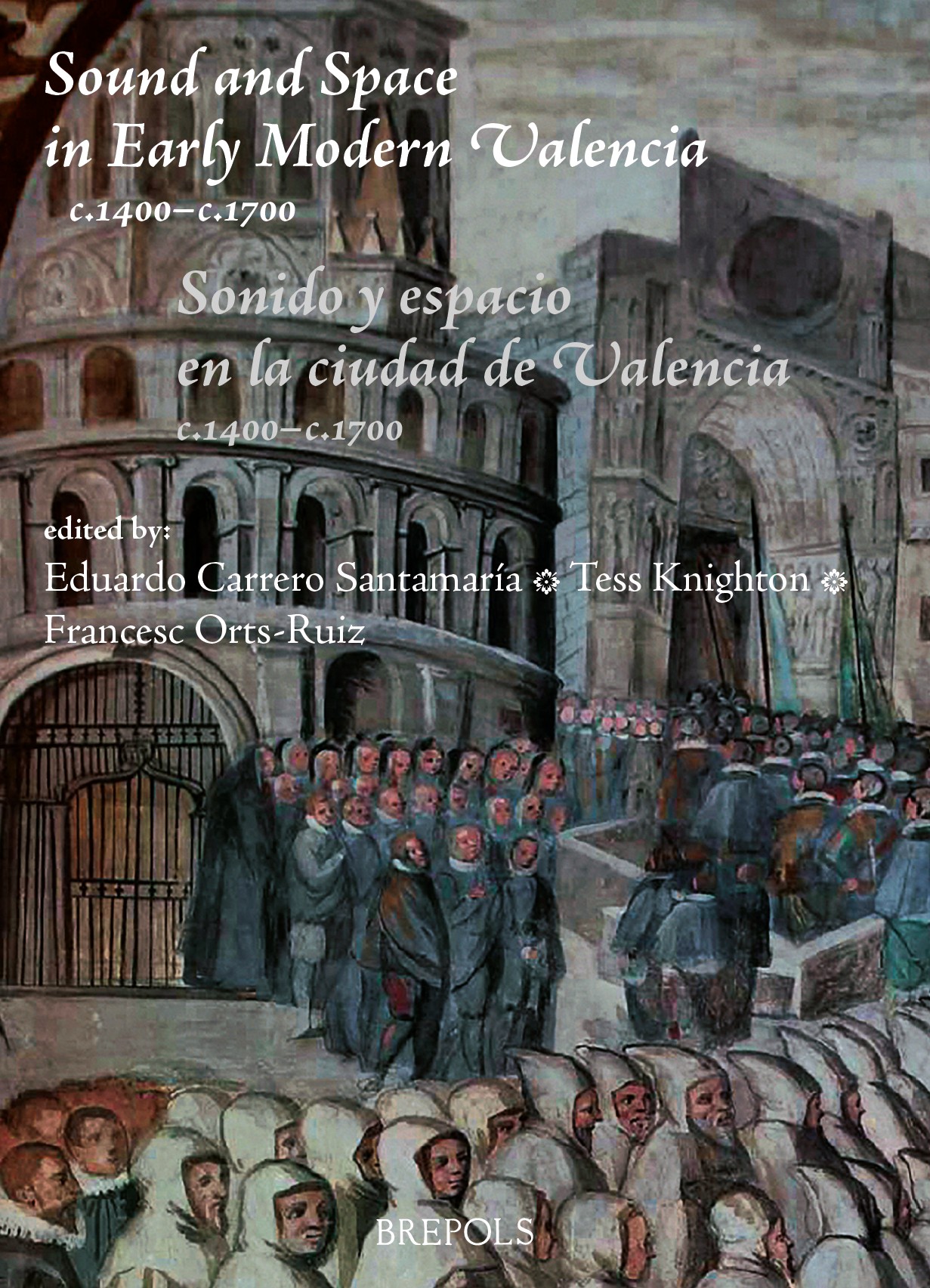
 Staging the Spectacle of Majesty
Ceremonial, Courtly Space, and Collecting under the Spanish Habsburgs
Volume 9
 Students, Scholars and Their Books at the University of Louvain (1425-1797)
Studium Lovaniense: Learning across Borders, 1
Volume 17


 Technical Studies of Asian Art
Proceedings of the Seventh Forbes Symposium at the Freer Gallery of Art

