
Le peuple aux trois noms
Une histoire de l'ancien Israël à travers le prisme de ses ethnonymes
By (author) F. Porzia

Adopting a diachronic approach to the biblical text, this book retraces the history of the different ethnonyms related to the “chosen people” (“Israel”, “Jews/Judeans”, and “Hebrews”). Encompassing archaeological, epigraphic and literary evidence, it reassesses the role played by Jewish tradition in the development of concepts such as “peoplehood” and “group identity”, which, through the Christian heritage, resulted in the modern concept of Nation-State. The Bible, the Book, is thus not only a source for the orientalist but can also be a useful tradition that may help us to a better understanding of our societies and the relationships they maintain with each other.
Jewish identity has always been a highly disputed topic. Such a dispute increased with the first archaeological discovery of the so-called Iron Age “proto-Israelites” and the recent debates about the relationship between being a Jew and an Israeli citizen in the modern state of Israel. Notwithstanding a three thousand years old history, the name “Israel” continues to be used. Adopting a diachronic approach to the biblical text, this book retraces the history of the different ethnonyms related to the “chosen people” (“Israel”, “Jews/Judeans”, and “Hebrews”). Encompassing archaeological, epigraphic and literary evidence, it reassesses the role played by Jewish tradition in the development of concepts such as “peoplehood” and “group identity”, which, through the Christian heritage, resulted in the modern concept of Nation-State. The Bible, the Book, is thus not only a source for the orientalist but can also be a useful tradition that may help us to a better understanding of our societies and the relationships they maintain with each other.
- By (author) F. Porzia
Other Titles in this Series
 ‘Trinkt von dem Wein, den ich mischte!’ ‘Drink of the Wine which I have Mingled!’
Festschrift für Silvia Schroer zum 65. Geburtstag
Volume 303
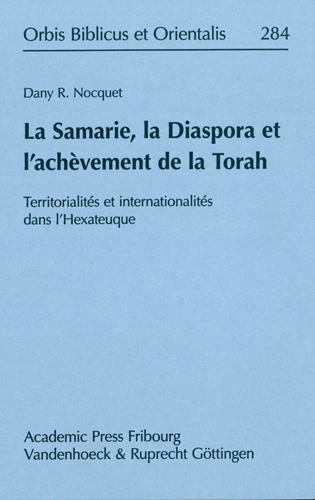 La Samarie, la Diaspora et l’achèvement de la Torah
Territorialités et internationalités dans l’Hexateuque
 Images of Anonymous Women
A Semiotic Approach to Image-Text Relations in Interpretation of Ancient Near Eastern Art and the Hebrew Bible
Volume 310
 The Text of Leviticus
Proceedings of the Third International Colloquium of the Dominique Barthelemy Institute, held in Fribourg (October 2015)
Volume 292
 Entre dieux et hommes : anges, démons et autres figures intermédiaires
Actes du colloque organisé par le Collège de France, Paris, les 19 et 20 mai 2014
 The Hebrew Bible/Old Testament and Scribal Scholarship in Antiquity
Studies in Honor of Arie van der Kooij on the Occasion of his Eightieth Birthday
Volume 306
 Divine Names on the Spot
Towards a Dynamic Approach of Divine Denominations in Greek andSemitic Contexts
Volume 293


 Oral et écrit dans l’Antiquité orientale: les processus de rédaction et d’édition
Actes du colloque organisé par le Collège de France, Paris, les 26 et 27 mai 2016
Volume 291




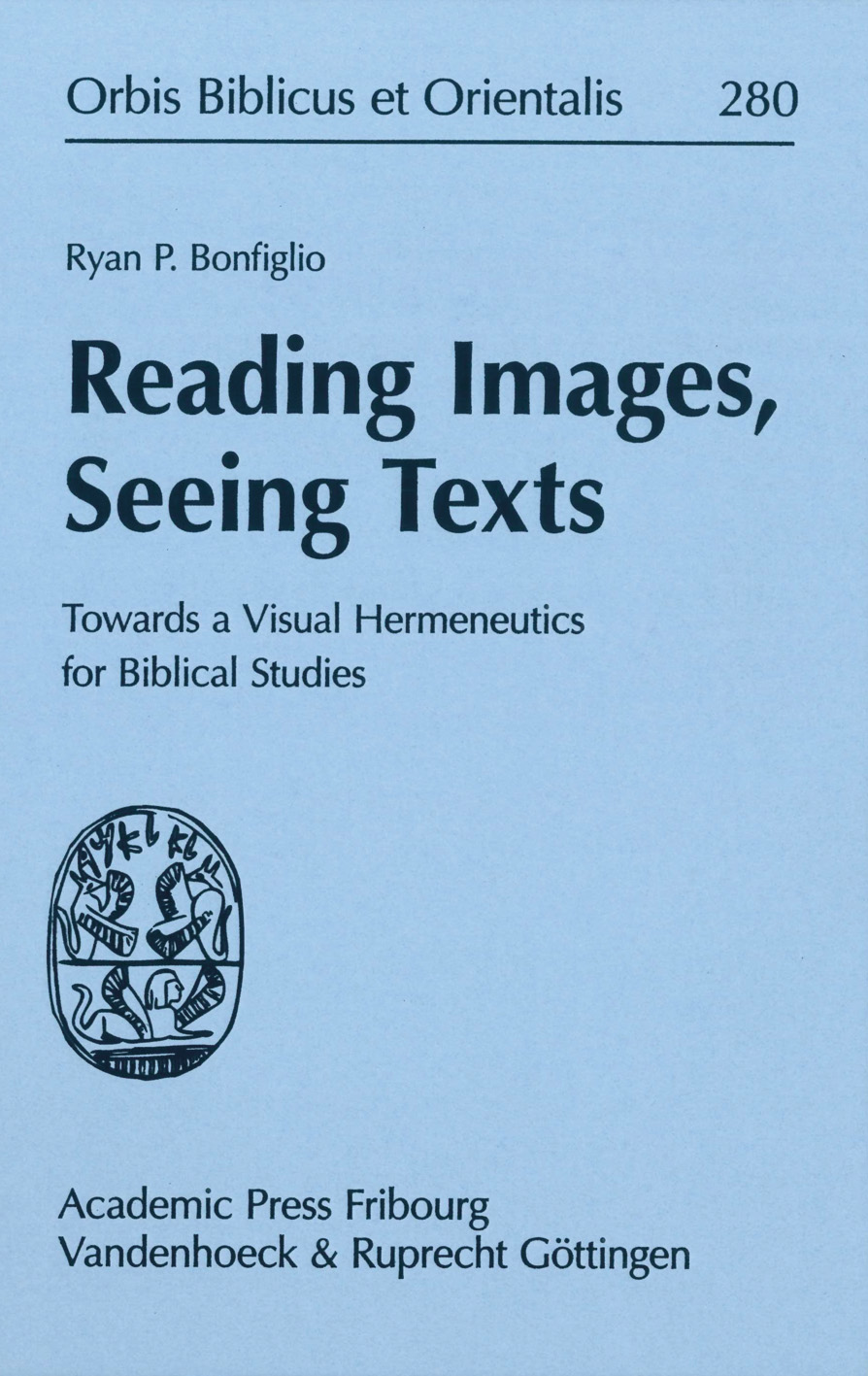
 The Power of Images
The Poetics of Violence in Lamentations 2 and Ancient Near Eastern Art
Volume 297
 Représenter dieux et hommes dans le Proche-Orient ancien et dans la Bible
Actes du colloque organisé par le Collège de France, Paris, les 5 et 6 mai 2015
Volume 287
 Wortschöpfung
Die Memphitische Theologie und die Siegesstele des Pije - zwei Zeugen kultureller Repräsentation in der 25. Dynastie
Volume 243


 Israeliten und Phönizier
Ihre Beziehungen im Spiegel der Archäologie und der Literatur des Alten Testaments und seiner Umwelt
Volume 235
 Architecture, Iconography, and Text
New Studies on the Northwest Palace Reliefs of Ashurnasirpal II
Volume 301
 When Gods Speak to Men
Divine Speech according to Textual Sources in the Ancient Mediterranean Basin
Volume 289

 Divine Names on the Spot II
Exploring the Potentials of Names through Images and Narratives
Volume 299

Similar Books


 Ars Prophetica
Theology in the Poetry of Twentieth-Century Hebrew Poets Avraham Halfi, Shin Shalom, Amir Gilboa, and T. Carmi
 As Messianism Turns to Heresy
The Regenstein Chair Lectures On Lurianic Kabbalah and Shabbatai Tzevi at Hebrew Union College - Cincinnati
 Athanasius of Alexandria, Epistula ad episcopos Aegypti et Libyae
Old Slavonic Version and English Translation
Volume 261


 Connecting the Dots: Counting, Writing, and the Beginnings of Civilization
The Secret Lives of Clay Tokens: A Memoir
 Cyril of Alexandria’s Christological Exegesis
Explorations of Partitive Exegesis in the Dialogues on the Trinity
Volume 70


 Epiphanies of the Divine in the Septuagint and the New Testament
Fifth International Symposium of the Corpus Judaeo-Hellenisticum Novi Testamenti (CJHNT), 14-17 May 2015, Nottingham


 Extracanonical Traditions and the Holy Land
Texts, Rituals, and Material Culture in Late Antique Palestine


 Ḫattušaš utnē išḫameški
Hittite and Other Ancient Near Eastern Studies Presented to Piotr Taracha on the Occasion of His 65th Birthday


 Lobbying for Equality
Jacques Godard and the Struggle for Jewish Equality during the French Revolution


 New Research on Old Collections in Southwest Asian Archaeology
Proceedings of the Workshop Held at the British Museum, London, 31 July – 2 August, 2023
