
La romanza vocale da camera in Italia
by F. Morabito

The nineteenth century in Italian music may legitimately be considered as the triumph of song. This was cultivated both in theatres and in the magnificent salons of the aristocratic palaces or in the more modest bourgeois drawing-rooms; here especially, with the help of the pianoforte, they gave voice to a more intimate genre, normally precluded from the clamour of the stage, yet equally loved: the chamber song. The contribution which we present here was intended to concern itself specifically with this immense and precious musical inheritance with which the past century has regaled us, illustrating and rebuilding the history of a genre for years neglected by “official” musicology, because too easily dismissed as inevitably trivial, here to-day and gone to-morrow, and unworthy of attention. The study starts with the first years of the nineteenth century with Gioachino Rossini and Vincenzo Bellini – an epoch when eighteenth-century ariettas for voice and basso continuo were giving way to accompanied melody – and ends with the first decades of the twentieth century with the composers of the “Eighties generation”. Such an enormous time span has made it possible to document the birth, development and decline of the chamber song; a decline which was fruitful however, given that from its ashes arose two new genres: the commercial popular song and the twentieth century chamber lyric, both manifestations of the dual and ambivalent nature of the song, always poised between serious and light music, straying sometimes more into one sphere than the other. The panoramic and necessarily general study which has emerged from it does not aim to be a detailed examination of the entire Italian vocal-chamber production for solo voice and pianoforte, and does not attempt to analyze in depth the most anonymous excerpt by the most anonymous composer, but is intended to be a first approach to a genre for years forgotten.
The nineteenth century in Italian music may legitimately be considered as the triumph of song. This was cultivated both in theatres and in the magnificent salons of the aristocratic palaces or in the more modest bourgeois drawing-rooms; here especially, with the help of the pianoforte, they gave voice to a more intimate genre, normally precluded from the clamour of the stage, yet equally loved: the chamber song. The contribution which we present here was intended to concern itself specifically with this immense and precious musical inheritance with which the past century has regaled us, illustrating and rebuilding the history of a genre for years neglected by “official” musicology, because too easily dismissed as inevitably trivial, here to-day and gone to-morrow, and unworthy of attention. The study starts with the first years of the nineteenth century with Gioachino Rossini and Vincenzo Bellini – an epoch when eighteenth-century ariettas for voice and basso continuo were giving way to accompanied melody – and ends with the first decades of the twentieth century with the composers of the “Eighties generation”. Such an enormous time span has made it possible to document the birth, development and decline of the chamber song; a decline which was fruitful however, given that from its ashes arose two new genres: the commercial popular song and the twentieth century chamber lyric, both manifestations of the dual and ambivalent nature of the song, always poised between serious and light music, straying sometimes more into one sphere than the other. The panoramic and necessarily general study which has emerged from it does not aim to be a detailed examination of the entire Italian vocal-chamber production for solo voice and pianoforte, and does not attempt to analyze in depth the most anonymous excerpt by the most anonymous composer, but is intended to be a first approach to a genre for years forgotten.
- By (author) Fulvia Morabito
Other Titles in this Series
 Remapping the Classics
Haydn, Mozart and Beethoven in Spain during the Long Nineteenth Century
Volume 54


 Singing Speech and Speaking Melodies
Minor Forms of Musical Theatre in the 18th and 19th Century
Volume 43


 La Musique religieuse en France au XIXe siecle
Le sentiment religieux entre profane et sacre (1830-1914)
Volume 44
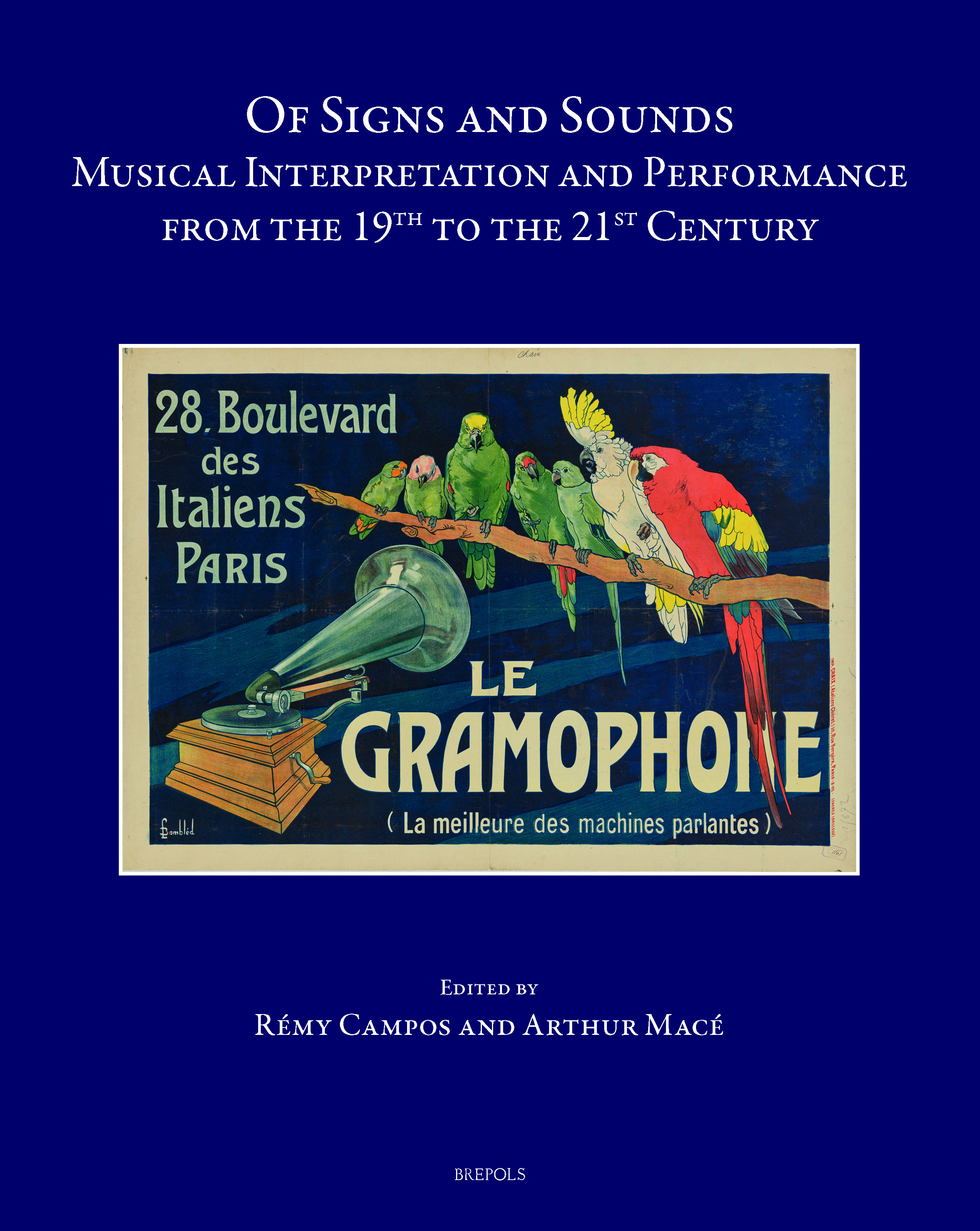 Of Signs and Sounds
Musical Interpretation and Performance from the 19th to the 21st Century
Volume 58


 Beethoven the European
Transcultural Contexts of Performance, Interpretation and Reception
Volume 48

Similar Books


 John Dunstaple Reading Boethius
John Dunstaple’s Annotations to Boethius’s “De institutione musica” in the Manuscript Oxford, Corpus Christi College Library, MS 118
 Music and Colonialism in Fascist Italy
Identity, Propaganda, and Ethnographic Representation
Volume 13





 Jüdische Musikerziehung im Preußen des 19. Jahrhunderts
Gesangunterricht an jüdischen Reformschulen als Facette bürgerlicher Akkulturation
Volume 21
 Künstlervertragsmodelle in der Musikwirtschaft
Rechtliche Grenzen der künstlerbezogenen Nebenrechteverwertung im Erlös-, Vermittlungs-, Options- und Leistungsmodell


