
La maturation artistique de Debussy dans son contexte historique (1884-1902)
by Francois de Medicis

This work is centered on the figure of Claude Debussy in the years between 1884 and 1902 – from the moment he captured the Prix de Rome to the premiere of Pelleas et Melisande, the work that marked his coming of age as a professional musician and confirmed his personal style. This period bore witness to one of the most profound transformations of the composer’s musical style and the ascent of his career to dizzying heights. Debussy’s creative achievements are placed in the context of his professional development as well as his interactions with various musical institutions such as the Conservatoire, the Institut des Beaux-Arts (during the Prix de Rome), the Societe Nationale de Musique, and the Opera-Comique. Detailed and cursory analyses of a wide range of works, both canonical and little-known, provide a window on how Debussy’s style was positioned with respect to other composers of his time who hailed from both the establishment and the avant-garde (Thomas, Massenet, Chabrier, Franck, D’Indy, Grieg, Wagner). This study allows for a more nuanced understanding of our received knowledge and a refreshed historical perspective that begs us to reconsider various aspects of the artist’s life. These include the cliche that Debussy was widely misunderstood in his youth, and a common failure to acknowledge the influence of Mussorgsky’s fellow Russians, like Balakirev and Rimsky-Korsakov.
This work is centered on the figure of Claude Debussy in the years between 1884 and 1902 – from the moment he captured the Prix de Rome to the premiere of Pelleas et Melisande, the work that marked his coming of age as a professional musician and confirmed his personal style. This period bore witness to one of the most profound transformations of the composer’s musical style and the ascent of his career to dizzying heights. Debussy’s creative achievements are placed in the context of his professional development as well as his interactions with various musical institutions such as the Conservatoire, the Institut des Beaux-Arts (during the Prix de Rome), the Societe Nationale de Musique, and the Opera-Comique. Detailed and cursory analyses of a wide range of works, both canonical and little-known, provide a window on how Debussy’s style was positioned with respect to other composers of his time who hailed from both the establishment and the avant-garde (Thomas, Massenet, Chabrier, Franck, D’Indy, Grieg, Wagner). This study allows for a more nuanced understanding of our received knowledge and a refreshed historical perspective that begs us to reconsider various aspects of the artist’s life. These include the cliche that Debussy was widely misunderstood in his youth, and a common failure to acknowledge the influence of Mussorgsky’s fellow Russians, like Balakirev and Rimsky-Korsakov.
- By (author) Francois De Medicis
Other Titles in this Series
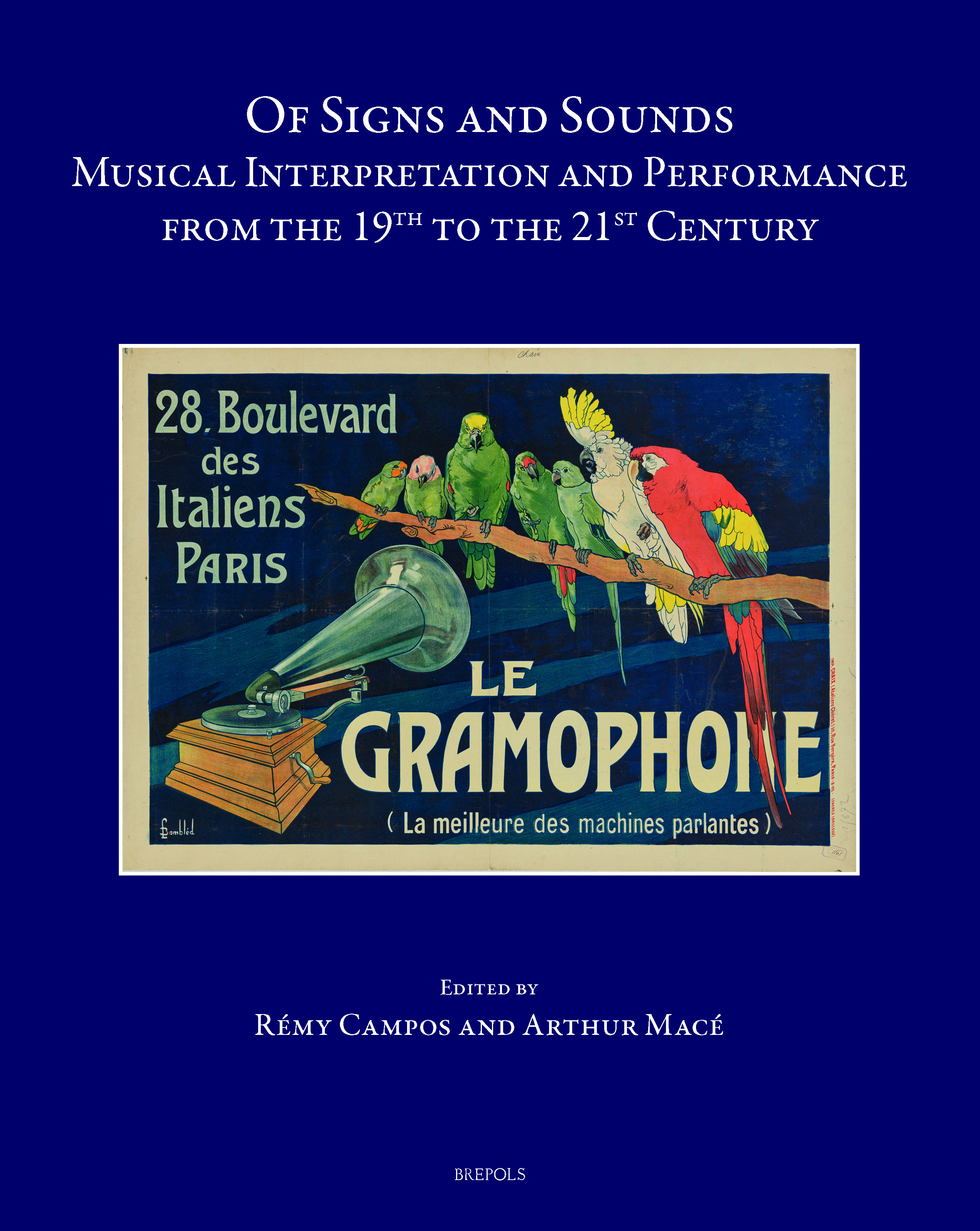 Of Signs and Sounds
Musical Interpretation and Performance from the 19th to the 21st Century
Volume 58


 Beethoven the European
Transcultural Contexts of Performance, Interpretation and Reception
Volume 48


 En pelerinage avec Liszt
Virtuosos, Repertoire and Performing Venues in 19th-Century Europe
Volume 24


 The Sound of Empire
Soundscapes, Aesthetics and Performance between Ancien regime and Restoration
Volume 51


 Vivaldi, Motezuma and the Opera Seria
Essays on a Newly Discovered Work and its Background
Volume 13

 Remapping the Classics
Haydn, Mozart and Beethoven in Spain during the Long Nineteenth Century
Volume 54

Similar Books


 John Dunstaple Reading Boethius
John Dunstaple’s Annotations to Boethius’s “De institutione musica” in the Manuscript Oxford, Corpus Christi College Library, MS 118
 Music and Colonialism in Fascist Italy
Identity, Propaganda, and Ethnographic Representation
Volume 13





 Jüdische Musikerziehung im Preußen des 19. Jahrhunderts
Gesangunterricht an jüdischen Reformschulen als Facette bürgerlicher Akkulturation
Volume 21
 Künstlervertragsmodelle in der Musikwirtschaft
Rechtliche Grenzen der künstlerbezogenen Nebenrechteverwertung im Erlös-, Vermittlungs-, Options- und Leistungsmodell


